What Is Managed Farmland?
Discover practical gardening advice, expert landscaping tips, and inspiration to help you make the most of your outdoor space.
Sanctity Ferme Team

A Complete Guide for First-Time Buyers (2026)
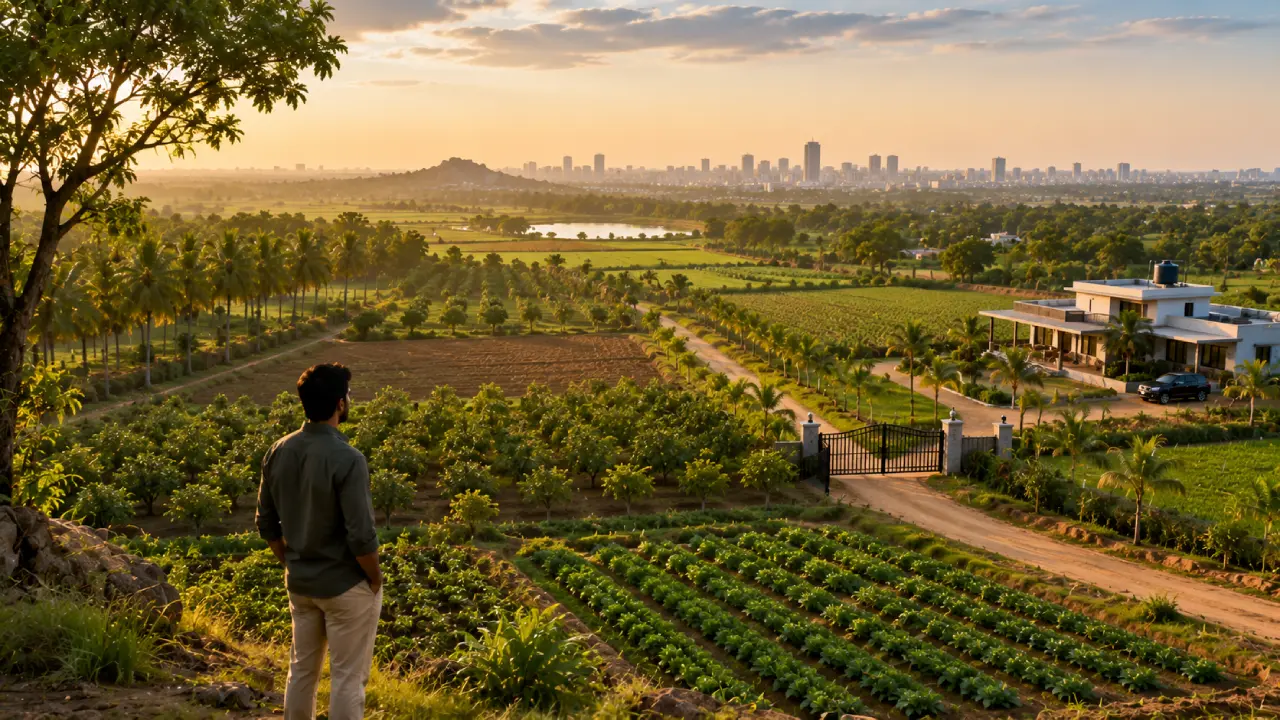
You have probably thought about owning a piece of land. A place outside the city, away from the noise, where the air is cleaner and the mornings feel different. You might have imagined a small farm, fruit trees, or just wide open space that belongs to you.
But the moment you start asking questions, the reality hits quickly. Who will water the plants when you are not there? Who handles the legal paperwork? Who manages the soil, the irrigation, the seasonal upkeep? For most working professionals, that is where the dream stops — not because it is impossible, but because nobody has the time or the expertise to figure it all out alone.
This is exactly where managed farmland comes in.
Managed farmland is a model of land ownership that separates legal ownership from day-to-day operations. You own the land outright. A professional team handles everything else — the farming, the maintenance, the security, and the infrastructure. It is genuine land ownership, just without the full-time burden that usually comes with it.
In this guide, we break down exactly what managed farmland means, how it works in practice, what you should look for when choosing a project, and why so many urban professionals near Bangalore are exploring it as a long-term investment in both lifestyle and land.
What Is Managed Farmland? The Simple Explanation
Managed farmland is agricultural land that is individually owned but professionally managed. You purchase a plot — typically measured in acres, half-acres, or guntas — and hold clear legal title to it. The management company then takes responsibility for maintaining, developing, and farming that land on your behalf, usually under a structured agreement.
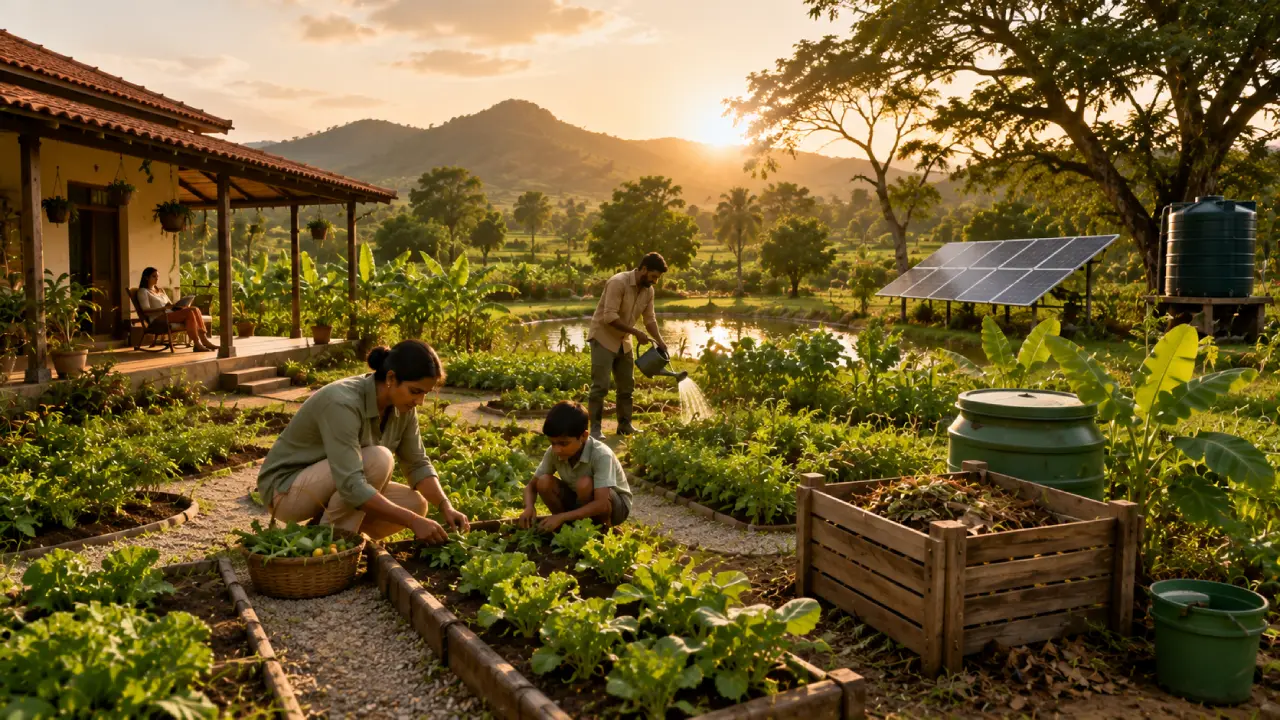
Unlike a real estate investment where the asset just sits there, managed farmland is productive. Trees are planted, crops are cultivated, the soil is maintained, and the land stays green and alive year-round — whether you visit once a month or once a year.
How Does Managed Farmland Work?
The process typically works in three stages.
First, you purchase a clearly demarcated plot within a larger managed farmland community. The plot is legally registered in your name with proper title documents, encumbrance certificates, and boundary markings.
Second, the management team takes over operations. They plant the agreed-upon mix of crops and trees — often a combination of short-term produce like vegetables and long-term agroforestry species like teak, mahogany, or fruit orchards. They manage irrigation, pest control, soil health, and seasonal upkeep as part of their service.
Third, you retain full ownership and can visit your land whenever you choose, track activity through progress reports or a farm app, and eventually decide how to use or exit the investment on your own timeline.
What Does 'Management' Actually Include?
A well-run managed farmland project covers considerably more than just watering plants. Here is what professional farm management typically involves:
Land preparation, grading, and plantation setup
Drip irrigation, borewell maintenance, and water management
Regular soil health monitoring and organic inputs
Crop rotation and seasonal planning
Security, perimeter maintenance, and site access
Periodic reporting so you know exactly what is happening on your plot
Responsible developers also handle legal compliance, property tax, and panchayat-level documentation on behalf of owners, reducing the administrative burden considerably. For a sense of how technology is changing this space, it is worth reading about what smart farming means in practice and how data-driven tools are improving farm outcomes.
Managed Farmland vs. Traditional Farmland: What's the Difference?
People often assume that buying farmland means buying managed farmland — or the opposite. The two are quite different, and understanding the distinction is important before you make any decision.
Traditional farmland is agricultural land that you purchase and manage yourself. You are responsible for everything: finding farm labour, deciding on crops, arranging irrigation, dealing with pest outbreaks, and handling all legal and administrative matters. This model works well for people who have farming backgrounds, live near the land, and have the time and expertise to manage operations directly.
Managed farmland removes those barriers. The ownership is the same — the land is legally yours — but the operational layer is handled by a professional team. You get the benefits of land ownership without needing to become a farmer.
Ownership vs. Tenancy — Clearing the Confusion
This is a question worth addressing clearly, because it comes up often.
In managed farmland, you are not a tenant and the management company is not the landlord. You own the land. The management arrangement is a service agreement, not a lease. The company works for you, not the other way around.
This matters because it affects everything — your legal rights, your ability to build on the land, your exit options, and how you pass the asset to your family. Always verify that your name appears on the registered sale deed, and that the management contract is clearly separate from the ownership documents.
Why Most People Cannot Run a Farm on Their Own
Running a productive farm requires expertise across at least three fields simultaneously: agronomy (understanding crops and soil), water management, and land administration. Most urban professionals have depth in none of these areas, which is not a failure — it is simply a reality of specialised careers.
Add to this the distance factor. Most managed farmland projects near Bangalore are located 60–120 km from the city. Commuting every week to supervise farm operations is not practical for most families. The managed model was designed precisely for this situation.
Why Are Managed Farmlands Gaining Popularity Near Bangalore?
The momentum behind managed farms near Bangalore is not a marketing trend. It reflects a genuine shift in how urban professionals think about wealth, wellbeing, and the future.
The Rise of Organic Green Farms
India's organic farming market is on a strong growth path. Research from the Indian Organic Farming Association suggests the sector could reach ₹70,000 crore by 2025, driven by rising consumer demand for chemical-free produce. Managed farmland projects that operate on organic principles are well-positioned to benefit from this shift — both in terms of produce value and the long-term health of the soil.
The appeal of organic green farms is not just financial. For many buyers, knowing that their land is being farmed without synthetic pesticides is a point of personal value. It aligns with how they want to eat, how they want to live, and the kind of legacy they want to leave behind.
Urban Professionals and the Shift Toward Green Assets
Across India's growth corridors — Karnataka, Tamil Nadu, Maharashtra — land values near expanding urban centres have been appreciating at rates between 6% and 15% annually. Areas like Hosur and the Bangalore–Chennai corridor have seen particularly sharp increases over the past few years.
For IT professionals, business owners, and NRIs who are looking beyond equity markets and urban apartments, managed farmland represents something genuinely different: a real, productive asset that does not move with stock market swings, qualifies for agricultural income tax exemptions under Section 10(1) of the Income Tax Act, and connects them to something tangible and green.
If you are exploring your options, it is worth looking at the range of farmland for sale near Bangalore to understand what a well-developed project looks like from the ground up.
Key Benefits of Investing in a Managed Farm
Land Appreciation and Long-Term Value
Agricultural land in India is a finite resource. The combination of rapid urbanisation, infrastructure investment along national highways, and increasing demand for peri-urban land has pushed values up consistently over the past decade.
The broader Indian agricultural market — valued at around USD 372 billion in 2024 — is projected to grow significantly through 2029. Within that landscape, land in high-demand corridors near Bengaluru has shown steady appreciation that outperforms many traditional asset classes over a ten-year horizon.
A conservative annual appreciation of 7–10% on agricultural land in growth corridors can significantly compound your investment value over time. When you add the productivity layer of managed farming, the asset becomes both appreciating and active.
Lifestyle — A Weekend Farm You Can Actually Use
This is the part that often gets underestimated in purely financial conversations.
Owning a managed farmland plot means having a place to go. A plot of land surrounded by trees, where your family can walk, breathe clean air, watch things grow, and step away from city life without needing to book a hotel. Many projects include infrastructure like motorable roads, community spaces, and the option to build a small farmhouse on your plot over time.
The lifestyle dimension is real, and for many buyers, it becomes the primary reason they are glad they invested. To get a sense of what day-to-day life looks like in a managed farmland community, it helps to explore life at a working farm community before making a decision.
Agricultural Income — With Honest Caveats
Many managed farmland developers offer revenue-sharing models where a portion of crop income or produce sales is shared back with plot owners. This can provide a seasonal income stream, though the amounts vary significantly based on crop types, market conditions, and management quality.
Managed farmland returns typically range from 6–12% annually from operations, with additional value coming from land appreciation. These figures are not guaranteed — returns depend on the specific crop plan, the developer's track record, and seasonal conditions. Always ask for detailed documentation and speak with existing plot owners before relying on projected income figures.
What is not variable: agricultural income in India is currently tax-exempt under Section 10(1) of the Income Tax Act. For investors in higher income brackets, this can make a meaningful difference to the effective return. For details on related tax planning, the Section 54B guide on agricultural land is a useful reference.
Key Statistics: Managed Farmland in India (2025–2026)
Metric | Data Point |
Indian agri market size (2024) | ₹31,140 crore (≈ ₹31.14 lakh crore) |
Projected market size (2029) | ₹39,555 crore (≈ ₹39.55 lakh crore) |
Organic farming market (India, 2025) | ₹70,000 crore+ |
Land price appreciation (KA/TN corridors) | 6–15% annually |
Managed farmland ROI (typical range) | 8–15% annually + appreciation |
Land prices near Hosur/Thalli (2022–2024) | Rose ~25% in two years |
Agricultural income tax status (India) | Exempt under Section 10(1) |
Sources: Mordor Intelligence, Indian Organic Farming Association, Knight Frank 2024, Farmonaut India Guide 2025
What Should a Good Managed Farmland Project Include?
Not all managed farmland projects are created equal. The concept is sound, but execution varies widely across developers. Here is what to look for before you commit.
Legal Clarity and Title Checks
This is non-negotiable. The land you purchase must have a clean, undisputed title. Ask for the following documents as a minimum: the registered sale deed, encumbrance certificate (EC) for at least 13 years, RTC (Record of Rights, Tenancy and Crops), sketch from the local revenue office, and any conversion orders if applicable.
A reputable developer will have pre-verified all titles through experienced legal counsel and will provide copies without hesitation. If there is resistance or vagueness around documentation, treat it as a serious warning sign.
If you are newer to the documentation requirements for agricultural land in Karnataka or Tamil Nadu, reading through the process of purchasing agricultural land in Karnataka offers a clear breakdown of what is involved.
Infrastructure, Irrigation, and Maintenance
A managed farmland project is only as good as its on-ground infrastructure. Before you invest, visit the site and check:
Is there a motorable road to every plot, including during monsoon?
Is there a reliable water source — borewell, rainwater harvesting, or canal access?
Is drip or sprinkler irrigation already installed, or is it promised?
Is there a dedicated security presence on-site?
Are the plantation timelines clearly documented, and can you verify them?
Projects with strong sustainability practices — native species planting, soil regeneration, water conservation — also tend to be better maintained overall, because the same discipline that drives environmental care drives operational discipline.
Transparency — What to Ask Before You Sign
A trustworthy developer welcomes questions. Here are the ones that matter most:
How many plots have been sold, and what percentage of owners visit regularly?
Can I speak with two or three existing plot owners about their experience?
What is the management fee, and what does it cover exactly?
What happens to my plot if the management company ceases to operate?
How are crop revenues calculated and disbursed?
No developer will have a perfect answer to every question, but how they respond tells you a great deal about how they operate.
Frequently Asked Questions About Managed Farmlands
Can anyone in India buy managed farmland?
Ownership rules for agricultural land vary by state. In Karnataka, the Land Reforms Act was amended to allow non-agriculturalists to purchase agricultural land subject to certain conditions. In Tamil Nadu, individuals from non-farming backgrounds can typically purchase agricultural land without restriction. Some states retain stricter rules.
Managed farmland developers operating legally will have already ensured their projects are structured in compliance with local state laws. Always verify this independently through your own legal advisor before signing any agreement.
NRIs face additional considerations depending on their residency status and the route through which they hold the investment. Consulting a property lawyer who specialises in agricultural land is strongly recommended for NRI buyers.
Is managed farmland a safe investment?
No investment is entirely without risk, and managed farmland is no exception. Agricultural income can vary with seasons and market conditions. The quality of management directly affects both the land health and any returns from farming.
That said, the underlying land asset is tangible and finite. Agricultural land in India has historically appreciated over medium-to-long time horizons, particularly near expanding urban corridors. The main risks to manage carefully are: title clarity, developer credibility, and the terms of the management agreement.
The safest approach is to choose a developer with a multi-year track record, visit the site in person, and verify all legal documents independently. A well-chosen managed farmland plot can be a genuinely stable long-term asset.
What is the difference between a managed farm and a farmhouse plot?
A farmhouse plot is typically agricultural or converted land on which you build a residential structure — the focus is on the built property rather than the farming activity.
A managed farm plot is primarily about land ownership and farming operations, with the option to build in many projects. The emphasis is on the land as a productive, green asset — not just as a building site. You may have access to a farmstay or community space managed by the developer, rather than a private standalone farmhouse.
Both serve different purposes. Farmhouse plots suit buyers who want a second home in a rural setting. Managed farmland suits buyers who want a productive land asset with professional oversight and long-term appreciation potential.
How much does managed farmland cost near Bangalore?
Plot sizes and prices vary across developers and locations. As a general indication, managed farmland projects in the Bangalore–Chennai corridor (Hosur, Shoolagiri, Thalli, Denkanikottai) have typically ranged from ₹35–60 lakhs per acre, including land cost and initial development.
Some projects offer smaller entry points — quarter-acre or half-acre plots — for buyers who want to start with a more manageable investment. Prices in this corridor have been rising steadily, so early-stage projects typically offer better entry valuations than fully developed ones.
The best way to get accurate, current pricing is to visit a site in person and ask for a detailed cost breakdown. A good developer will be completely transparent about what is included in the price and what is not.
What crops are typically grown on managed farmlands near Bangalore?
The exact crop mix depends on the developer's farm plan, soil quality, and water availability. In the Shoolagiri and Hosur belt, common choices include mango, sapota, teak, mahogany, moringa, and a rotating mix of seasonal vegetables and intercrops.
A well-designed farm plan typically layers short-term crops (vegetables, herbs) with medium-term fruit trees and long-term timber species. This layered approach keeps the land productive at multiple time horizons and provides a more diversified income base than monoculture farming.
Final Thoughts: Land That Works for You
Managed farmland is not a shortcut and it is not magic. It is a straightforward model: you own real land, a professional team keeps it green and productive, and you get the lifestyle and long-term value of being a landowner without needing to become a full-time farmer.
For working professionals, families looking for a meaningful asset to pass on, and anyone who has ever wanted a genuine connection to land — the managed model makes that possible in a way that traditional farmland never quite did.
The key, as always, is choosing carefully. Visit the site. Read the documents. Talk to existing owners. Ask the hard questions. The right project will welcome all of that.
At Sanctity Ferme, we have been building managed farmland communities near Shoolagiri — about 90 minutes from Bangalore on NH44 — since 2017. We manage over 300 acres, have planted more than 5 lakh trees, and have seen land values grow from ₹55 to over ₹450 per sq. ft. over four years. Our founder lives on-site. This is not a sales project for us — it is the way we have chosen to live, and we are glad to share it with you.
If you'd like to see what managed farmland looks like in practice — the land, the community, the trees — the best next step is a site visit. Walk the plots, see the infrastructure, and decide for yourself.