What is Smart Farming?
Discover practical gardening advice, expert landscaping tips, and inspiration to help you make the most of your outdoor space.
Sanctity Ferme Team
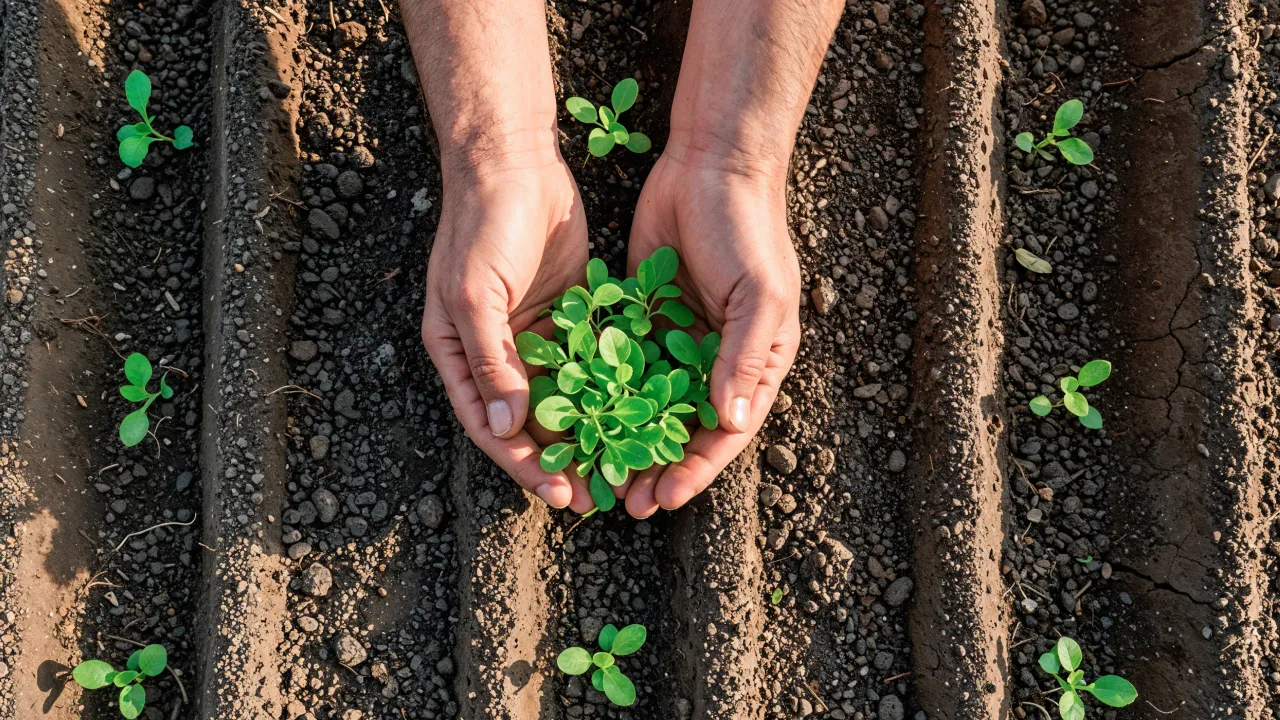
Smart farming is a way of managing a farm using data and connected tools so that decisions are more accurate and timely than traditional methods. Smart farming is the adoption of advanced technologies and data-driven farm operations to optimise and improve sustainability in agricultural production, using AI, automation, and IoT.
What Smart Farming Means
Smart farming technology is not a single machine or app. It is a combination of:
Data collection (soil, crop, weather, livestock, equipment).
Data storage and analysis (software platforms and analytics tools).
Action tools (irrigation automation, drones, robotics, and guidance systems).
In day-to-day terms, smarter farming means:
Measuring real conditions instead of relying only on assumptions.
Applying inputs (water, fertiliser, sprays) where needed, not uniformly.
Detecting problems earlier, when they are cheaper to fix.
Here’s a smart farming vs. normal farming breakdown -
Area | Traditional approach | Smart agriculture approach |
Irrigation | Fixed schedule | Based on soil and weather data (often sensor-led). |
Fertiliser use | General dose for the full field | More precise, sometimes zone-wise based on variability. |
Pest monitoring | Periodic checks | More frequent monitoring and data-supported decisions. |
Equipment maintenance | Reactive | Condition monitoring and planned servicing. |
How Smart Farming Works
Most smart farming technologies follow a repeatable cycle: collect data, interpret it, decide, act, and repeat. The internet of things farming cycle can be described as Observation (sensors record data), Diagnostics (data goes to a cloud IoT platform with decision rules), Decisions (user and/or machine learning decides treatment), and Action (farm executes and repeats).
The practical cycle on a smart farm:
Observation: Soil moisture, temperature, humidity, equipment status, or animal activity is measured.
Diagnostics: The data is processed on a platform (often cloud-based).
Decisions: Alerts, predictions, or recommendations guide what to do next.
Action: Irrigation runs, fertiliser timing changes, a repair is scheduled, or a treatment is applied.
This is the working logic behind Internet of Things farm technology: connected devices create usable information at the right time.
Main Technologies Used
Smart agriculture tech is built from a few core layers. A farm can adopt them step-by-step, based on budget and priority.
Smart agriculture technology includes:
Technology layer | What it includes | Typical farm use |
ICT and data handling | Systems that capture, store, process, and transfer information. | Organising farm records, monitoring trends, and sharing reports. |
IoT sensors | Sensors for crops, livestock, soil, and equipment, plus connected devices. | Tracking soil moisture, microclimate, and equipment health. |
Drones / UAVs | Aerial data collection and, in some cases, application support. | Crop monitoring and remote sensing. |
AI and ML analytics | Models that turn farm data into predictions and recommendations. | Yield planning, risk alerts, decision support. |
Automation and robotics | Autonomous tractors, seeding/harvesting/pruning robots, and automated spraying. | Reducing labour load and improving precision. |
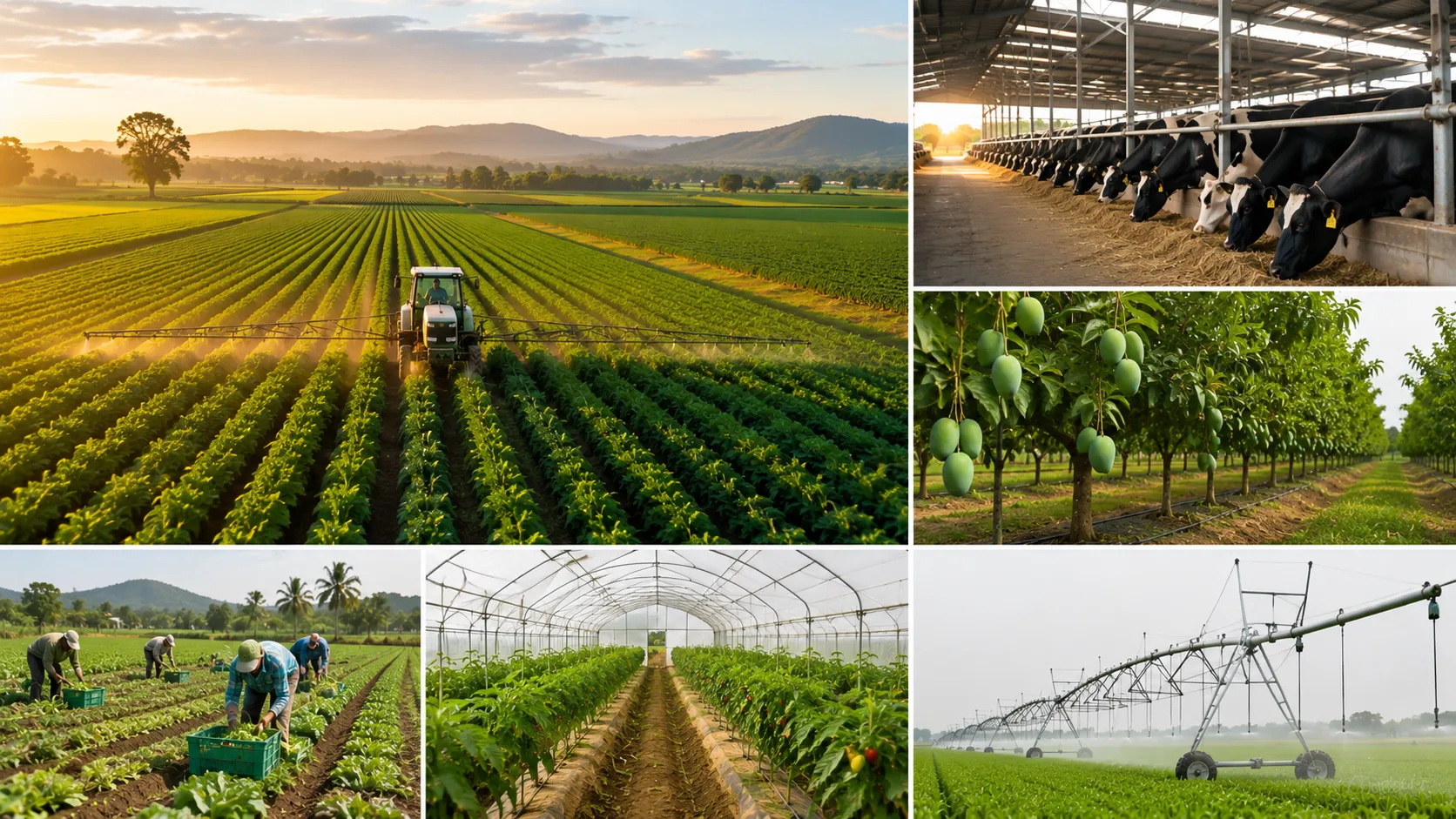
IoT in smart farming includes sensors for monitoring crops, tracking livestock, and observing the condition of farm equipment, and drones with LiDAR can collect agricultural data through remote sensing. AI/ML can help derive insights from big data generated by IoT initiatives, and automation and robotics are prominent in modern smart farming practices.
Where “Agri Smart” Fits
“Agri smart” is often used as a broad term for:
Smart farming system planning (data + decisions + action).
Smart farming solutions (tools that solve a specific farm problem).
Smart farms (farms that run with monitoring, records, and automated routines).
Benefits
The benefits of technology in farming are easiest to evaluate when tied to outcomes: lower waste, better timing, improved crop consistency, and better planning. Many smart agriculture solutions focus on water because irrigation costs and availability directly affect results.
Benefits of smart farming (practical view):
Better water use through measurement and scheduling support.
Better targeting of fertilisers and sprays through more precise application.
Faster detection of crop stress and disease risk through monitoring.
Reduced labour pressure through automation in repetitive tasks.
Better planning through farm data records (season comparison and budgeting).
Water Conservation
Let’s take a case in Texas where sensors linked to a smartphone app collect real-time soil data (including soil moisture), combine it with other information such as weather forecasts, and provide AI-powered watering recommendations.
A California winery used a cloud-based tool that ingests weather forecasts, satellite imagery, and sensor data to measure vine stress. The yields increased by 26% while water usage reduced by 16% after implementation.
A smart greenhouse facility in Kazakhstan is equipped with IoT and AI that monitors conditions and automatically adjusts temperature, light, humidity, and irrigation to create an optimal growth environment.
Livestock monitoring research where sensors were attached to cattle to track activity patterns, helping determine whether interventions are needed.
How to Adopt Smart Farming
Smart farming works best when adoption is phased and measurable. A practical approach is to choose one high-impact problem (water, pests, fertiliser efficiency, equipment downtime) and implement one solution fully before adding more tools.
A simple six-step adoption plan:
Define the farm problem clearly (example: high water usage, uneven growth, and recurring pump failures).
Record a baseline (water used per week, fertiliser spend, yield range, and downtime).
Choose one smart farming solution that directly addresses the baseline gap.
Pilot it in a limited area or one crop cycle.
Review outcomes and operational effort (time, reliability, and maintenance).
Scale only after the routine becomes stable.
Smart Farming for Small Farmers
IoT-based smart farming is not only for large-scale operations but can add value to areas such as organic farming and family farming. For small farmers, the most practical starting points are usually:
Soil moisture monitoring (especially where irrigation is costly).
Basic weather tracking and spray scheduling.
Simple farm record systems (inputs, yields, expenses).
Smart Farming and Managed Farms
Some buyers who explore farm land for sale around Bangalore also look for managed farms, where operations and maintenance are handled through a managed setup. If smart farming is a key goal in such a purchase, it helps to ask very specific questions:
Which smart farming technologies are already installed (sensors, automation, and dashboards)?
Who reviews the data, and how often are actions taken?
What proof is shared with owners (water logs, crop schedules, input bills, and yield reports)?
What is the process if a device fails (maintenance timelines and responsibility)?
This keeps the discussion practical and avoids buying “technology” without operational discipline.
Conclusion
Smart farming works best when it is paired with responsible land stewardship and a setting that supports long-term habits. If owning managed farms near Bengaluru is part of the plan, Sanctity Ferme offers eco-friendly, well-managed farmlands around 90 minutes from Bangalore, designed for people who value sustainable living and a connected community.
You can build a farmhouse, be part of organic farming activities, and enjoy a quiet place to spend time, while still staying close to the city for your regular needs. Visit the site, understand how the land is managed on the ground, and pick a plot that matches your plan and schedule, so you do not miss good options later.
FAQs
How does smart farming work?
Smart farming works by collecting farm data through sensors and connected devices, analysing it on a platform, and using the results to guide decisions and actions.
What are the main technologies used in smart farming?
Key technologies behind smart farming are AI, automation, and IoT, supported by data-driven operations. There are also IoT sensors, drones for remote sensing, and AI/ML analytics for insights.
What are the benefits of smart farming?
Benefits of smart farming often include more efficient irrigation, more precise input application, improved monitoring, and better operational planning. There are various examples, including sensor-led irrigation recommendations.
Is smart farming suitable for small farmers?
IoT-based smart farming not only targets large-scale operations but can also add value to family farming and organic farming. In practice, it is most suitable when implemented in small steps focused on the highest cost or risk area.
How does smart farming help in water conservation?
Smart farming supports water conservation by using soil and weather data to recommend watering schedules and amounts, reducing unnecessary irrigation.
Can smart farming increase farm profitability?
Smart farming can improve profitability when it reduces waste in inputs, prevents losses through earlier detection, and improves yield consistency through targeted actions. Analytics and modelling with AI/ML can inform decision-making across crop production and land utilisation, supporting more efficient management.