Why Organic Veggie Training is the First Step Every New Farm Owner Needs
Discover practical gardening advice, expert landscaping tips, and inspiration to help you make the most of your outdoor space.
Sanctity Ferme Team

You have bought the land. You have walked the plot, imagined the rows of vegetables, pictured what harvest day might look like. Now comes the question that most new farm owners quietly underestimate: do you actually know how to grow them organically?
Organic vegetable farming is not simply farming without chemicals. It is a system one that requires a working understanding of soil biology, crop sequencing, natural pest management, and timing. Without that foundation, even the best farmland in the best location produces disappointing results in the first year. Sometimes the second as well.
That is why training is not optional. It is the first step before the seeds, before the soil amendments, before anything else.
What Are Organic Veggies and Why Does the Method Matter?
Organic vegetables are grown without synthetic pesticides, chemical fertilisers, or genetically modified inputs. But the distinction goes deeper than what you leave out of the process.
Organic produce is free from the residues of synthetic pesticides and fertilisers that accumulate in conventionally grown food. It is also genuinely richer in nutrients not as a marketing claim, but as a consequence of healthier, biologically active soil and slower, more natural growth processes.
The reason organic vegetables taste different and they do taste different, noticeably so is because the soil they come from is alive in a way that chemically-farmed soil is not. Healthy soil produces food with a depth of flavour that depleted, chemical-dependent soil simply cannot replicate. For a farm owner growing vegetables for their own family, this matters from the very first harvest.
For those growing for profit, it matters even more. Organic vegetables, fruits, spices, and medicinal plants consistently command premium prices in the market prices that conventional agriculture cannot match. The profitability is real. But it does not arrive automatically. It arrives because the farmer understands the method well enough to execute it consistently.
Is 100% Organic Really 100%?
It is a fair question, and it deserves an honest answer rather than a reassuring one.
Certified organic farming in India is governed by the National Programme for Organic Production, or NPOP. Farmers operating under this standard must avoid synthetic chemicals entirely, maintain detailed record-keeping, and submit to periodic inspections and audits by accredited certification bodies. A certified organic label does carry genuine weight it is not a self-declaration.
But certification takes time. A two to three year conversion period is generally required before land can be fully certified organic. During that window, your soil is doing the slow work of clearing itself of prior chemical inputs and rebuilding its microbial life from the ground up.
This is precisely why what you do in year one matters so much. The decisions you make early what you add to the soil, what you plant, how you manage pest pressure determine how quickly and cleanly that transition happens. A trained grower moves through the conversion period purposefully, knowing what the soil needs at each stage. An untrained one often stalls, or inadvertently sets the process back without realising it.
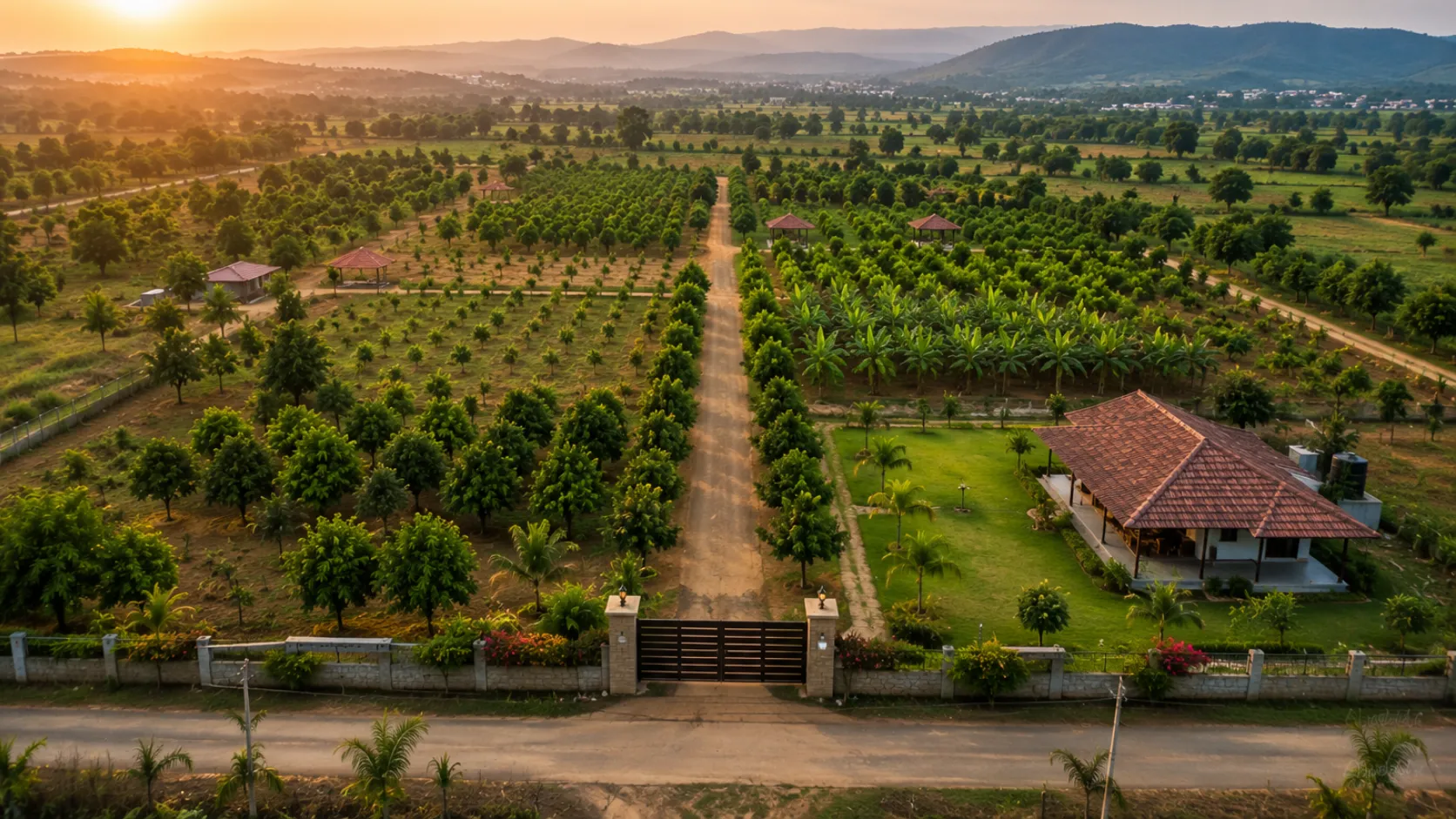
For new farm owners on managed farmlands near Bangalore, this context is particularly relevant. If your plot sits on land that has already seen years of regenerative management as Sanctity Ferme's projects near Shoolagiri have your starting point is considerably stronger than a degraded or chemically-farmed plot. That advantage compounds when you have the training to build on it intelligently.
Which Vegetables Are Best for Organic Cultivation?
Not all vegetables respond equally well to organic methods, and knowing which crops to start with is one of the most practically valuable things good training teaches you.
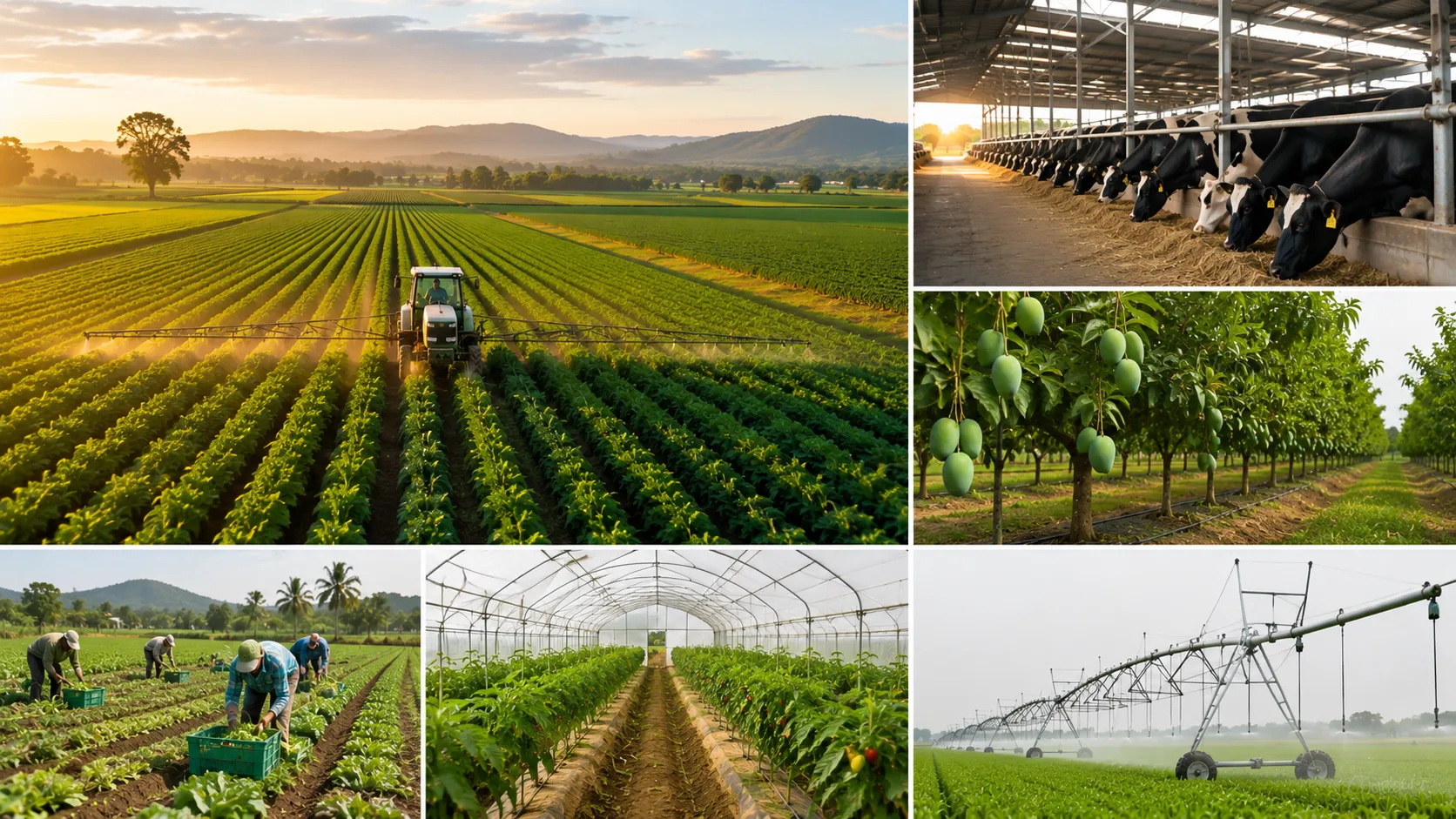
Tomatoes, capsicum, cucumber, leafy greens like spinach and lettuce, and okra are consistently among the most profitable vegetable options in India. Organic cultivation of these crops using natural fertilisers, composts, bio-pesticides, and rotational cropping directly addresses the concerns that drive urban buyers toward organic produce in the first place.
For beginners on managed farmlands in South India, a few starting points that consistently work well:
Leafy greens spinach, amaranth, and fenugreek have short growing cycles of 25 to 40 days, give you rapid feedback on soil health, and are forgiving enough to learn on. They are ideal for building confidence and understanding the rhythm of organic growing before you commit to longer-cycle, higher-stakes crops.
Okra and beans are both well-adapted to the Tamil Nadu and Karnataka climate, naturally pest-resilient in most conditions, and consistently in demand at local markets throughout the season.
Tomatoes and brinjal are higher-value but also meaningfully higher-maintenance when grown organically. Both are highly susceptible to whiteflies, fruit borers, and other pest pressure in Indian conditions. Managing them well requires consistent monitoring, integrated pest management, and the kind of informed judgement that comes from having done it before or been properly taught.
The practical advice is simple: start with the forgiving crops. Build your knowledge and your soil at the same time. Move to the premium crops once both are genuinely ready.
What Does Organic Veggie Training Actually Cover?
The gap between wanting to farm organically and actually knowing how is bridged by structured learning. A good training programme covers considerably more than planting technique and that breadth is what makes it valuable.
Soil preparation and composting is where everything begins. Before you plant anything, you need to understand your soil's texture, pH level, and organic matter content. Good compost is the foundation of organic vegetable cultivation not a supplement to it. Most beginners skip this stage and spend months wondering why their crops underperform despite doing everything else correctly.
Crop rotation and intercropping are not complicated concepts, but they require planning before you put a single seed in the ground. Rotating crops prevents soil nutrient depletion and interrupts pest cycles. Traditional polyculture growing multiple crops in close proximity has been practised across India for centuries precisely because it works. Training teaches you how to design a rotation that suits your specific plot and climate.
Natural pest management is where many beginners feel most out of their depth, and where training makes the biggest practical difference. Planting marigolds alongside vegetables deters certain destructive insects. Neem oil sprays are effective against a wide range of household pests. Homemade preparations using garlic, chilli, and cow urine have documented efficacy against common crop pests and cost almost nothing to produce. These are all learnable, repeatable techniques but only if someone has shown you how to use them, and when.
Harvest timing and post-harvest handling complete the picture. Organic vegetables are more perishable than their chemically-treated counterparts they do not have synthetic coatings or preservatives extending their shelf life. Knowing when to harvest and how to handle produce from field to table protects both the quality of what you grow and the value you can realise from selling it.
Can You Trust Organic Food From India?
Yes with the right context around what that trust is based on.
India's organic sector is growing at pace, and the regulatory infrastructure is steadily improving alongside it. Government initiatives like the Paramparagat Krishi Vikas Yojana and the National Programme for Organic Production are actively supporting farmers through the transition providing financial assistance, training, and certification support. The FSSAI has introduced the Jaivik Bharat logo specifically to help consumers identify genuinely certified organic products on the shelf.
But the deepest answer to the trust question is not a logo or a certificate. It is traceability. When you grow your own organic vegetables on land you own and manage or visit regularly enough to know what is happening there you know exactly what went into the soil. There is no supply chain to wonder about. No label to verify against your own instincts. You were there.
This is one of the most quietly significant benefits of farmland ownership that people rarely talk about. Your family's vegetables come from your land. That level of food trust genuine, first-hand, unmediated is something no supermarket, however well-certified, can offer.
Farming Vegetables for Profit: The Training Dividend
The numbers for organic vegetable farming are genuinely encouraging. A well-managed organic plot can generate around ₹70,000 per acre in income against an investment of approximately ₹25,000 a profit margin of roughly ₹45,000 per acre. With consistent planning and quality produce, an organic farm can grow into a recognisable, profitable operation within two to three years.
But those numbers assume you are farming correctly from the beginning. A new farm owner who skips training typically spends the first year making mistakes that were entirely avoidable wrong crop timing, soil that was never properly prepared, pest damage from threats that were misidentified or caught too late. Training does not eliminate the learning curve. It compresses it dramatically, and it means the lessons you learn do not come at the cost of an entire season's harvest.
At Sanctity Ferme's managed farmlands near Shoolagiri, the land is already set up for purposeful organic cultivation. With over 5 lakh trees planted and 300+ acres under active regenerative management, the ecosystem surrounding your plot is already supporting organic growing from day one. The soil biology is moving in the right direction before you arrive.
Pair that ecological head start with proper training, and your first crop cycle has every reason to be productive not experimental.
Your Next Step
Organic vegetable cultivation on your own land is genuinely achievable not just for experienced farmers or agricultural graduates, but for anyone willing to approach it with curiosity, patience, and the discipline to learn before they plant.
If you are exploring farmland for sale near Bangalore or want to understand how farm owners at Sanctity Ferme are already growing their own organic produce, visit our projects and spend some time with the team on the ground.
You can also explore life at Sanctity Ferme and our approach to sustainability to understand the environment your vegetables would actually be growing in.
The training comes first. The harvest follows.