What Is Sustainable Living? A Beginner's Guide Through Farm Stay Experiences
Discover practical gardening advice, expert landscaping tips, and inspiration to help you make the most of your outdoor space.
Sanctity Ferme Team
The phrase "sustainable living" comes up everywhere in news articles, product packaging, office sustainability pledges, and weekend think pieces. Yet for most people, it remains something vaguely admirable and vaguely distant: something that other, more organised people do.
This post is for everyone who has wondered what sustainable living actually means in practice, whether it has to be expensive or complicated, and how a weekend on a farm near Bangalore might be the most honest introduction to it you can find.
What Is Sustainable Living?
Sustainable living is the practice of making choices that reduce your individual impact on the planet's resources so that future generations inherit a world capable of sustaining them as well.
The concept sits at the intersection of three things: the environment (how much you consume and how much you pollute), the economy (whether sustainable choices are financially viable over time), and community (whether the way you live supports or depletes the world around you).
In practical terms, sustainable living is not one grand gesture. It is a direction a consistent orientation toward choices that are less extractive, less wasteful, and more connected to natural systems.
Sustainable living examples in everyday life:
Eating locally grown, seasonal food rather than produce shipped from across the country
Reducing food waste through composting and planned buying
Using energy efficiently switching off what you're not using, choosing LED lighting
Buying fewer things of higher quality rather than many disposable things
Spending time in nature rather than consuming it through products
None of these require a dramatic lifestyle overhaul. Sustainable living is not about perfection it is about direction.
Why Is Sustainable Living Important?
The Planetary Case
Humanity currently consumes resources faster than the planet can regenerate them. Scientists and environmental researchers track this through a concept called Earth Overshoot Day the point in each calendar year when human demand exceeds what Earth can sustainably supply. In recent years, that date has fallen before the end of July, meaning the remaining months of the year run on ecological debt.
When we clear forests, over-extract groundwater, burn fossil fuels, and fill landfills faster than nature can absorb them, we borrow from a future that our children will have to repay without having borrowed the resource themselves.
Sustainable living is not about guilt. It is about the honest recognition that resources are finite, and that how we live today has consequences for people who don't yet have a voice in the conversation.
The Personal Case
Beyond the environmental argument, sustainable choices tend to make individual lives quieter and more intentional. Consuming less generates less clutter. Eating local food tastes better and costs less per nutritional unit. Spending time in nature rather than in malls consistently correlates with lower stress and better mood in research across cultures.
The irony of unsustainable consumption is that it rarely delivers what it promises. More things, more convenience, more novelty and yet the background anxiety of modern urban life persists. Sustainable living, in its quieter way, tends to address that anxiety at its source: by reconnecting people to what actually sustains them.
Is Sustainable Living Expensive?
This is the question that most people reach first and the answer is more reassuring than the marketing around sustainable products suggests.
Some sustainable choices do cost more upfront. Organic food, energy-efficient appliances, solar panels, and certified sustainable products carry higher initial prices. This is real, and pretending otherwise is not useful.
But many sustainable choices cost less. Reducing consumption costs nothing. Composting costs nothing. Fixing what you own rather than replacing it saves money. Buying second-hand is cheaper than buying new. Cooking with seasonal, local produce is less expensive than buying pre-packaged, out-of-season items flown in from distant markets.
The most useful frame: sustainable living is more expensive when it means buying premium eco-products. It is often cheaper when it means using less. The version of sustainable living available to most Indians reducing food waste, growing some of your own herbs, spending weekends in nature rather than shopping centres costs very little and delivers genuine returns in wellbeing.
The entry point is not a purchase. It is a shift in what you pay attention to.
Sustainable Living Examples: What It Actually Looks Like
Sustainable living does not look the same for everyone. Here are some examples across different areas of daily life:
Food: Buying vegetables from local farmers' markets rather than imported produce. Avoiding single-use plastic packaging at supermarkets. Reducing meat consumption on some days. Planning meals so that less food is thrown away.
Energy: Turning off lights and fans when leaving a room. Choosing natural ventilation over air conditioning when weather allows. Drying clothes on a line rather than a dryer.
Transport: Consolidating errands into fewer trips. Using the metro or shared transport for commutes. Choosing a staycation over a long-haul flight when rest is actually what's needed.
Consumption: Buying clothing less frequently but with higher durability. Repairing electronics and appliances rather than replacing them immediately. Borrowing or renting things used occasionally power tools, camping gear, event items.
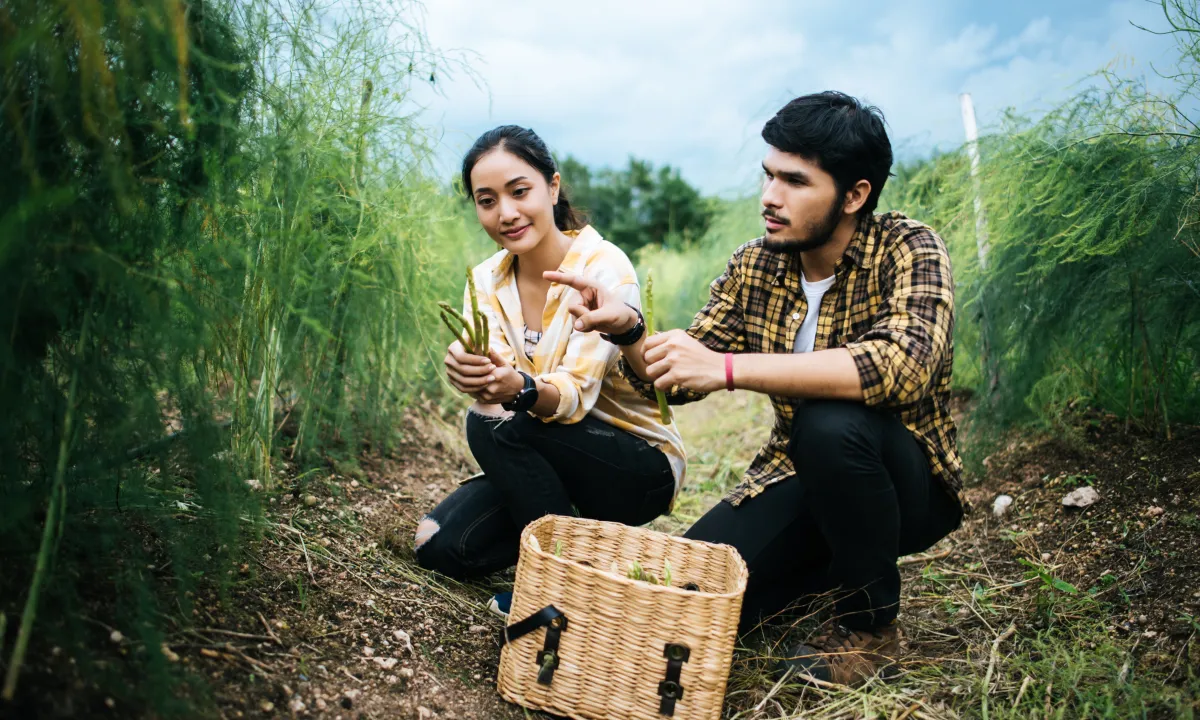
Connection with nature: Spending time outdoors regularly. Growing something even a balcony herb garden. Supporting regenerative farms and food producers. Visiting places where nature is being protected or restored.
This last point is where farm stays become relevant.
How Can I Experience Sustainable Living in Real Life?
The Farm Stay as a Classroom
For urban Indians particularly those living in Bangalore, where the distance between a screen and a paddy field can feel immeasurable a farm stay is often the most direct, experiential introduction to sustainable living available.
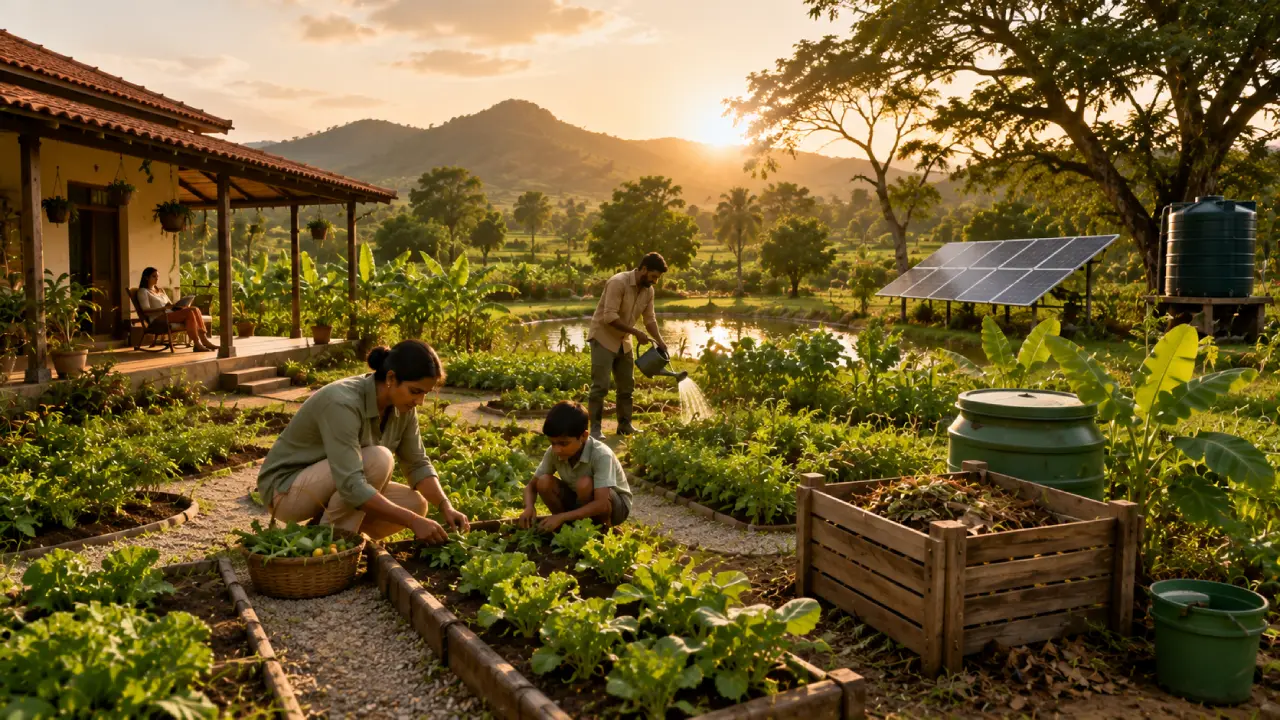
A well-run farm stay doesn't just offer accommodation in a rural setting. It offers participation. You can see how composting works. You can walk through a plantation and understand what it takes to grow a tree. You can eat food that was grown within walking distance of where you're sitting. You can experience a morning without notifications and genuinely notice the difference it makes.
These experiences are not trivial. Research consistently shows that exposure to natural environments reduces cortisol levels, improves mood, and restores the kind of attentional clarity that urban life erodes. A weekend on a working farm is not escapism it is calibration.
It also helps dissolve the abstraction around sustainability. When you've walked through a plantation and seen what healthy soil looks, feels, and smells like, "soil health" is no longer a phrase in a news article. It's something you understand in your body.
What a Farm Stay Near Bangalore Can Teach You
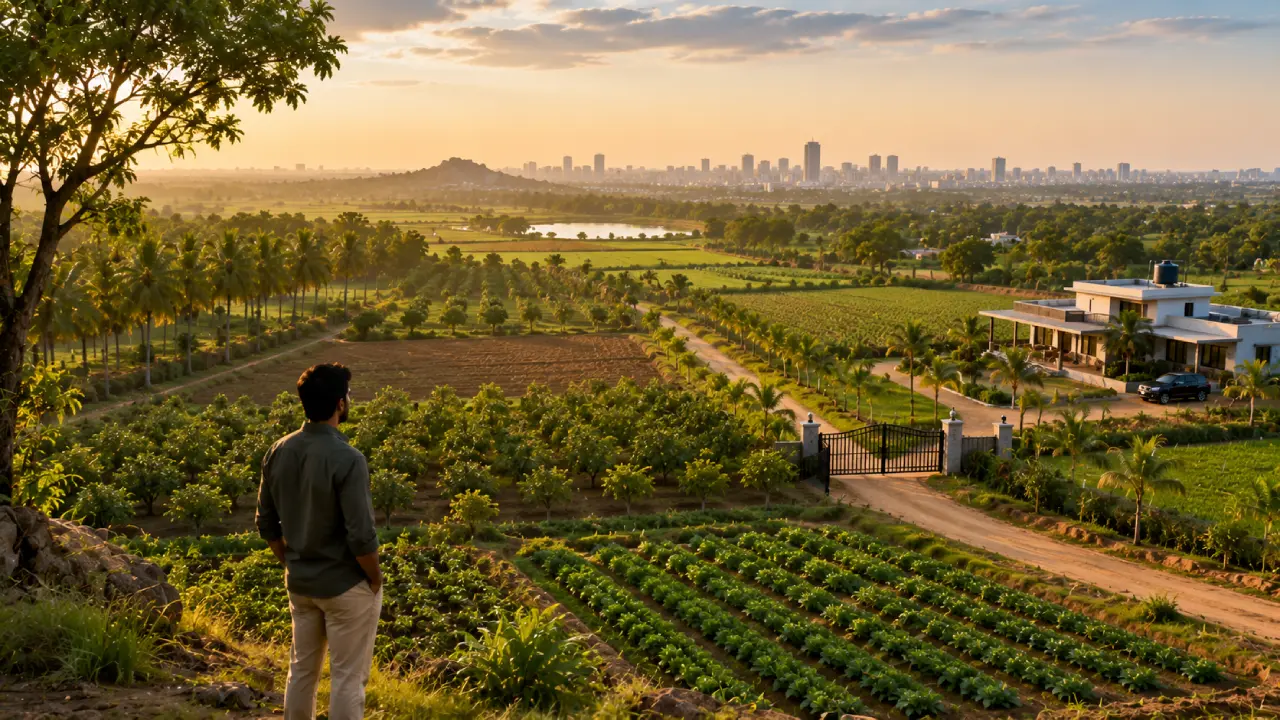
The Shoolagiri region of Tamil Nadu, approximately 90 minutes from Bangalore on NH44, offers a landscape that most city residents have never seen up close: rolling hills, green cover across managed plantations, birdsong instead of traffic, and air that carries the smell of earth rather than exhaust.
At Sanctity Ferme, our farmstay guests experience sustainable living not as a set of rules but as a set of rhythms waking up when it gets light, eating food that came from land nearby, walking through plantations where 5 lakh+ trees have been established across 300+ acres, and spending an evening around a fire without needing to reach for a phone.
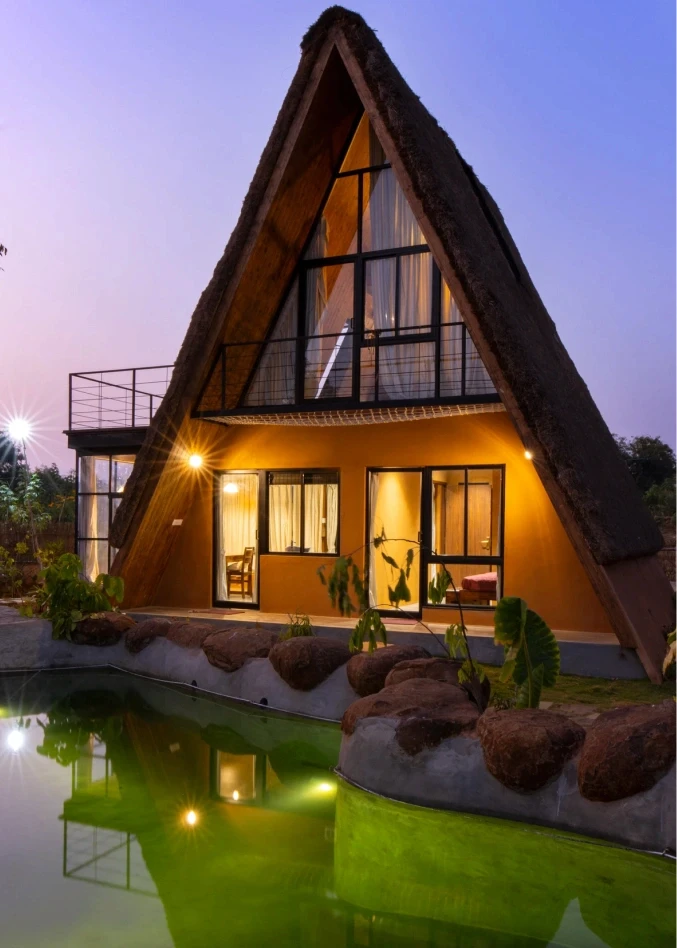
Guests of our Sunny Side Up Farmstay can combine a farmstay overnight with guided nature walks, horseback riding through farmland, and an understanding of how managed plantations work why we plant what we plant, how intercropping supports biodiversity, and what it looks like when land is actively cared for rather than merely owned.
This is life at Sanctity Ferme not a performance of sustainability, but the actual texture of it.
Beyond the Weekend: Owning Land as a Sustainable Act
For those who find the experience resonates deeply, there is a longer version of this story.
Owning a piece of agricultural land near Bangalore and having it professionally managed under regenerative farming practices is one of the most meaningful sustainable investments an urban Indian can make. It keeps agricultural land in productive use rather than allowing it to lie fallow or be converted. It supports biodiversity through multi-species planting. It generates income from agricultural activity that is, by nature, less extractive than industrial alternatives.
At Sanctity Ferme, our sustainability practices include regenerative soil management, biodiversity restoration, and water conservation across all five projects. Every plot we develop is intended to leave the land in better condition than we found it.
If you are at the beginning of your sustainable living journey, a farm stay is the right starting point. If you are ready to make that connection more permanent, farmland for sale near Bangalore offers a way to participate in something that outlasts a weekend.
A Beginner's Roadmap to Sustainable Living
You don't need to change everything at once. Here is a simple progression:
Start with attention. Notice where your food comes from, how much you throw away, and how much time you spend in natural versus built environments. Awareness precedes change.
Make one shift in consumption. Reduce something you use habitually that could be reduced single-use plastic, food waste, impulse purchases. The habit of reducing is more valuable than any specific item.
Spend time in nature deliberately. Not as tourism but as attention. A forest walk, a farm visit, a morning in a garden. Let it be slow.
Support producers who farm sustainably. Buy directly from local farmers' markets when possible. Choose food that travelled less distance to reach you.
Consider what you own and what it costs the world. Not as guilt but as curiosity. The question "where did this come from, and where does it go?" is the foundation of sustainable thinking.
In Conclusion
Sustainable living is not a lifestyle brand or a set of premium purchases. It is the practice of living with enough awareness of your impact that your choices move even incrementally toward a world that can sustain itself.
A farm stay near Bangalore won't make you a model of sustainability overnight. But it will give you something more valuable: a felt sense of what it means to be connected to land, food, and the natural rhythms that urban life obscures.
At Sanctity Ferme, we've spent years building a managed farmland community that lives these principles in the soil we restore, the trees we plant, and the farmstay experiences we offer to guests who want more than a weekend away.