What is Sustainable Farming?
Discover practical gardening advice, expert landscaping tips, and inspiration to help you make the most of your outdoor space.
Sanctity Ferme Team
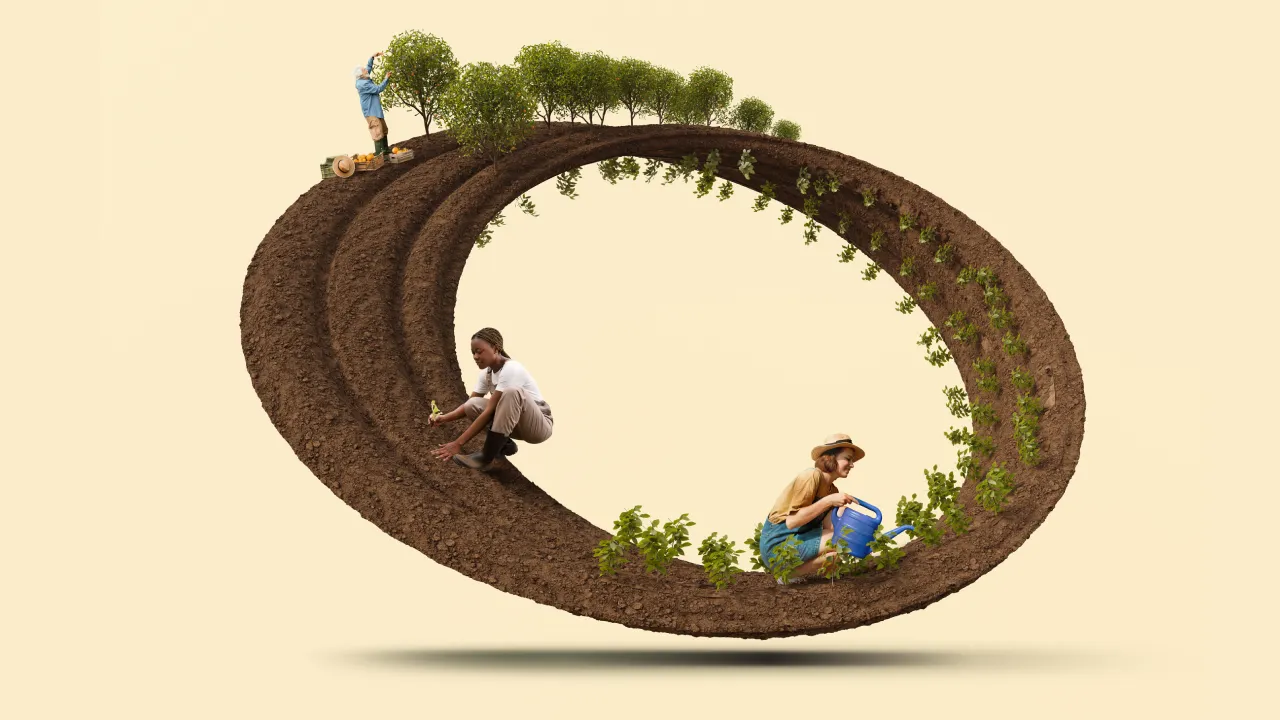
When people ask what is sustainable farming, they usually want a definition that’s simple and comprehensible. Sustainable farming produces food without quietly damaging the soil, water, and natural systems that farming will need tomorrow. In other words, it’s not only about this season’s yield - it’s about keeping the land productive and the business workable for the long run.
It also helps to understand what is sustainable agriculture, because the terms get mixed up online. Sustainable agriculture covers the entire farming system: soil management, water planning, crop and livestock decisions, energy use, waste handling, and the farm’s effect on nearby ecosystems and communities. Sustainable farming is the day-to-day, on-ground process through which those sustainable agriculture ideas are applied.
Why Sustainable Farming Matters Right Now
Farms depend on resources that can degrade when pushed too hard. Soil can lose structure and organic matter, groundwater can fall, and pests often get worse when a farm ecosystem becomes unbalanced. Over time, those problems reduce yield stability and increase the cost of “fixing” issues that could have been prevented.
There’s a strong business case too. Many sustainable farming practices focus on using inputs more precisely - so money isn’t wasted on unnecessary fertiliser, excess irrigation, or repeat pesticide sprays.
For many individuals, farming sustainably becomes less about ideology and more about predictability, especially in years with heat waves, erratic rainfall, or new pest outbreaks.
If you think of it as farming sustainable agriculture, the idea becomes clearer. You’re building a production system that can keep working under stress, instead of one that only performs when conditions are perfect.
Core Goals Of Sustainable Agriculture
A good sustainable farming practice usually tries to balance a few goals at the same time:
Build soil health and protect long-term productivity
Use water efficiently and reduce runoff or pollution
Reduce avoidable chemical use through planning and monitoring
Support biodiversity, including pollinators and beneficial insects
Maintain profitability and contribute to local rural livelihoods
When these goals guide decisions, sustainable farming becomes a repeatable system - not a one-time “conversion.”
What are Sustainable Crops?
Sustainable crops depend on your climate, soil type, water availability, and market access. In general, sustainable crops are the ones that fit local conditions well and can be grown with efficient input use, fewer emergency interventions, and lower long-term damage to soil and water.
In many dry regions, millets can be a practical choice because they often need less water than water-intensive alternatives. Pulses and legumes can support nitrogen cycling and improve rotation quality, which can reduce fertiliser pressure over time. But the best crop is always location-specific, and it should be chosen using soil testing, realistic irrigation planning, and clear demand signals from your market.
Sustainable Farming Practices That Work
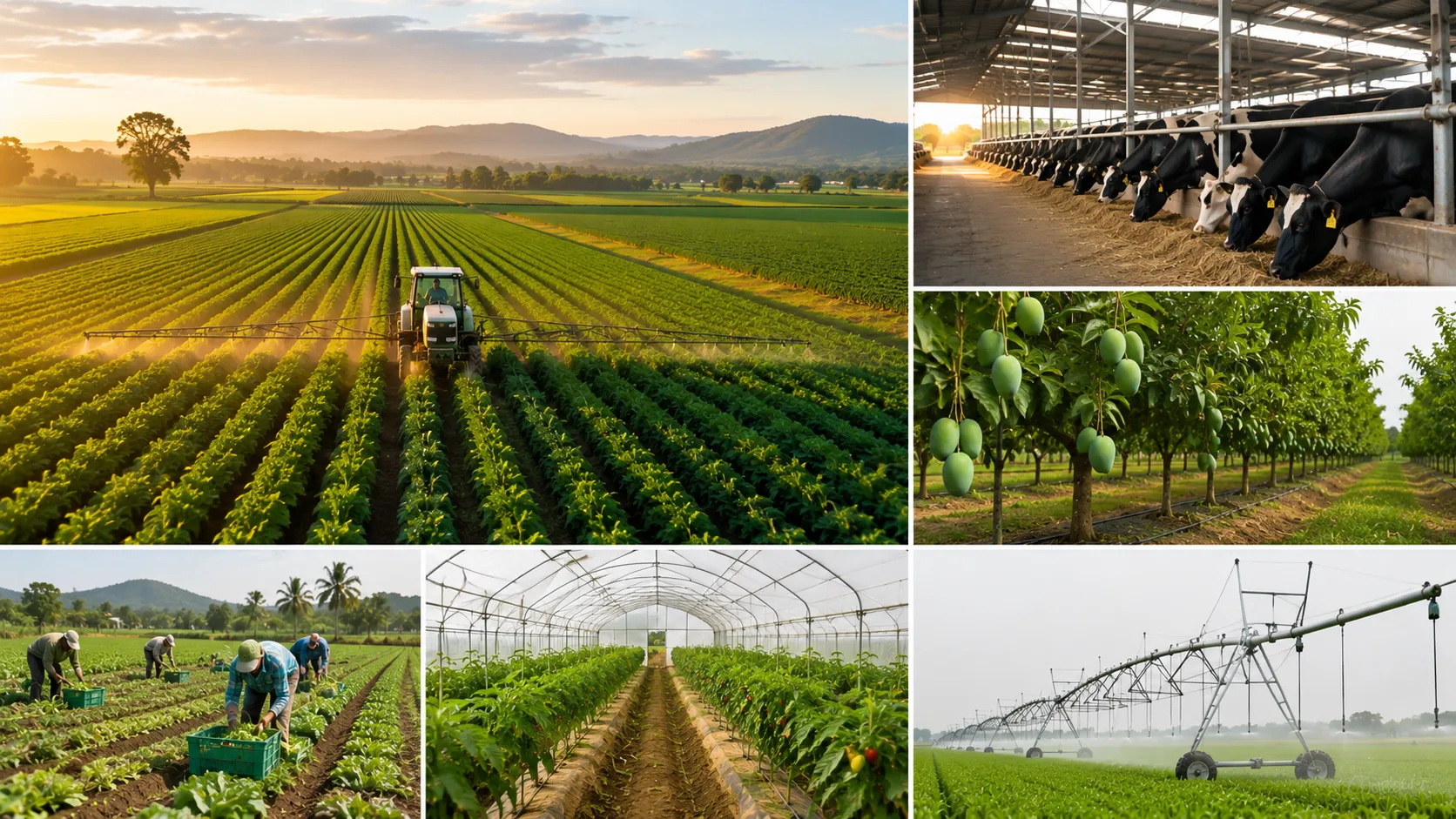
Different farms adopt different approaches, but results usually improve when you combine methods instead of relying on a single change. Below are proven sustainable farming methods that tend to work across many contexts.
1) Build Soil Health and Reduce Erosion
Healthy soil is a yield stabiliser. It holds water better, supports root growth, and reduces nutrient losses during heavy rain or over-irrigation.
Common sustainable farming techniques for soil health include:
Soil testing before major nutrient decisions
Adding compost, farmyard manure, and returning crop residues where safe
Cover crops in suitable windows to protect the soil and feed soil biology
Reducing unnecessary tillage to protect the structure and microbial life
Over time, these steps improve nutrient efficiency and reduce the “boom-bust” pattern many farms face.
2) Use Water Efficiently and Control Runoff
Water management is at the centre of most sustainable agriculture practices. When irrigation is planned well, farms often cut costs without cutting yield, and nearby ponds, lakes, and rivers stay cleaner. Practical sustainable farming solutions for water include:
Drip or sprinkler irrigation, where feasible
Mulching to reduce evaporation and moderate soil temperature
Contour bunding or levelling (depending on slope and soil)
Even small improvements, like avoiding irrigation during peak heat, can add up across a season.
3) Improve Nutrient Efficiency
Fertilisers are useful tools, but over-application becomes expensive and risky. A lot of sustainable farming comes down to precision: giving the crop what it needs, when it needs it, and not more.
Many farmers use the “right source, right rate, right time, right place” approach for nutrient management. In nitrogen-sensitive situations, some also use stabilisers or split applications so nitrogen stays available longer and leaches less. This supports yield while reducing environmental pressure.
4) Crop Rotation and Diversity
Rotation is one of the simplest upgrades with the biggest long-term payoff. It breaks pest cycles, spreads risk, and improves soil structure - especially when rotations include crops with different root depths and nutrient patterns in managed farmlands. Good rotation planning usually means:
Rotating crops with different nutrient demands
Including legumes where climate and markets allow
Avoiding the same crop in the same field season after season
This is one of the most reliable sustainable farming methods because it helps both agronomy and cash-flow stability.
5) Integrated Pest Management
Sustainable does not always mean “no sprays.” It means you don’t spray blindly. IPM uses monitoring, thresholds, and targeted decisions so you act only when the farm actually needs it.
Strong IPM programs typically include:
Regular scouting and pest counts
Resistant varieties where available
Protecting beneficial insects and pollinators
Targeted sprays at the correct dose and timing, only when thresholds are crossed
It’s not a universal fit, but in the right region, agroforestry can be one of the strongest sustainable farming techniques for resilience.
6) Responsible Livestock Integration
Livestock can strengthen a sustainable farm when managed carefully. Animals can convert crop residues into manure, support nutrient cycling, and add a second income stream.
The key is responsible management: clean water access, humane care, and manure handling that enriches soil instead of causing runoff, odour issues, or contamination. Done poorly, livestock can create pollution; done well, it can close nutrient lags and deficiencies on the farm.
7) Urban Agriculture as a Supporting Model
Urban farming can support local food access and reduce transport emissions for certain crops. Still, cities can’t replace production farms at scale, so the bigger opportunity is improving sustainability across both rural production and urban supplementation.
Benefits and Advantages for Farmers and Consumers
The benefits of sustainable agriculture are not limited to “environmental good.” Farmers need practical outcomes: stable yields, manageable costs, and land that doesn’t degrade every year.
Common advantages of sustainable farming include:
Better soil fertility and improved yield stability over time
Reduced runoff and lower risk of water pollution
Higher water-use efficiency during dry months
Lower input waste through better planning and monitoring
Stronger resilience to pests, disease, and extreme weather swings
For consumers and communities, these improvements can also support cleaner water and safer chemical handling - especially when farms avoid misapplication and follow monitoring-based decisions.
Challenges When Shifting to Sustainable Farming
Transitioning is real work, and most farms don’t change overnight.
A common challenge is upfront cost - irrigation upgrades, compost systems, cover crop seed, or precision tools can require investment before returns show up.
The next challenge is learning and record-keeping. Many sustainable farming practices require more observation, note-taking, and field-level experiments than conventional routine-based farming. A practical path is to start small - trial one plot, measure results, then scale what works.
Finally, habits can be hard to change. The easiest way to keep momentum is to set measurable targets such as improved soil organic matter, reduced water use per acre, or fewer pesticide sprays based on IPM thresholds.
Sustainable Farmland Near Bengaluru
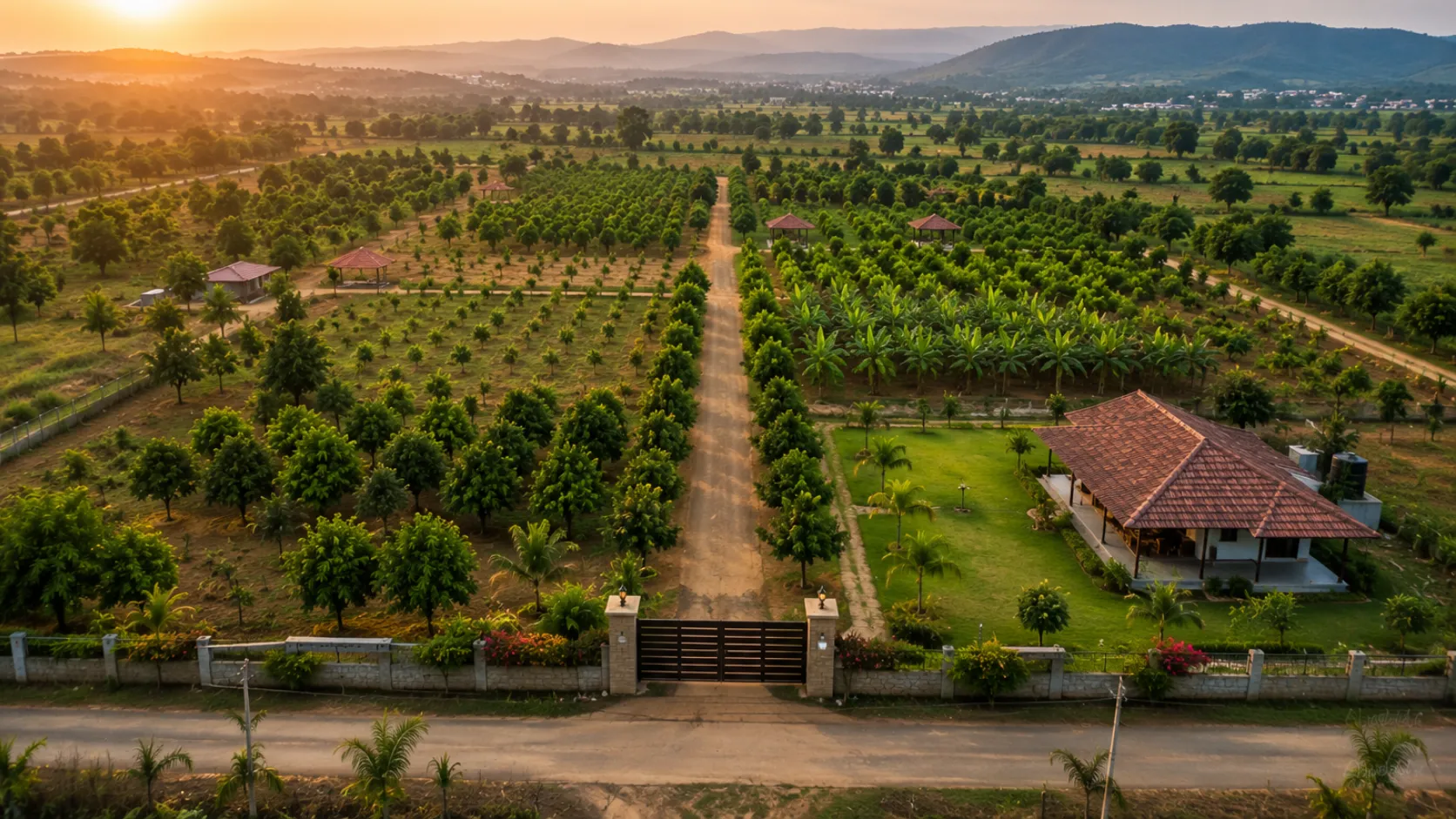
Interest in sustainable farmland has grown among professionals who want land that is actively managed rather than left idle. That’s why searches like farm land for sale near Bangalore and managed farmland have become more common in recent years.
If your goal is truly sustainable farming (not just land ownership), clarify three things before you buy:
Who will operate the farm, and what experience do they have
Which sustainable agriculture practices will be followed and documented
How soil, water, and input use will be monitored across seasons
Some buyers also try a farm stay near Bangalore before committing. That hands-on exposure helps you understand labour realities, water constraints, and seasonal shifts that are easy to miss during short visits.
Conclusion
The Green Revolution reshaped India’s economy by combining policy, technology, and farmer-led efforts to strengthen food security and rural growth. Its legacy still encourages innovation and self-reliance, reminding us that agriculture thrives when it protects the future along with the harvest. Sanctity Ferme carries this spirit forward on restored quarry lands! Explore life at SF and book a call today.
FAQs
What are the main sustainable farming practices?
The most common sustainable farming practices include soil health building, efficient irrigation, nutrient management based on soil testing, crop rotation, and IPM-based pest control.
How does sustainable farming benefit farmers?
Sustainable farming can reduce input waste, improve soil fertility, and stabilise yields across difficult seasons.
Can sustainable farming increase crop yield?
Yes, it can - especially when soil structure, organic matter, and water efficiency improve. Yield gains often appear over multiple seasons rather than immediately.
What are the methods of sustainable farming?
Sustainable farming methods include cover cropping, reduced tillage, drip irrigation, precision nutrient application, crop rotation, IPM, agroforestry, and responsible livestock integration. Hydroponics and aquaponics also serve as sustainable farming solutions.