What is Agricultural Land and its Types
Discover practical gardening advice, expert landscaping tips, and inspiration to help you make the most of your outdoor space.
Sanctity Ferme Team
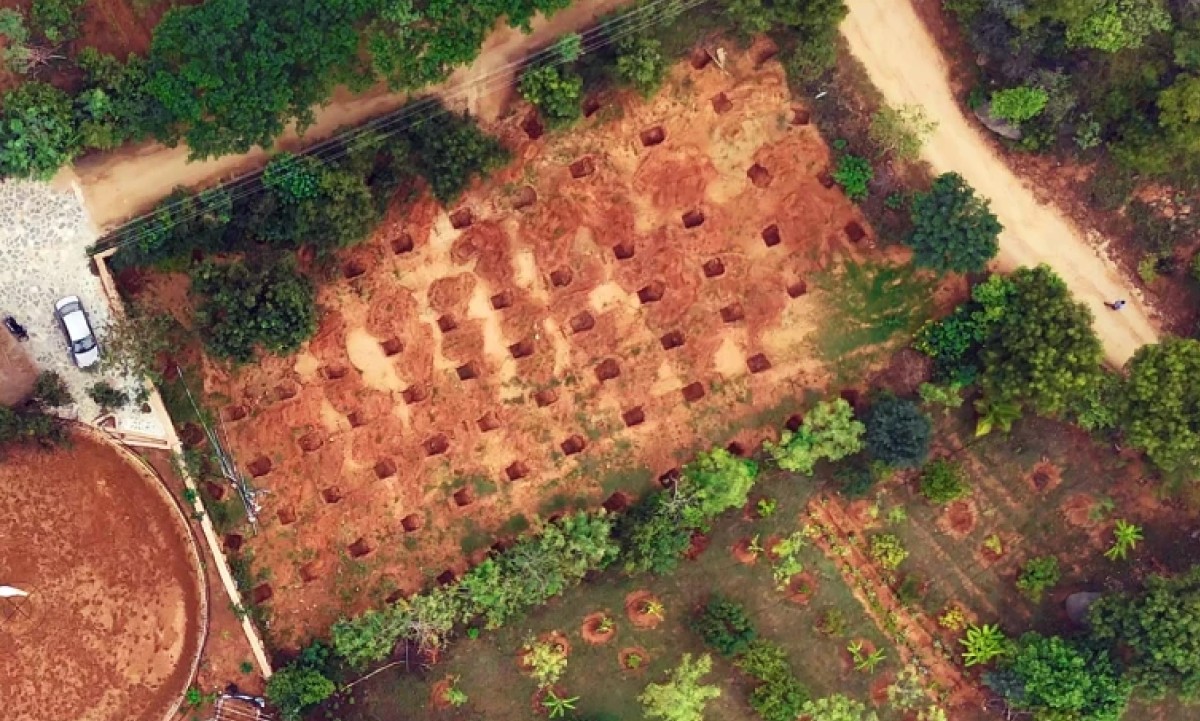
Agricultural land is the space used primarily for crop cultivation and allied activities. They are typically classified by use (cropland, fallows, and pasture), irrigation status, and cropping intensity, with remote‑sensing and statistical systems jointly tracking changes over time in India and globally. The main types of agricultural land commonly discussed in India include irrigated and rainfed cropland, single and multiple crop systems across Kharif, Rabi and Zaid seasons. It includes land kept fallow for soil recovery, alongside permanent pastures where practiced regionally.
This overview explains what agricultural land is, how it is classified in practice, how “types of agricultural land” are operationally defined, and why India’s patterns reflect both agro‑ecology and land administration realities.
What Is Agricultural Land
In land‑use science, agricultural land is generally defined as land under cropland and grassland uses managed for agricultural production. It is often enumerated as arable land, land under permanent crops, and permanent meadows/pastures in statistical systems aligned with FAO conventions. Remote‑sensing and national statistics map cropland extent and intensity over time to distinguish cultivated areas, fallows, and transitions to or from other land covers. This underpins “what is agricultural land” in empirical monitoring.
Did You Know
|
Indian Context And Data Systems
India’s land-use information blends administrative records with statistical and satellite-based land-use and land-cover products. These datasets delineate cropped area, cropping intensity, and long-term land-use transition patterns at both national and sub-national scales. For regions witnessing growing interest in farm land for sale in Bangalore, such integrated data systems are particularly valuable.
The national LULC database for a decade shows expansion and contraction of cropland in different regions. Other than that, it also presents data on peri‑urban growth and shifts between single and multiple cropping systems, informing policy and planning for agricultural land in India.
Types Of Agricultural Land
The various categories of agricultural land are described below -
Arable Farmland
This is land set aside for seasonal crops like cereals, pulses, oilseeds, and vegetables. It’s usually flat or gently sloped, so tractors and other machines can work smoothly.
The soil tends to be deep, fertile, and drains well, with steady access to water.
Farmers switch crops each season and keep some stalks or straw on the field to protect and feed the soil, which helps keep yields steady.
Think of the wheat country across the Great Plains, or the well-watered rice paddies of Southeast Asia.
Orchards
An orchard is a long-term fruit farm planted in tidy rows - apples, citrus, mangoes, and more.
Trees are spaced so sunlight reaches the canopy, air can move through, and equipment can pass without damage.
Routine care includes watering, pruning, thinning the fruit, and using balanced pest control methods to keep trees healthy.
Well-known examples include Washington’s apple regions and Florida’s citrus groves.
Vineyards
Specialised perennial plantings for grape production, primarily for wine but also table grapes and raisins.
Vines are trellised in rows; slopes and aspect aid drainage and ripening.
Canopy management and careful harvest timing shape flavour and quality.
Notable regions span Napa Valley, Bordeaux, and other Mediterranean climate
Pasture And Rangeland
Picture open skies, waving grasses, and livestock moving as the day warms. These are the grazing grounds for cows, sheep, and goats, from rolling hills to wide, breezy plains.
The plant mix leans on grasses and clovers that fit the local rainfall and seasons.
Farmers move herds between paddocks so the grass can rest and bounce back stronger.
These landscapes quietly power everyday life by supplying meat, milk, and wool.
Mixed Farming Systems
Here, crops and animals share the same farm gate, and each side helps the other. It is a practical way to combat risks and get more from the land.
Manure feeds the soil, while stalks, husks, and straw circle back as animal feed.
Rotations, fodder plots, and simple composting keep costs down and soils healthier.
Many small and mid-sized family farms choose this path for steady, resilient incomes.
Fallow Fields
Sometimes the smartest thing to do is let the field rest. A planned break lets the soil catch its breath and rebuild.
Skipping a season helps store moisture and restore nutrients in the root zone.
Cover crops keep living roots in the ground, protect topsoil, and add organic matter.
A pause also breaks pest and disease cycles, which supports long-term productivity.
Plantation Estates
These are large, well-organised farms centred on a single high-value crop such as tea, coffee, rubber, or sugarcane.
Growing one crop makes planting, harvesting, and processing faster and more efficient.
Skilled labour and careful handling after harvest protect flavour, quality, and price.
You will find them across the tropics, from Darjeeling’s tea gardens to Brazil’s coffee regions.
Water-Managed Farmland: Dryland And Irrigated
It is the land defined by how it receives water, shaping crop choices and management.
Dryland relies on rainfall and soil moisture conservation. Drought-tolerant crops like millet are typical.
Irrigated fields use canals, wells, sprinklers, or drip lines. They occupy a smaller share of global farmland. But they contribute a disproportionately large share of food output.
Controlled-Environment Farms
Production under protected or soilless systems to fine-tune climate and nutrition.
Greenhouses use glass or plastic structures to manage temperature, humidity, and light for crops like tomatoes, cucumbers, and flowers.
Hydroponics (and related systems like NFT and aeroponics) grow plants without soil, delivering nutrients in water with markedly lower water use than conventional fields.
Terraced Hillsides
Stepped fields carved into slopes to slow runoff, control erosion, and make steep land arable.
Stone or earthen risers retain soil and water on each bench.
Suited to rice, tea, and diverse hill crops in high-rainfall regions.
These landscapes are both highly functional and visually striking.
Types Of Agricultural Land In India
Terraced regions: The Northeast and sections of the Western Ghats showcase iconic rice and tea terraces adapted to steep terrain.
Arable heartlands: The alluvial plains of Punjab and Haryana support large-scale wheat and rice cultivation.
Fruit belts: Himachal Pradesh’s temperate valleys nurture apples, while Uttar Pradesh is renowned for vast mango orchards.
Grazing landscapes: Semi-arid grasslands in Rajasthan and Gujarat sustain major cattle and sheep populations.
Plantation zones: Assam and Kerala lead in tea; Karnataka stands out for coffee.
Holdings, Equity And Structure
India’s operated holdings are highly fragmented, with international comparisons highlighting very small average farm sizes and equity concerns in ownership distribution relative to developed regions.
Management strategies, access to inputs, and market linkages vary sharply by farm size and water availability. These differences are especially relevant in the context of managed farmlands near Bangalore, where consolidation of operations and professional management models are often positioned as responses to fragmentation.
Cropping Systems And Intensity
Cropping intensity reflects how many crops are harvested annually per unit of net sown area, with higher intensity linked to irrigation infrastructure, proximity to markets, and agro‑ecological suitability. Recent Indian case studies apply Sentinel‑2 multi‑temporal data to quantify cropping intensity and seasonal patterns across arid and semi‑arid zones, illustrating the operational classification that farmers and planners use.
For agriculture land, Bangalore, peri‑urban expansion in Bengaluru Rural has been documented using geospatial change detection, showing conversion pressures on cropland and fragmented agricultural land mosaics. These pressures often interact with water constraints and access corridors, shaping location‑specific viability and the price of agricultural land in the Bengaluru periphery.
Price Drivers Of Agricultural Land
The price of an agriculture farm house is driven by water security, soil productivity, access roads, proximity to mandis and urban markets, and expectations of conversion or amenity development. Remote‑sensing evidence of peri‑urban expansion correlates with cropland conversion, which is often capitalised into land values even when policies intend to preserve agricultural use.
Comparative reviews show classification systems and cropland maps vary in legend, resolution, and update frequency, requiring care when synthesising “total agricultural land in India” across sources. A global synthesis underscores definitional differences between cropland, agricultural land, and mixed systems, and recommends harmonised LULC classes for consistent national reporting.
Governance And Land Administration
Land administration in India emphasises improving records, interoperability, and institutional capacity so that land‑use categories and rights can be reliably tracked and enforced. For buyers and planners, this means that clarity on title, use rights, and compliance is as crucial as agronomy in determining the function and value of agricultural land categories on the ground.
Implications For Stakeholders
For farmers and investors, the actionable “types” are less about labels and more about matching irrigated or rainfed potential to crop calendars, market linkages, and risk management under climate variability.
For policymakers, the dual imperative is to maintain harmonisation across administrative records and remote-sensing datasets while safeguarding peri-urban agricultural functions where they remain viable. This balance becomes critical in areas with rising demand for land for sale in Bangalore.
Notes
The guide highlights the value of time‑series imagery and multi‑source data fusion to separate cropland, fallow, and pasture, which tightens estimates of total agricultural land in Karnataka across years. Emerging global datasets integrate FAO statistics and agro‑ecological zoning to benchmark India’s agricultural land footprint against other regions, though national administrative sources remain vital for ground truth.
Conclusion
Defining “what is agricultural land” in India blends land‑use science with administrative practice: cropland, fallows, and pasture organised by irrigation and seasonality, measured through harmonised statistics and satellite data. Around Bengaluru, peri‑urban dynamics make due diligence on use, water, and permissions central to decisions about agriculture land for sale in Bangalore and the realistic functions of agricultural property over time.