Everything You Need to Know About Mushroom Farming on Your Plot
Discover practical gardening advice, expert landscaping tips, and inspiration to help you make the most of your outdoor space.
Sanctity Ferme Team
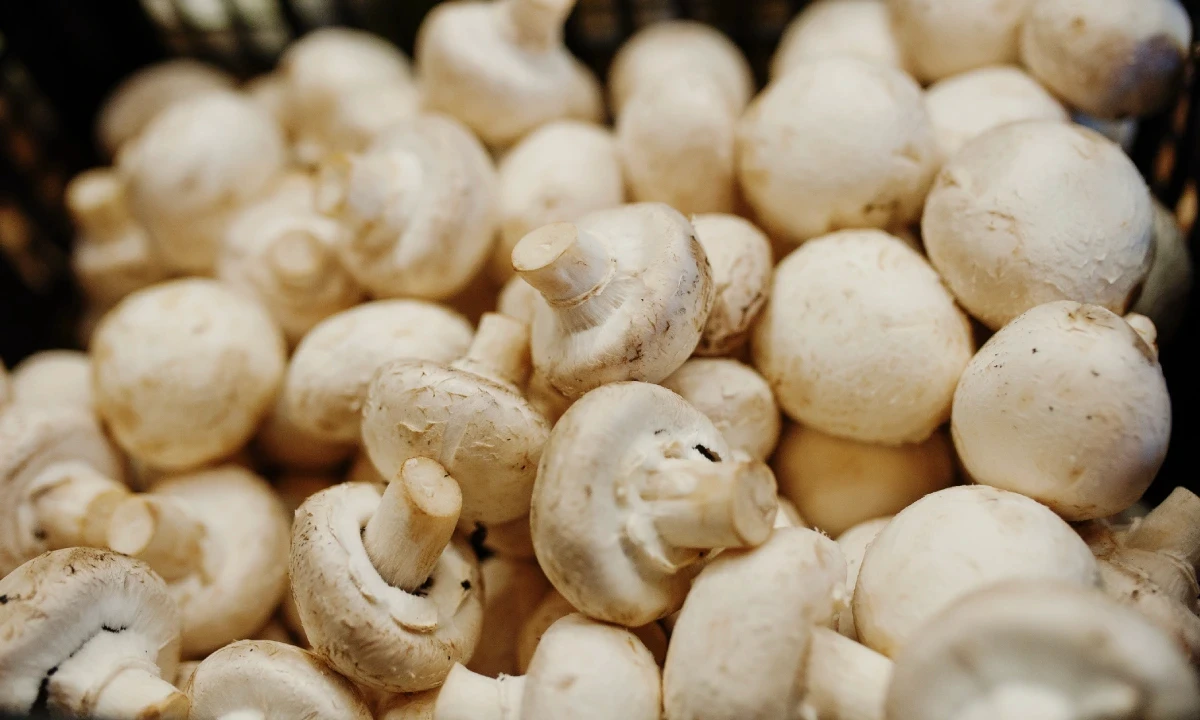
When people think about what to grow on a farm plot near Bangalore, the mind usually goes to trees and seasonal crops. Mushroom farming rarely enters the picture — and that is a genuinely missed opportunity.
Mushrooms are one of the fastest-turning, lowest-footprint crops you can produce on a managed farmland. They grow in weeks, not months. They need no soil. And they can be cultivated on waste material — paddy straw, wheat straw, sawdust — that would otherwise be burned at the field edge or simply discarded. For a farmland owner looking for an early income crop while timber trees and fruit orchards take their time to mature, mushroom cultivation in India is worth understanding properly.
What Is Mushroom Farming and Why Is It Gaining Momentum?
Mushroom farming — also called mushroom cultivation or mushroom agriculture in India — is the controlled growing of edible fungi on prepared organic substrates in shaded, humidity-managed spaces. The setup is simpler than most people expect, and the learning curve is shorter than almost any other crop.
India produces over 73% of its mushrooms as button mushrooms, with oyster mushrooms accounting for around 16%, milky mushrooms 3%, and the remainder split across paddy straw, shiitake, and other varieties. Demand has risen sharply as urban consumers grow more aware of mushrooms' nutritional profile — high protein, low fat, rich in B vitamins, selenium, and beta-glucans. This is not a niche trend. It is a sustained shift in how Indian urban households shop and eat.
For farmland owners in Karnataka and Tamil Nadu, the Bangalore and Hosur markets represent immediate access to restaurants, cloud kitchens, supermarket chains, and health food buyers — all of whom pay significantly better prices than a mandi ever will. Oyster mushroom selling prices typically range from ₹120 to ₹250 per kg in South Indian urban markets, depending on quality and channel. That spread matters, and it rewards farmers who can supply directly.
Can Mushroom Farming Be Profitable?
Yes — and the numbers are clear about why.
Oyster mushroom farming is widely recommended as the entry point for beginners because it requires minimal setup, grows on wheat straw, and completes a full crop cycle in four to six weeks. A two-room setup of 10×10 sq. ft. each can produce approximately 4,500 kg of oyster mushrooms across nine crop cycles per year — mushrooms are not grown through the peak summer months, so the math accounts for that. At ₹120 per kg, that translates to gross income of around ₹5.4 lakh, with net returns of approximately ₹4.3 lakh after total setup and running costs of around ₹1.1 lakh.
That is a profit margin of nearly 80%. It is difficult to find many agricultural crops that come close to that figure.
At a commercial scale — a 640 sq. ft. mushroom shed with 750 grow bags — income per crop cycle ranges from ₹22,500 to ₹45,000, with net profit of ₹12,000 to ₹35,000 per cycle. Recovery of initial investment typically takes three to six months for oyster setups. Not three years. Not five. Three to six months.
For farmland owners who already have a plot with shaded structures or an existing farm shed, the setup cost falls even further. Mushroom cultivation essentially converts underused farm infrastructure into a productive income unit — one that starts paying back almost immediately.
Which Mushroom Is ₹30,000 per kg?
The mushroom that commands the highest prices in India is not a cultivated variety. It is the wild Himalayan variety known as Guchhi — or morel, botanically Morchella esculenta — which can fetch ₹20,000 to ₹30,000 per kg in premium markets and export channels. The price reflects its extreme rarity and the fact that it grows only in specific forest conditions in Himachal Pradesh, Uttarakhand, and Jammu, and cannot currently be commercially cultivated at any meaningful scale. It is a forager's crop, not a farmer's crop.
For practical mushroom farming in India — particularly in the Bangalore–Hosur–Shoolagiri belt — the commercially viable varieties are oyster, button, milky, and increasingly shiitake. These can realistically return ₹120 to ₹500 per kg depending on variety, quality grading, and whether you are supplying hotels and restaurants directly or moving volume through a market channel.
What Is the Price of 1 kg of Mushroom Seeds (Spawn)?
Mushroom spawn — the functional equivalent of seeds in conventional farming — typically costs ₹70 to ₹120 per kg in India for oyster and milky mushroom varieties. Button mushroom spawn tends to run slightly higher. One kg of spawn can yield anywhere from 10 to 20 kg of mushrooms, depending on variety, substrate quality, and how well the growing environment is managed.
Spawn is available through ICAR, Krishi Vigyan Kendras, and private suppliers across Karnataka and Tamil Nadu. The substrate — straw, sawdust, or cotton waste — is often available cheaply or freely on a farm, particularly if the plot includes paddy or wheat cultivation. This input cost advantage makes mushroom cultivation in Karnataka and Tamil Nadu genuinely attractive for farmland owners who are already producing agricultural waste that would otherwise go nowhere useful.
How Much Money Is Required for Mushroom Farming?
Startup costs vary considerably by scale and variety:
Scale | Setup Cost | Monthly Running Cost | Annual Net Return (approx.) |
Small (2 rooms, 10×10 ft) | ₹40,000–₹50,000 | ₹7,500/crop cycle | ₹3–4.5 lakh |
Medium shed (640 sq. ft., 750 bags) | ₹29,000–₹35,000 | ₹10,000–₹15,000/cycle | ₹1–2 lakh |
Commercial unit (temperature-controlled) | ₹1.5–3 lakh | ₹30,000–₹50,000/month | ₹5–10 lakh+ |
Oyster mushroom farming is the lowest-barrier entry point by some distance. It requires no cold storage, tolerates ambient humidity in South Indian conditions, and can be started in a bamboo shed or an existing farm outbuilding with an initial outlay as low as ₹30,000 to ₹50,000. There are very few productive farming activities you can start for that figure.
Government support is available and worth pursuing. ICAR's National Research Centre for Mushroom at Solan, state horticulture departments, and KVK programmes offer training, subsidised spawn, and in some cases startup capital for mushroom farms in the Hosur and Bangalore regions under schemes like RKVY and ATMA. If you are setting up a unit, it is worth making a call to your local KVK before you spend anything.
Oyster Mushroom Farming in India: Why It Suits This Region
The Shoolagiri–Hosur belt has consistent humidity and moderate temperatures for most of the year — conditions that make it well-suited to oyster mushroom production without heavy climate control investment. The proximity to paddy and sugarcane-growing regions means agricultural waste substrate is available locally at low cost, sometimes for nothing at all.
Oyster mushrooms thrive between 20 and 30°C — which aligns well with the ambient conditions in this region from September through April, giving a practical production window of seven to eight months per year without air conditioning. During peak summer months, a small evaporative cooling setup or an improved shade structure can push the season further if demand justifies it.
It is not the most glamorous aspect of farmland ownership. But it is one of the most practical early income strategies available in this geography, and it works.
Mushroom Farming as Part of a Managed Farm System
The real opportunity for a farmland owner is not a standalone mushroom shed sitting in a corner of the plot. It is integration — mushroom cultivation as one working part of a layered farm system.
A mushroom unit on a managed farm plot near Bangalore earns in the short term while tree crops establish in the medium term. The spent mushroom substrate — the straw left after harvest — is an excellent organic soil amendment for fruit trees nearby, improving water retention and microbial activity in the root zone. What leaves the mushroom shed feeds the orchard. Nothing on the farm becomes waste, because nothing has to.
This layered logic — early income from mushrooms, medium-term returns from fruit trees, long-term value from timber — is how productive managed farmlands are designed. Every element supports another. Every crop has a role that goes beyond its own yield.
Sanctity Ferme's farm land for sale near Bangalore is built around exactly this kind of multi-yield thinking across 300+ acres near Shoolagiri. The managed farmlands near Bangalore are designed so the land is working for you from year one — not year five, when the mango trees finally come in.
If you want to understand what a properly planned farm plot looks like — one where mushroom cultivation, fruit orchards, and timber species genuinely fit together as a system rather than sitting awkwardly beside each other — a site visit is the clearest starting point.