Miyawaki Forest Method: Grow a Dense Forest in 2–3 Years on Your Farmland
Discover practical gardening advice, expert landscaping tips, and inspiration to help you make the most of your outdoor space.
Sanctity Ferme Team
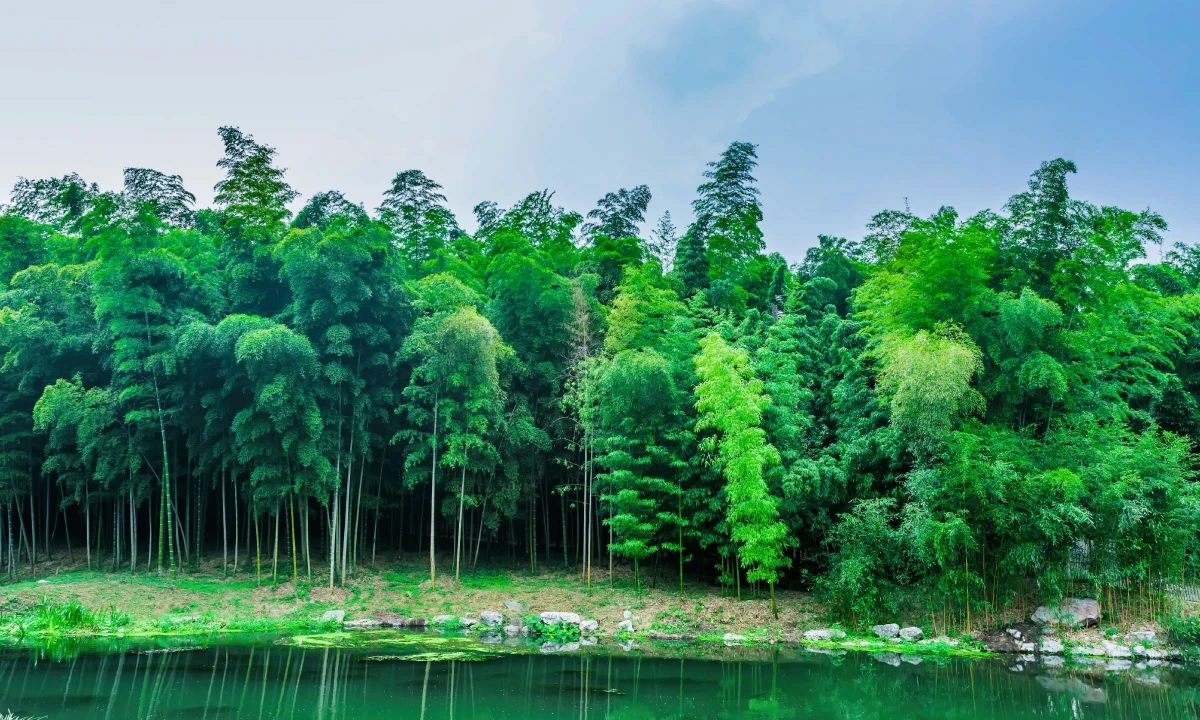
Most reforestation efforts ask for your patience across decades before showing any meaningful result. The Miyawaki method changes that equation entirely — and for farmland owners, that difference is worth paying attention to.
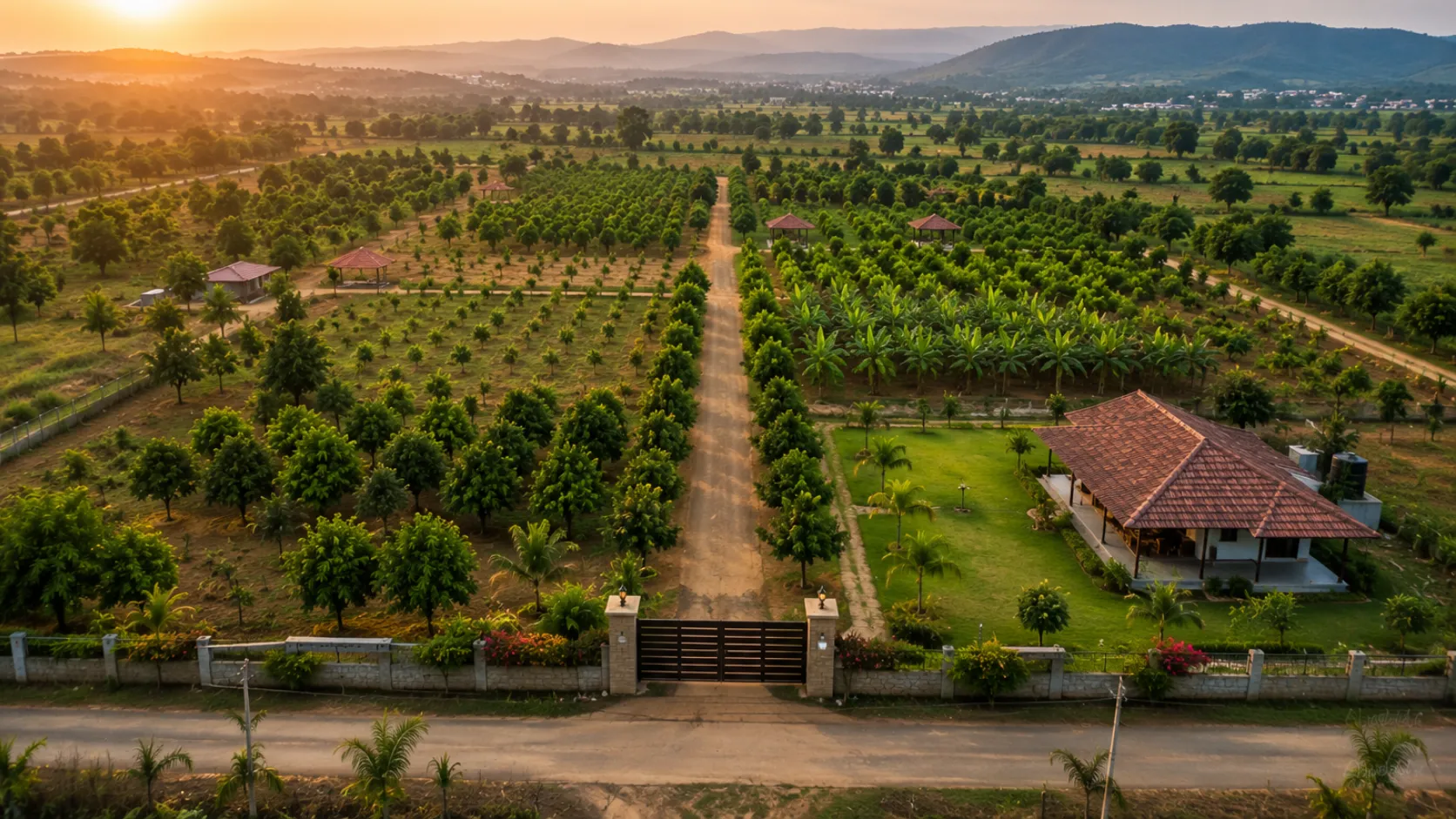
If you own a farm plot near Bangalore or are exploring farmland for sale near Bangalore, the Miyawaki plantation method is one of the most compelling ways to transform a section of your land — quickly, affordably, and in a way that lasts.
Here is what it is, how it works, and why it matters for Indian farmland owners right now.
What Is the Miyawaki Method of Forest?
The Miyawaki method was pioneered by Japanese botanist Akira Miyawaki — a man who spent decades studying natural forest ecosystems and then asked a simple question: what if you could replicate them deliberately, in a fraction of the time?
The answer he arrived at was dense, native planting. Two to four different indigenous species packed into every square metre of land, mimicking the way a natural forest actually organises itself. The technique is sometimes called the Pot Plantation Method, and it has been used across Japan, Europe, and now — with growing momentum — across Indian cities from Mumbai to Bengaluru to Prayagraj.
India's Prime Minister spoke about it on Mann ki Baat, citing the story of a Kerala teacher who used the Miyawaki method to turn a barren piece of land into a thriving miniature forest called Vidyavanam. The story spread because it was not exceptional — it was repeatable. That is the point.
The core insight behind the method is elegantly simple. When you plant the right native species close together, they compete for light, structurally support each other, and grow at a pace that naturally seeded forests simply cannot match.
What Is Meant by Miyawaki Forest?
A Miyawaki forest is not a garden. It is not a plantation in the way most people picture one. It is a self-sustaining, multi-layered native forest — built on a compressed timeline.
The process starts with identifying native trees of the region and dividing them into four functional layers: shrub, sub-tree, tree, and canopy. The soil is then analysed and enriched with biomass to improve water retention and nutrient levels. A mound is built, saplings are planted at three to five per square metre, and the ground is covered with a thick layer of mulch that holds moisture and suppresses weeds in the critical early months.
After that, the forest largely takes over its own management. Within two to three years, you stop watering. The canopy closes in. The undergrowth fills out. The ecosystem begins maintaining itself — the way a forest always has.
The numbers that characterise the method are striking: plant growth up to 10 times faster than conventional methods, and the resulting plantation up to 30 times denser. For a farmland owner who wants visible, meaningful ecological transformation within a few years of purchase — not a few decades — this delivers.
Why the Miyawaki Plantation Method Works So Well in South India
The Shoolagiri hills region, where Sanctity Ferme's managed farmlands sit, has rich native flora and a tropical climate that is genuinely ideal for dense planting. This matters more than it might seem, because the Miyawaki method is entirely dependent on native species — and South India has no shortage of them.
At a Miyawaki project in Anekal, Bengaluru, a small plot was planted with 6,300 saplings of native varieties — papaya, guava, seethaphal, jasmine, badam, and others. Saplings that arrived at under two feet tall grew into adult trees reaching six to seven feet within a short window. The transformation was not slow or subtle. It was visible.
The science confirms what practitioners on the ground are seeing. A study measuring carbon sequestration in Miyawaki forests aged 2, 4, and 5 years in Bengaluru and Palakkad found that annual growth rate of forest biomass increases significantly with age — a 2-year-old forest sequestered 5.28 Mg of carbon per hectare per year, while a 5-year-old forest sequestered over 33 Mg. A sixfold increase in just three additional years.
For any farmland owner thinking seriously about long-term ecological and land value outcomes, that trajectory is worth understanding.
What Are the Disadvantages of the Miyawaki Forest?
Every technique has trade-offs, and the Miyawaki method is no exception. It is worth being clear-eyed about the limitations before you begin.
When the same species are repeated at high density, the resulting forest can have limited genetic diversity — which makes it somewhat more susceptible to disease or pest pressure than a truly wild forest would be. The close spacing between trees can also restrict the movement of certain wildlife species that need more room to navigate. And the method is not universally applicable — it requires reasonable soil conditions and may underperform in areas with very poor soil quality or high erosion risk.
The first two to three years also demand consistent attention. Regular watering, weeding, and mulching are non-negotiable during establishment. This is the period of highest input, before the forest transitions to self-management.
For a managed farmland, none of this is particularly daunting. The farm management team handles early-stage maintenance as part of the overall plot care programme. After year three, the Miyawaki patch largely looks after itself — and your involvement can drop to occasional observation and appreciation.
What Are the 4 Types of Forest in India?
Understanding India's natural forest types matters for one practical reason: it determines which species belong in your Miyawaki plantation. The method only works well when the species you plant are genuinely native to your region — not imported, not exotic, not chosen for aesthetics alone.
India's forests are broadly classified into four types:
Tropical Wet Evergreen Forests are found along the Western Ghats, northeastern India, and the Andaman Islands — characterised by tall, dense canopy, high rainfall, and year-round greenery.
Tropical Dry Deciduous Forests are the most widespread type in India, covering large parts of the Deccan plateau, central India, and Tamil Nadu. These forests shed leaves in the dry season and are particularly well-suited to the Miyawaki method because their native species are already adapted to variable rainfall and seasonal stress.
Montane or Sub-Alpine Forests occur at higher elevations in the Himalayas, Nilgiris, and other hill ranges. Species here grow more slowly and are generally less suitable for dense Miyawaki plantation.
Thorn Forests and Scrublands are found in semi-arid zones across Rajasthan, parts of Karnataka, and Tamil Nadu. Hardy species from these zones — babool, khejri, neem — can anchor a Miyawaki plantation even on marginal land that other approaches struggle with.
For farmlands near Shoolagiri and the broader Bangalore rural belt, Tropical Dry Deciduous species are the most relevant and reliable choice. Neem, peepal, amla, drumstick, tamarind, and arjuna all thrive here and respond strongly to the Miyawaki planting method.
Environmental and Land Value Benefits for Farmland Owners
Beyond the ecological transformation, the Miyawaki method produces benefits that are directly tangible for your farm and your investment.
Miyawaki forests reduce air and water pollution, prevent soil erosion, and actively increase local biodiversity. Large forests developed through this technique can lower the local temperature by 4 to 7 degrees Celsius — a number that sounds modest until you experience a shaded, cooled microclimate on a May afternoon in the Deccan.
For a weekend farm or a farmstay property, that temperature reduction is not incidental. It makes outdoor spaces genuinely more comfortable and usable for longer periods through the year.
The species mix typically includes fruit-bearing trees like mango, tamarind, and amla alongside medicinal plants like neem, tulsi, and brahmi, and timber species like teak, mahogany, and sheesham. A well-designed Miyawaki patch does not sit apart from the rest of the farm — it integrates with it. It improves soil biology for adjacent cultivation areas, creates natural windbreaks, supports the pollinators that benefit your crops, and adds a layer of biodiversity that strengthens the entire plot.
It also simply looks extraordinary. A dense, living forest — established in two to three years on land you own — is something that visitors notice and future buyers value immediately.
At Sanctity Ferme, sustainability is central to how every farmland project is developed. With over 5 lakh trees already planted across 300+ acres near Shoolagiri, the ecosystem and soil conditions are already well-prepared for Miyawaki-style dense planting on individual plots. The native species diversity in this region makes species selection both straightforward and ecologically sound.
Starting a Miyawaki Forest on Your Managed Farmland
The process is far more accessible than most people initially assume.
You do not need a large plot to begin. A corner section of 200 to 500 sq. ft. is entirely sufficient. You select native species suited to your microclimate, prepare the soil with compost and organic matter, plant at high density with a mulch layer, and water regularly through the first two years. That is essentially the full commitment of the establishment phase.
By year three, the trees are largely self-sustaining and approaching their full height. After that, your involvement drops significantly. The forest maintains itself — and continues improving the land around it for decades.
If you want to see what this looks like in practice — on actual farmland, in the South Indian climate, at different stages of establishment — walking the land at Sanctity Ferme's projects near Shoolagiri is the clearest answer. No description quite replaces standing inside a three-year-old Miyawaki forest and seeing how much has happened.
Sanctity Ferme's farm plots near Shoolagiri, 90 minutes from Bangalore via NH44, are designed for exactly this kind of purposeful, nature-forward ownership. Explore life at Sanctity Ferme and talk to the team about what is possible on your specific plot.
A dense forest in 2 to 3 years. On land you own. That is not a promise — it is just what the Miyawaki method does, consistently, when it is done right.