How Organic Farming Works
Discover practical gardening advice, expert landscaping tips, and inspiration to help you make the most of your outdoor space.
Sanctity Ferme Team
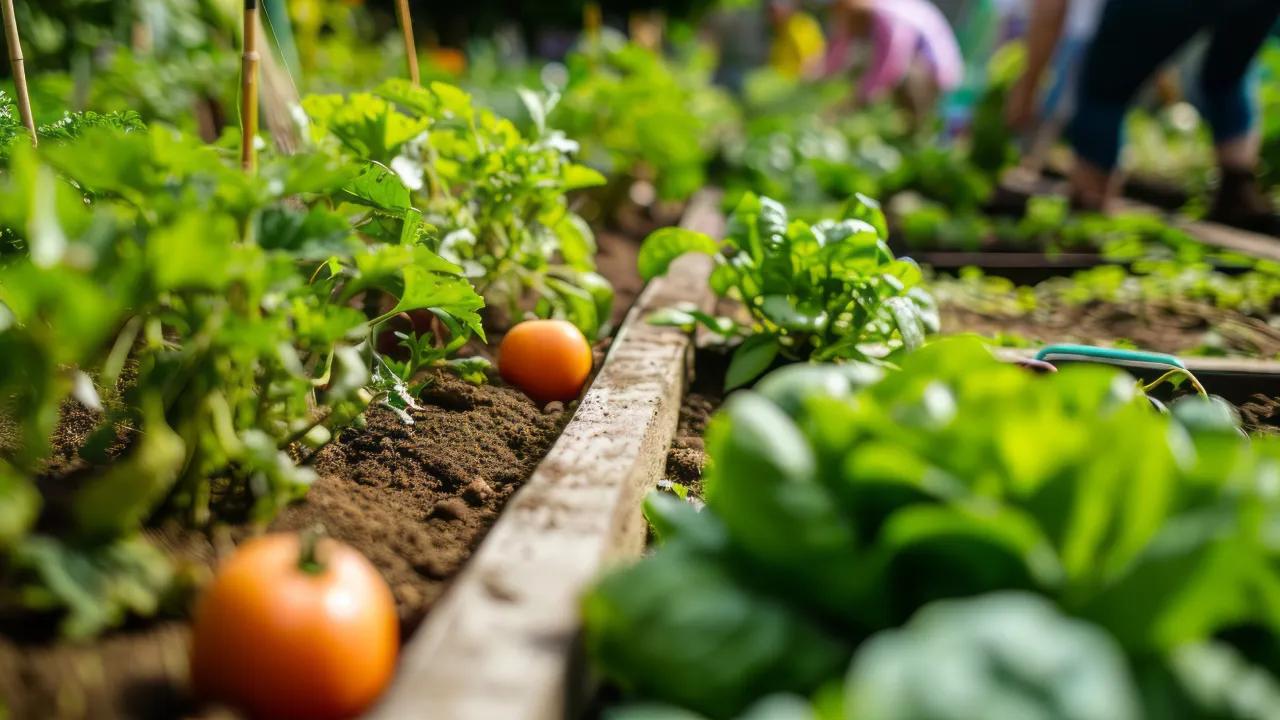
Agriculture today is shaped by growing concerns about soil degradation, chemical residues in food, climate uncertainty, and long-term food safety. These issues are closely linked to how crops are grown and how land is managed. Organic farming is often discussed, but it is frequently misunderstood. Many people see it as a label or certification, rather than a complete farming system.
As a matter of fact, organic farming is an organised method that aims at the health of the soil, ecological stability, and maintenance. It does not offer a fast solution, it is not an easy way out, and it does not guarantee immediate results. This blog describes how organic farming works, the concept behind it, the various types that are carried out, and more.
What Is Organic Farming?
Organic farming is an agricultural system that functions in respect to nature rather than artificial chemicals. It is not aimed only at increasing the yield of crops, but at creating a farming system that will be productive and environmentally sustainable in the long run.
The core objectives of organic farming include:
Improving soil health through organic matter and biological activity
Maintaining ecological balance within the farm ecosystem
Producing food in a sustainable way over the long term
Unlike conventional farming, organic farming does not rely on chemical fertilisers or pesticides to fix problems after they appear. Instead, it focuses on prevention through thoughtful soil management, planned crop rotation, and biological pest control methods. It is also different from natural farming, which aims at minimising inputs to almost zero. Organic farming permits certified organic materials like compost, biofertilisers, and even natural pest control preparations to ensure constant production.
Biological cycles are at the heart of organic farming:
Returning organic material to the soil
Bacteria and fungi decompose this material into nutrients that can be taken up by plants.
Nutrient cycling takes place naturally through interactions between soil and plants
The last few years have seen a good boost for organic farming across India. The nation is home to 30% of total organic producers in the world. The popularity of organic farming practices has been pretty popular around Bangalore. This has prompted a rising number of individuals interested in organic agriculture to personally visit farm land for sale in Bangalore.
Core Principles of Organic Farming
Organic farming is governed by a number of concepts that ensure the way farms are planned, managed and maintained. These principles of organic farming are effective in ensuring that they are productive and also protecting soil, ecosystem and long-term farm viability.
Soil as a Living Ecosystem
The concept of organic farming considers soil as a living ecosystem rather than a growing medium. It is composed of microorganisms (bacteria, fungi, earthworms, and insects) that break down the organic material and make it available to plants in the form of nutrients. This biological activity is fed on by compost, green manure and crop residues and enhances the structure of the soil.
One of the major principles of organic farming is that crop yield is never emphasised over soil health. Nourishment of the soil, microorganisms and structure enhances crops and makes them stronger and resilient to withstand environmental changes. The yield is regarded as a product of good soil and not a process that is imposed by external factors.
Ecological Balance
Organic farming works with nature rather than trying to control it aggressively. Insects, birds, and microorganisms all play roles in regulating pests and supporting plant growth. Organic systems do not seek the eradication of all pests. But it creates a balance.
Biodiversity is a part of the function. Several crops, natural vegetation and integrated farming systems offer resilience. A diverse ecosystem lowers the chance of outbreaks by pests and enables farms to better deal with environmental stress.
Prevention Over Treatment
Organic farming methods focus on preventing issues before they emerge. A healthy soil, correct crop rotation, the right choice of plants and the correct distance between them all help ensure that pests, diseases and nutrient deficiency are minimal.
One of the important measures to prevent this is focusing on farm designs. Field orientation, water manipulation, cropping sequence and habitat need to be planned to avoid recurring issues. This reduces the need for reactive interventions later.
Sustainability and Long-Term Productivity
Organic agriculture values long-term soil fertility over short-term yield maximisation. Practices are selected for their long-term (not season-specific) impact.
Chemically intensive systems may immediately work, but ultimately decline the productivity of your soil. The goal of organic farming is a steady yield and also increasing the capacity of the land to produce future crops.
Types of Organic Farming
There are two types of organic farming. Both can lower the environmental footprint and enhance the health of the soil. But the use of inputs is different.
Integrated Organic Farming
Integrated organic farming involves a combination of the traditional organic farming activities and some external organic inputs. Compost, green manures, biofertilizers and naturally approved pest remedies are some of the ways farmers help their crops grow. The objective is to improve efficiency in an environmentally friendly way.
This method is commonly used by transitioning farms or those struggling with difficult conditions. Inputs are closely controlled so that soil health and ecological stability are not put in jeopardy.
Pure Organic Farming
Pure organic farming is completely free of any synthetic chemicals and dependent on nature for its fertility and pest-control needs. Compost, farm yard manure, crop residues and biopreparations are the keystone of this system.
This strategy requires sound planning and even more patience, since returns may take some time before they eventually stabilise. When done well, it enhances the fertility of the soil over time.
Preparing the Land for Organic Farming
Preparing land for organic farming is a foundational step that determines how well the system will function in the long run. The focus is on reversing chemical dependence, restoring soil life, and understanding the land before expecting stable yields.
This preparation is especially important for land that supports long-term uses beyond crop production, including experiential models such as a farm stay near Bangalore, where soil health and environmental safety directly affect usability.
Transitioning from Conventional to Organic Farming
The transition should happen in a stepwise manner. It should begin with diminishing stress on the soil and its crops.
Detoxification Period and Residue Breakdown
Chemical residues of old inputs cannot be removed instantaneously. Microbial activity and the addition of organic matter over time help to degrade those residues and make them less damaging to soil biology.
Improving Soil Structure and Fertility Naturally
The use of organic fertilisers such as compost and green manure improves the aggregation and porosity of soil. This enables greater root growth, reduced pest/disease problems and increased water retention.
Importance of Crop History and Land Assessment
Knowledge of the past history of cropping and the application of chemicals can assist in the transition planning. Decisions concerning changes and recovery schedules are made using soil tests and field observations.
How Soil Fertility Is Managed Without Chemicals
Organic farming enhances the fertility of soil using biological means as opposed to synthetic ones. The goal is to develop a system through which the nutrients will be recycled and supplied in a steady manner.
Composting and Organic Manure
Compost and organic manure provide the nutrients in low-release forms, which are equivalent to the uptake by plants.
The nutrient availability is enhanced through farmyard manure, vermicompost and plant-based compost.
In addition to nutrition, they improve the soil structure, microbial activities and the water holding capability.
These are the inputs that form the backbone of organic farming methods.
Green Manuring
Green manuring is the act of cultivating certain crops with the sole aim of enhancing soil fertility.
Leguminous crops fix atmospheric nitrogen through root-associated bacteria
They contribute to the organic matter of the soil and enhance soil structure when absorbed into the soil.
The practice also helps in the protection of soil during fallow periods.
Crop Residue Management
Organic farming does not remove or burn crop residues but puts them back to the ground.
The residues serve as a surface mulch and decrease the loss of moisture.
They also add organic carbon and nutrients as they break down.
This facilitates long-term soil health and soil microbial activity.
Biofertilisers
Biofertilisers have useful microorganisms that nourish plants.
They break down nutrients into usable forms for plants.
Some also enhance the growth of roots and the well-being of plants.
Their role is supportive rather than corrective.
Seed Selection and Crop Planning in Organic Farming
Seed choice and crop planning directly affect crop resilience and system stability. Organic systems depend on seeds that can perform well without chemical support.
Seed Resilience and Local Adaptability
Local adaptation of the seeds is better under organic management. They demonstrate greater resistance to pests, diseases and climate stress.
Crop Rotation as a Planning Tool
Crop rotation prevents nutrient exhaustion and disrupts pest and disease cycles. Different crops contribute varying residues and nutrient demands. That helps maintain soil balance.
Intercropping and Mixed Cropping Systems
Growing multiple crops together improves resource efficiency.
It reduces pest pressure naturally.
It spreads risk and improves yield stability.
These systems strengthen ecological balance on the farm.
Natural Pest and Disease Management
Organic farming treats pests as indicators of system health rather than enemies to eliminate. They are not killed with harsh chemicals. The focus is on controlling their population and striking a balance.
Biological Pest Control
Beneficial insects regulate pest populations naturally.
Predators and parasites reduce pest numbers.
Flowering plants and habitat areas support these beneficial organisms.
This creates long-term control without chemical intervention.
Botanical and Natural Inputs
Spraying and oiling are done when pest pressure becomes unacceptable.
Neem, garlic and herbal extracts serve as repellents.
They work properly only if the timing and dosage are correct.
They are supportive solutions, not primary ones.
Cultural Practices
Positive cultural practices minimise the prevalence of pests and diseases.
Proper spacing improves airflow.
Pest population peaks can be avoided by planting in a timely manner.
Clean fields also reduce breeding areas for pests.
Weed Management Without Synthetic Herbicides
Some weeds help safeguard soil and maintain biodiversity. Organic growers are concerned with keeping weeds at levels manageable for the crop rather than eliminating them.
Mechanical and Manual Methods
Physical weed control remains essential.
Early hand weeding and mechanical devices are employed.
By preventing the formation of new seeds, future infestations are minimised.
With good timeliness, even weed-seeding pressure remains easy to handle.
Mulching and Cover Crops
Covering material reduces access to sunlight and prevents weeds from growing.
Decomposing organic mulches enhances the quality of soil.
Cover crops compete with weeds for sunlight to prevent their growth.
These techniques also serve to improve moisture control.
Water Management in Organic Farming Systems
Water management is tightly correlated with soil health in organic agriculture. It's a smart approach that saves plants and resources.
Soil Organic Matter and Water Retention
The holding capacity of soil is increased with increasing organic matter. This lowers the frequency of irrigation and shields crops during times of drought.
Efficient Irrigation Practices
There are no fixed irrigation schedules. It happens based on needs. Methods like drip irrigation reduce waste and nutrient leaching.
Preventing Runoff and Erosion
Mulching, green manuring and the right field arrangement decelerate water runoff. This conserves topsoil and stops loss of nutrients.
Water Quality Considerations
Soil biology and crop health are at stake when it comes to water quality. Fresh water prevents contamination.
Harvesting, Storage, and Post-Harvest Handling
Organic practices must continue beyond the field to protect crop integrity. Post-harvest handling plays a critical role in maintaining quality and trust.
Preventing Contamination After Harvest
Harvest tools and containers must be free from chemical residues. Even small contamination can compromise organic status.
Separation from Non-Organic Produce
Organic produce must be clearly separated during transport and storage. Mixing with non-organic produce is dangerous to certification and traceability.
Storage Conditions and Natural Preservation Methods
Appropriate temperature, ventilation and hygiene eliminate spoilage. The quality is also preserved by the natural methods of preservation without chemical agents.
Maintaining Organic Integrity Through the Supply Chain
Transparency, labelling and traceability maintain organic status. Each step should be organic up to the point when the product gets to the consumer.
Certification for Organic Farming in India
Organic farming in India is regulated under the National Programme for Organic Production. It is administered by the Ministry of Commerce and Industry. The programme sets the guidelines on organic production, certification schemes, and accreditation procedures of certification bodies. It also governs the use of the national India Organic logo on certified produce. These standards are in line with international organic standards that facilitate acceptance in both domestic and export markets.
The India Organic logo is allowed in farms that are in conformity with the norms stipulated under the National Programme on Organic Production and pass through inspection and verification. The certification makes sure that there is consistency in organic practices. It is an ongoing compliance process rather than a one-time approval.
Eligibility and Application Requirements
Any individual or organisation seeking a certification for organic farming in India must submit an application in the prescribed format along with the required fees. Before applying, the farm must already conform to organic crop production standards to reduce the risk of non-compliance during inspection.
The application must include:
A detailed organic production or handling system plan
Complete contact and operational details
Disclosure of previous certification attempts and outcomes
Records of any past non-compliance and reasons for reapplication
Additional information required to assess compliance
Fees and Inspection Process
As part of the certification process, the operator must pay the registration fee, one-time inspection fee, and applicable travel costs. Regular inspections and continuous adherence to standards are required to maintain certification status.
Yield, Cost, and Economics of Organic Farming
The economics of organic farming differ from conventional farming because the system prioritises long-term stability over immediate output. Financial performance depends on soil recovery, management quality, and market access rather than short-term yield maximisation.
In the initial years, organic yields may be lower compared to conventional systems. As soil fertility improves and biological processes stabilise, yields tend to become more consistent and resilient. The benefits of organic farming in the long run outweigh the initial difficulties.
Input costs follow a different structure. Organic farming reduces dependence on synthetic inputs but requires investment in organic matter management, biological inputs, and on-farm resource development. Over time, reliance on purchased inputs usually declines.
Labour requirements are generally higher, especially during transition. Activities such as compost preparation, manual weed control, and diversified cropping demand more skilled involvement.
Certified organic produce often benefits from market premiums and relatively stable pricing. This stability helps offset early-stage yield variations.
Economic Factor | Organic Farming | Conventional Farming |
Yield pattern | Gradual and stabilising | High initial output |
Input structure | Biological and regenerative | Chemical-dependent |
Labour need | Higher and skill-based | Lower and input-driven |
Price behaviour | Premium and stable | Volatile and market-driven |
Environmental Impact of Organic Farming
One of the key advantages of organic farming is its positive impact on the environment. It restores natural processes and reduces external damage. These impacts extend beyond the farm and influence surrounding ecosystems.
Soil Regeneration and Carbon Sequestration
Good management practices that can restore soil organic matter and enhance soil structure are the main advantages of organic agriculture. This stimulates soil carbon storage, long-term soil fertility and the strength of the plant.
Reduced Water Pollution
Without synthetic fertilisers and pesticides, the risk of chemical runoff is also reduced. This prevents groundwater, rivers and adjacent water bodies from getting polluted.
Biodiversity Restoration
One of the advantages of organic farming is that it supports a wide range of plants, insects, birds, and microorganisms. This diversity strengthens ecological balance and improves natural pest control.
Climate Resilience of Organic Systems
Healthy soils retain moisture better and resist erosion. This helps crops withstand droughts, heavy rainfall, and temperature fluctuations more effectively.
Challenges and Limitations of Organic Farming
Organic farming comes with practical challenges that require planning and patience. Understanding these disadvantages of organic farming helps farmers prepare realistic strategies.
Transition Period Difficulties
One of the disadvantages of organic farming might be the yield fluctuations and learning curves during the initial years. Soil recovery takes time, and financial pressure can increase during this phase.
Pest Pressure in Early Years
One of the disadvantages of organic farming is that imbalances during transition can increase pest incidence. Stable control develops gradually as biodiversity and soil health improve.
Certification and Market Access Challenges
Certification involves documentation, inspections, and compliance costs. Accessing reliable markets is essential to realise price benefits.
Future of Organic Farming in Managed Farmland
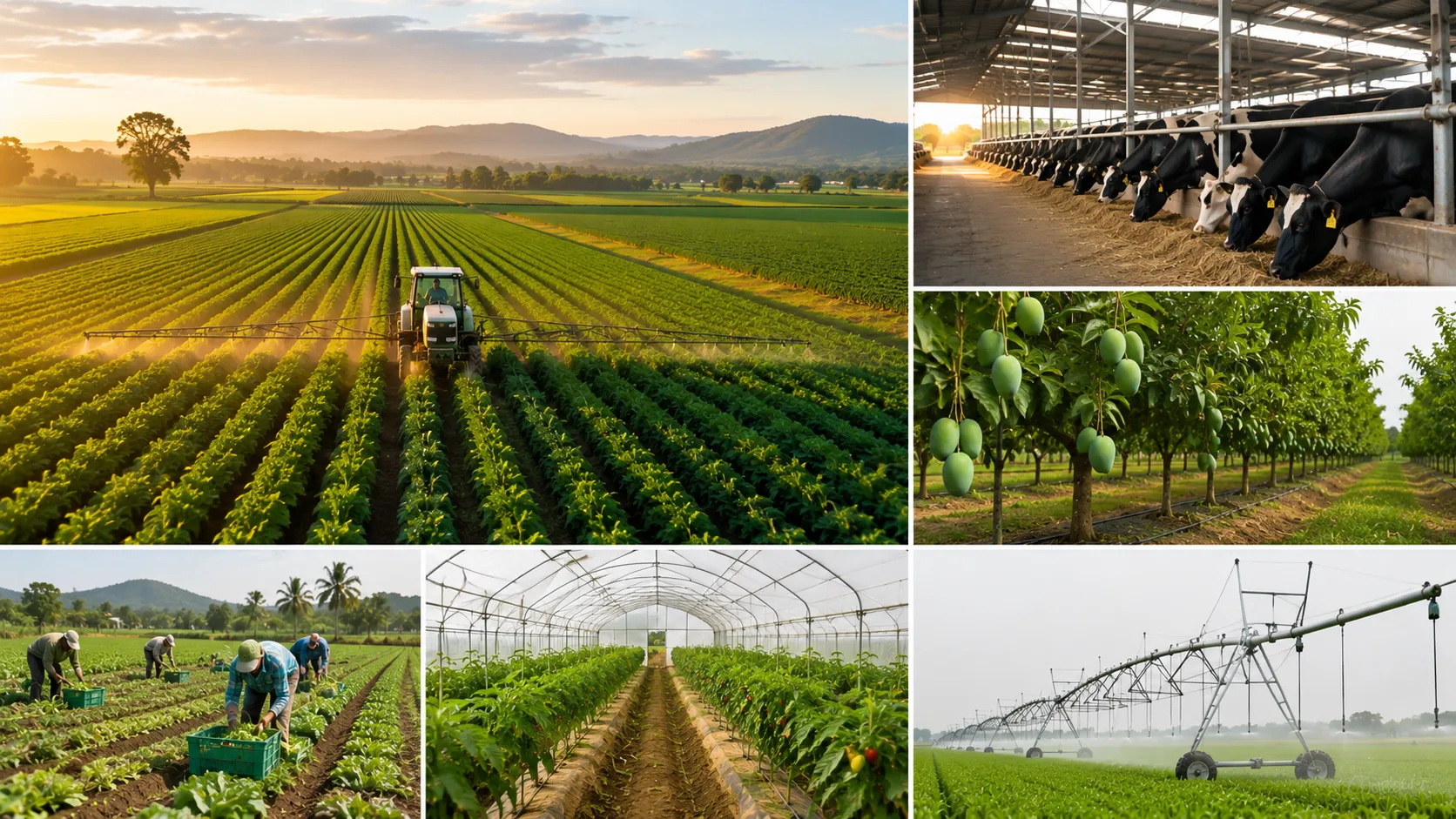
Organic farming is playing an increasingly important role in global food systems as sustainability, food security, and environmental responsibility gain priority. Managed farmland models are helping scale organic practices by offering planned infrastructure, professional land management, and consistent oversight, which makes organic farming more accessible and reliable.
Advances in technology are further strengthening organic agriculture. Better soil analysis, crop monitoring, and data-driven planning tools allow farmers to make informed decisions without compromising organic principles. When combined with regenerative and climate-smart practices, managed organic farmland is becoming more resilient, productive, and viable over the long term.
Conclusion
Organic farming is a complete system built on soil health, ecological balance, and long-term thinking. It is an approach that uses patience and smart planning. The success of organic farming is achieved by working with natural processes rather than forcing outcomes. When managed well, it’s a long-term investment in land quality, food safety and environmental health.
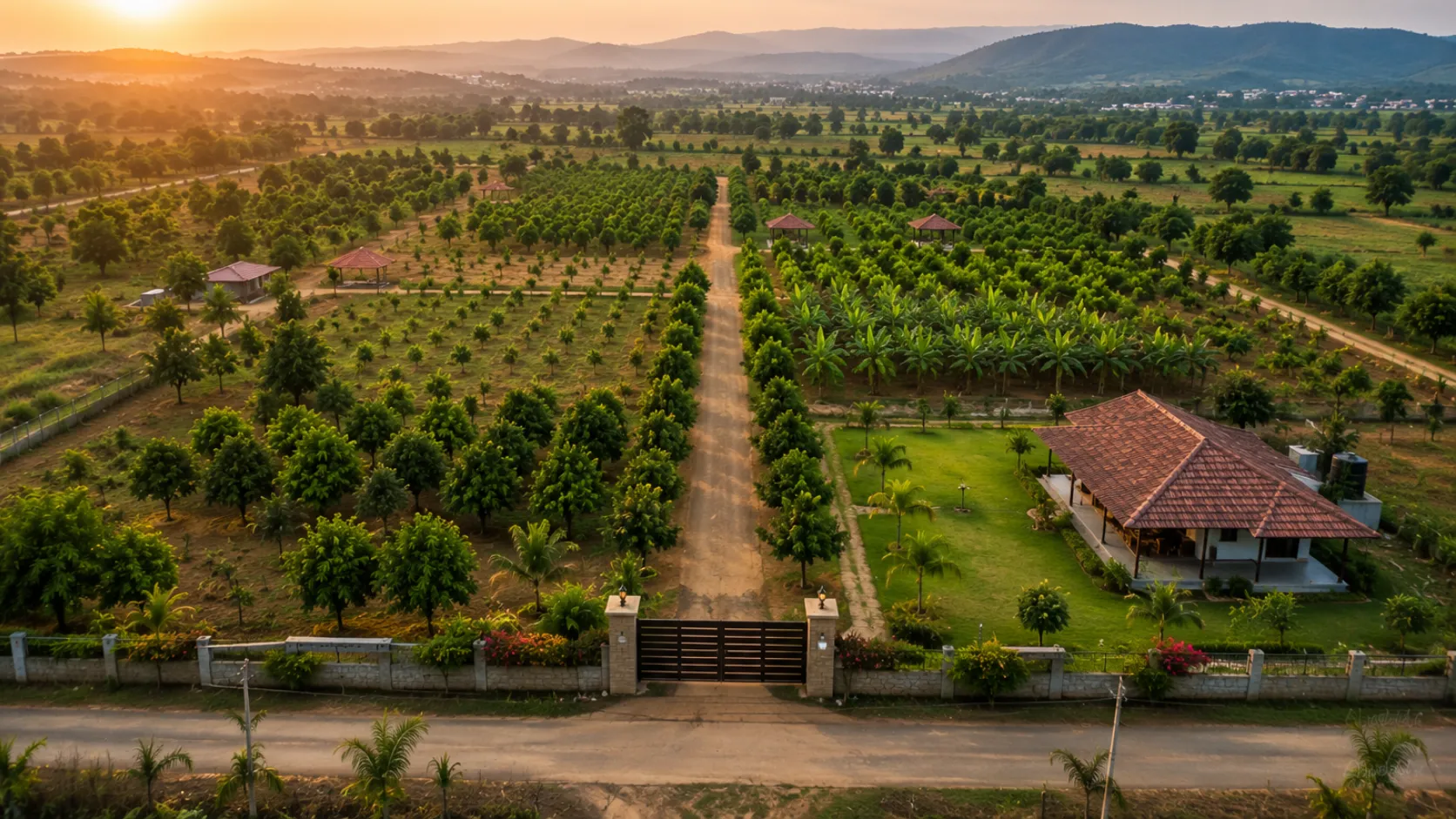
If you are looking to experience organic farming within a thoughtfully planned environment, Sanctity Ferme offers eco-friendly, well-managed farmlands just 90 minutes from Bangalore. Invest in a sustainable community where you can build your dream farmhouse and enjoy a connected lifestyle. Explore a peaceful retreat that brings organic living closer to everyday life.
FAQs
What is organic farming?
Organic farming is an agricultural system that relies on natural processes instead of synthetic chemicals. It focuses on soil health, ecological balance, and long-term sustainability.
What are the benefits of organic farming?
Organic farming improves soil fertility, reduces environmental pollution, and supports biodiversity. The benefits of organic farming also include safer food production and long-term farm resilience.
Is organic farming profitable in India?
Organic farming can be profitable when managed well and supported by reliable markets. Profitability improves over time as input dependence reduces and soil health stabilises.
What crops are best for organic farming?
Crops that adapt well to local conditions and have steady market demand perform best. Pulses, oilseeds, vegetables, fruits, and cereals are commonly grown organically.
How long does it take to convert to organic farming?
The conversion period typically takes several years, depending on past land use and soil condition. Full benefits are usually seen after soil biology and nutrient cycles stabilise.