Forest Bathing Benefits: How Nature Improves Your Mental and Physical Health
Discover practical gardening advice, expert landscaping tips, and inspiration to help you make the most of your outdoor space.
Sanctity Ferme Team
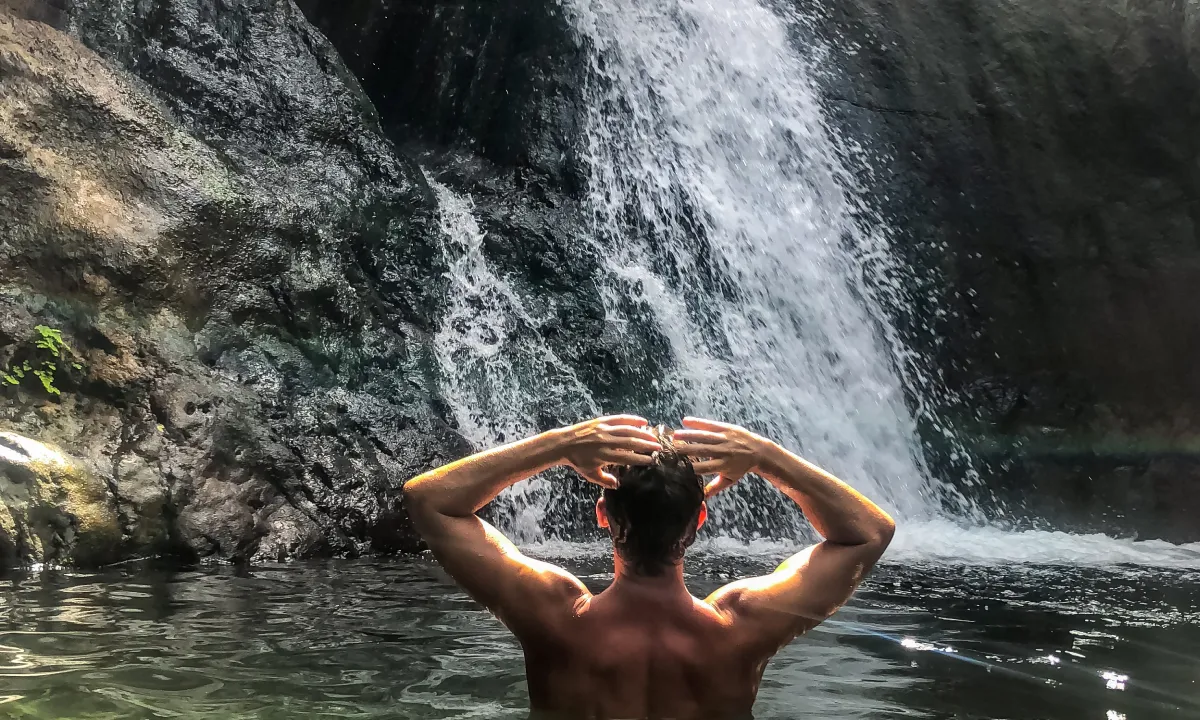
There is a version of rest that no vacation package sells. It doesn't involve a hotel room, a spa treatment, or a long-haul flight. It involves trees and the simple act of standing quietly among them.
The Japanese call it Shinrin-yoku: forest bathing. The word shinrin means forest, yoku means bath. Together, they describe something most of us have felt intuitively but rarely attributed to science: that time spent in nature particularly in forests and green spaces makes us feel genuinely, physiologically better.
This post explains what forest bathing is, what decades of research have confirmed about its effects on the body and mind, how it differs from meditation, and how a weekend among the trees near Bangalore might be the most restorative thing on your calendar this season.
What Is the Meaning of Forest Bathing?
Forest bathing is the practice of immersing yourself in a natural environment a forest, a plantation, a green hillside using all your senses, slowly and without agenda.
It is not hiking. It is not exercise. It is not birdwatching or photography, though any of these can happen alongside it. Forest bathing is fundamentally about receptivity: allowing the forest environment to work on your nervous system through what you see, hear, smell, touch, and breathe.
The term Shinrin-yoku was formally coined in Japan in 1982 by the Japanese Forestry Agency, which introduced it as a form of nature-based recreation aimed at improving public health. Since then, researchers primarily in Japan and South Korea have built a substantial body of evidence showing that time spent in forested environments produces measurable physiological and psychological changes changes that neither walking through a city nor sitting quietly indoors can replicate.
The practice is simple. Walk slowly. Stop often. Pay attention to what your senses are receiving rather than what your mind is generating. No destination. No productivity. No phone.
Is Forest Bathing Scientifically Proven?
Yes and the research base is more robust than most people realise.
Since the 1980s, hundreds of studies have examined the health effects of forest environments on human subjects. A 2019 systematic review published in Environmental Health and Preventive Medicine concluded that forest bathing activities can significantly improve people's physical and psychological health. A meta-analysis published in the International Journal of Mental Health and Addiction reviewed 20 randomised and non-randomised controlled trials and found that shinrin-yoku can be effective in reducing mental health symptoms in the short term, particularly anxiety.
The mechanisms behind these benefits are well-understood. Three stand out.
Phytoncides: The Forest's Invisible Medicine
Trees release volatile organic compounds called phytoncides antimicrobial chemicals that are essentially part of the tree's own immune system. Common phytoncides include α-pinene, limonene, and β-caryophyllene, and they are present in the air of forested environments in concentrations far higher than in urban air.
When humans inhale phytoncides, research shows that levels of natural killer (NK) cells white blood cells that target viral infections and tumour cells increase measurably. A landmark study found that 2–3 days of forest bathing can increase NK cell activity by more than 50%, and that this effect persists for at least 30 days after the visit. The same study detected phytoncides including α-pinene and β-pinene in forest air samples collected during the trip establishing a direct link between the forest's chemistry and the human immune response.
Phytoncides also directly reduce cortisol levels, lower blood pressure, and have measurable effects on the autonomic nervous system shifting activity away from the sympathetic (fight-or-flight) response toward parasympathetic (rest-and-restore) function.
Attention Restoration Theory
Kaplan's Attention Restoration Theory proposes that natural environments restore our capacity for directed attention by engaging what researchers call "soft fascination" the effortless, pleasurable attention we pay to a landscape, birdsong, or moving water as opposed to the effortful, draining attention required by screens, deadlines, and urban environments.
The forest doesn't demand attention the way a notification does. It invites it. And that distinction, accumulated over 20, 40, or 90 minutes, allows the brain's directed attention system to rest and recover. Studies have found measurable improvements in cognitive function working memory, creative problem-solving, directed attention following nature exposure.
A 90-minute walk in nature has been shown to reduce activity in the subgenual prefrontal cortex the area of the brain associated with rumination, the repetitive negative thinking linked to depression and anxiety. A walk of the same length in an urban setting produced no such effect.
Stress Reduction Theory
The Stress Reduction Theory holds that natural environments reduce physiological stress responses because they were, for most of human evolutionary history, safe environments. Being in nature signals to the body that it is not under threat and the nervous system responds accordingly: heart rate slows, cortisol drops, blood pressure falls.
Studies measuring stress hormones before and after forest bathing sessions consistently show reductions in cortisol and adrenaline. Research with hypertensive adults found that slow walking and quiet time in forest environments produced significant drops in blood pressure effects that did not appear in matched urban control groups.
What Are the Benefits of Forest Bathing?
Based on the accumulated evidence, forest bathing produces a range of well-documented health benefits:
Reduced stress and anxiety. Cortisol levels fall during and after forest exposure. The physiological stress response elevated heart rate, blood pressure, and sympathetic nervous system activity is measurably reduced.
Improved mood. Serotonin levels increase during forest bathing, contributing to improved mood, reduced depression risk, and greater emotional stability. Research has found significant improvements in self-reported mood, fatigue, and overall sense of wellbeing following forest immersion.
Stronger immune function. NK cell activity increases substantially following forest exposure, with effects lasting weeks. For people whose immune function is compromised by chronic stress which is most urban professionals this is a clinically meaningful benefit.
Better sleep. Reduced stress and lower cortisol contribute directly to improved sleep quality. The parasympathetic nervous system activation produced by forest time supports deeper, more restorative sleep.
Improved focus and cognitive function. Attention restoration from nature exposure improves working memory, creative thinking, and the ability to concentrate benefits particularly relevant for professionals experiencing cognitive fatigue.
Lower blood pressure and heart rate. Directly measurable cardiovascular effects have been documented across multiple studies. Both passive sitting among trees and slow walking in forest environments produce these results.
What Is the Difference Between Forest Bathing and Meditation?
Both practices involve present-moment awareness. Both can reduce stress and improve mood. But the mechanisms and the demands are different.
Meditation works by training directed attention. You choose a focus (the breath, a mantra, a visualisation), and you practice returning to it when the mind wanders. The skill is in the returning. This is effortful in the right way it builds capacity over time but for many people, particularly beginners, it can feel like another performance arena: something to do correctly, something to measure progress on.
Forest bathing works partly through the environment itself. Phytoncides act on your immune system whether you notice them or not. The parasympathetic nervous system activates in response to the sensory signals of a natural environment birdsong, green light, the smell of soil and bark without requiring any deliberate attention management.
Meditation trains your capacity to steer attention. Forest bathing reduces the need to steer so hard. They are complementary rather than competing. Many people find that time in a forest makes meditation easier that the restoration provided by the natural environment creates the mental spaciousness in which sitting quietly becomes natural rather than forced.
Both are valid. Both work. And they work even better together, which is why many forest therapy programmes explicitly combine slow walking in nature with seated breathing or gentle mindfulness practice.
How to Practice Forest Bathing
You don't need training, equipment, or a guide though all three can deepen the experience. What you need is a natural space and an hour of unhurried time.
Go slowly. Forest bathing is not a fitness activity. The average pace should be much slower than a walk. Stop whenever something catches your attention.
Leave the phone behind (or at minimum, turn it to silent and keep it in your pocket). The practice requires sensory availability. Notifications interrupt it.
Use all your senses. What do you hear? What do you smell? What does the bark of a tree feel like? What is the quality of the light filtering through the canopy? The more senses you engage, the more the environment can work on your nervous system.
Stay for at least 45–60 minutes. Many of the documented physiological effects particularly the cortisol reduction and mood improvements appear with sustained exposure. A quick five-minute walk through greenery is pleasant. An hour is therapeutic.
Don't optimise. There is no correct way to forest bathe. Sitting with your back against a tree counts. Standing still and listening counts. The goal is receptivity, not achievement.
Experiencing Forest Bathing Near Bangalore
The Shoolagiri hills in Tamil Nadu, approximately 90 minutes from Bangalore on NH44, offer exactly the kind of landscape that makes forest bathing possible: rolling hills, mature tree cover, birdsong in the mornings, clean air, and an absence of the urban density that keeps the nervous system in constant low-level alert.
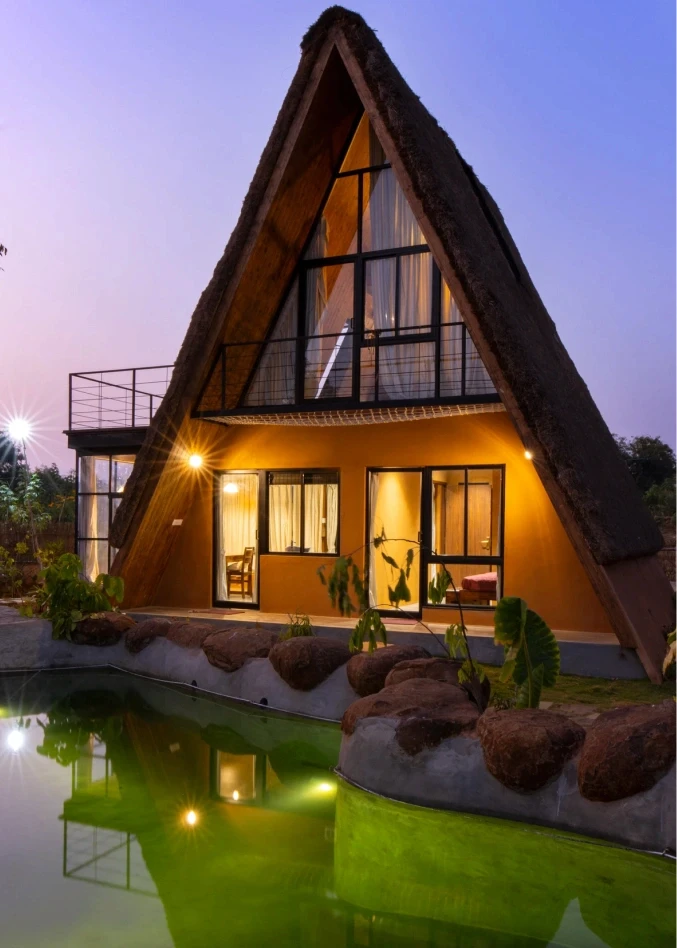
At Sanctity Ferme, our managed farmland community spreads across 300+ acres with 5 lakh+ trees planted across the landscape teak, fruit trees, timber species, and native species that together create the kind of layered green environment that phytoncide research suggests is most beneficial. Guests at our Sunny Side Up Farmstay regularly find that simply walking through the plantation no agenda, no destination is the most restorative part of their visit.
Our guided nature walks allow guests to move slowly through the farm's landscape, paying attention to what grows, what sounds exist here that don't exist in the city, and what it feels like to breathe air that has been processed by thousands of trees rather than millions of vehicles.
This is not wellness tourism in its packaged form. It is a managed farmland that happens to offer, as a byproduct of being a working farm with real green cover, the conditions that forest bathing research describes as therapeutic.
If you want to experience what an afternoon among trees can do for a nervous system that has been living in Bangalore traffic, book a farmstay visit at Sanctity Ferme and give yourself the time to find out. You can also explore the sustainability practices that shape how we manage our land including why biodiversity matters not just ecologically but as a condition of the very experience that makes forest bathing work.
And if the experience leaves you wanting something more permanent a piece of this landscape that you can return to, not just visit farmland for sale near Bangalore is available across our ongoing projects.
In Conclusion
Forest bathing is not a trend. It is a return to something humans have known for most of our existence: that time among trees restores us in ways that built environments cannot.
The science now confirms what the feeling always suggested. Phytoncides boost immune function. Cortisol drops. Blood pressure falls. NK cells increase. Mood improves. Focus returns. Sleep deepens.
None of it requires a subscription, a device, or an instruction manual. It requires a forest, a little time, and the willingness to stop doing and start noticing.