Why Community Organic Farming is the Only Future for Rural India
Discover practical gardening advice, expert landscaping tips, and inspiration to help you make the most of your outdoor space.
Sanctity Ferme Team

Rural India needs a farming pathway that protects soil, stabilises income, and supports local enterprise. Input costs continue to rise, rainfall is inconsistent, and markets remain fragmented. In this setting, the solo farmer model is exposed to avoidable risk.
Community organic farming offers a disciplined alternative in which neighbours coordinate cropping, inputs, labour, and distribution using defined roles and transparent records. The result is lower volatility, healthier land, and decisions aligned with village development.
What Community Organic Farming Involves
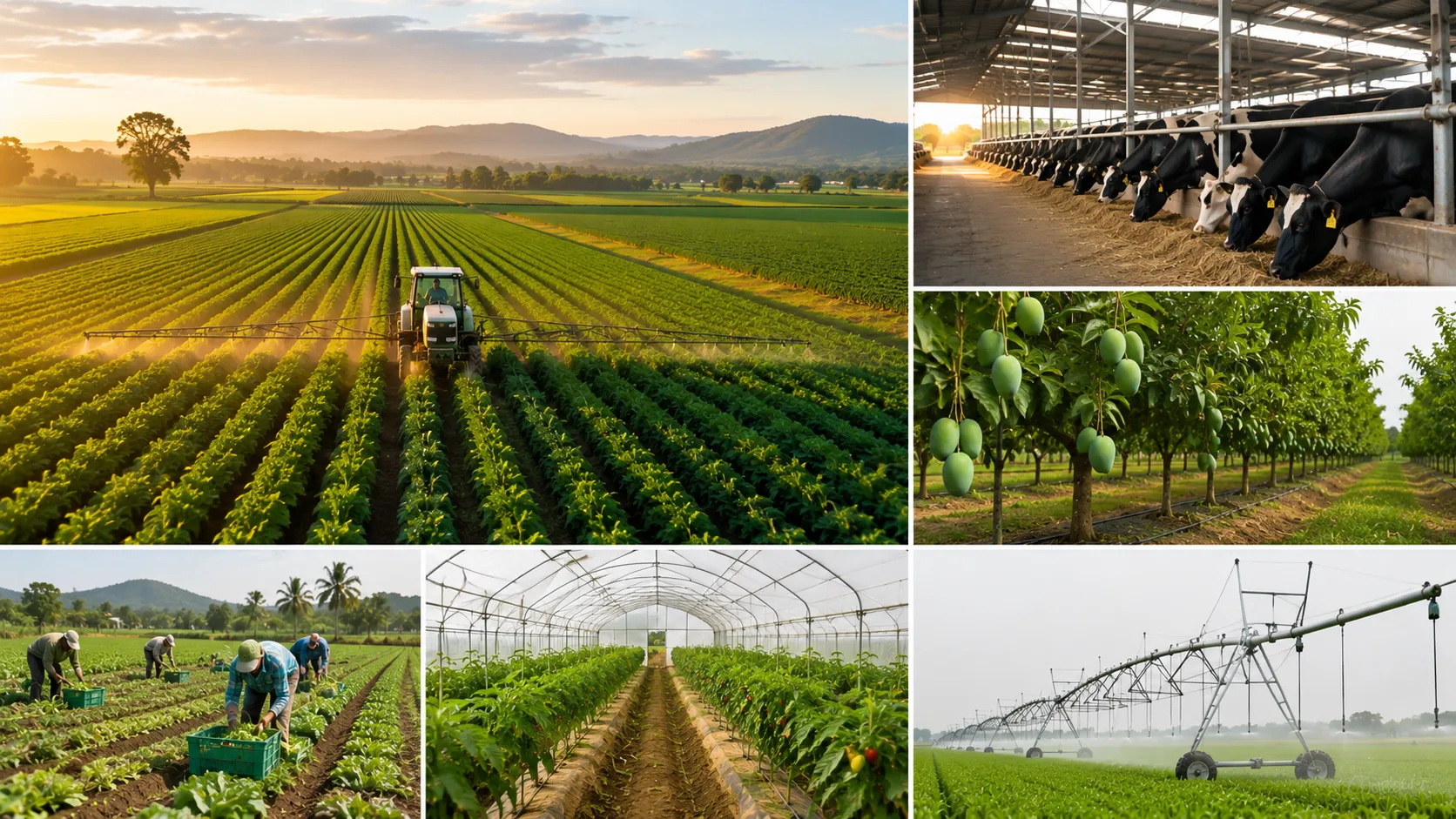
Community farming is a structured arrangement. Members plan calendars together, pool labour during peak windows, and share common assets such as nurseries, compost bays, sheds, and basic storage. In communal farming, decisions are collective and documented, which allows performance to be reviewed and improved.
The approach aligns closely with indigenous farming knowledge: mixed cropping, seed saving, local soil amendments, water harvesting, and continuous ground cover. Community farming projects make these routines consistent, measurable, and easier to monitor.
Why the Group Model is More Resilient
Inputs are procured in bulk, which reduces cost and improves quality control.
Labour is coordinated for sowing, transplanting, and harvesting.
Post-harvest handling and transport follow one plan, which reduces waste.
Planting is staggered across members, avoiding gluts and price shocks.
Sustainable farming communities use these basics to replace volatility with repeatable practice. A rural farming community learns faster than any individual because errors are identified early and methods are refined together.
Why Organic Performs Better When Shared
Organic systems depend on punctual routines. Compost, mulch, local bio-inputs, and biological pest management deliver results when implemented on time. A shared farming community maintains that discipline through simple rota-based management.
Community-managed natural farming reinforces this by relying on local inputs and close observation. Over several seasons, soil organic matter rises, water use becomes more efficient, and external dependency declines. This is how community organic farming achieves stable output while protecting the resource base.
The Income Case
Income stability matters as much as yield. Group negotiation with buyers improves price discovery and payment terms. Coordinated sowing and harvest reduce bottlenecks. Shared cold storage or a modest packhouse enhances shelf life and quality.
Over time, reduced purchased inputs and stronger soil health lift margins without pressure to expand acreage. This is practical risk management for farming in rural areas and strengthens confidence for reinvestment.
Land, Habitat, and Dignified Living
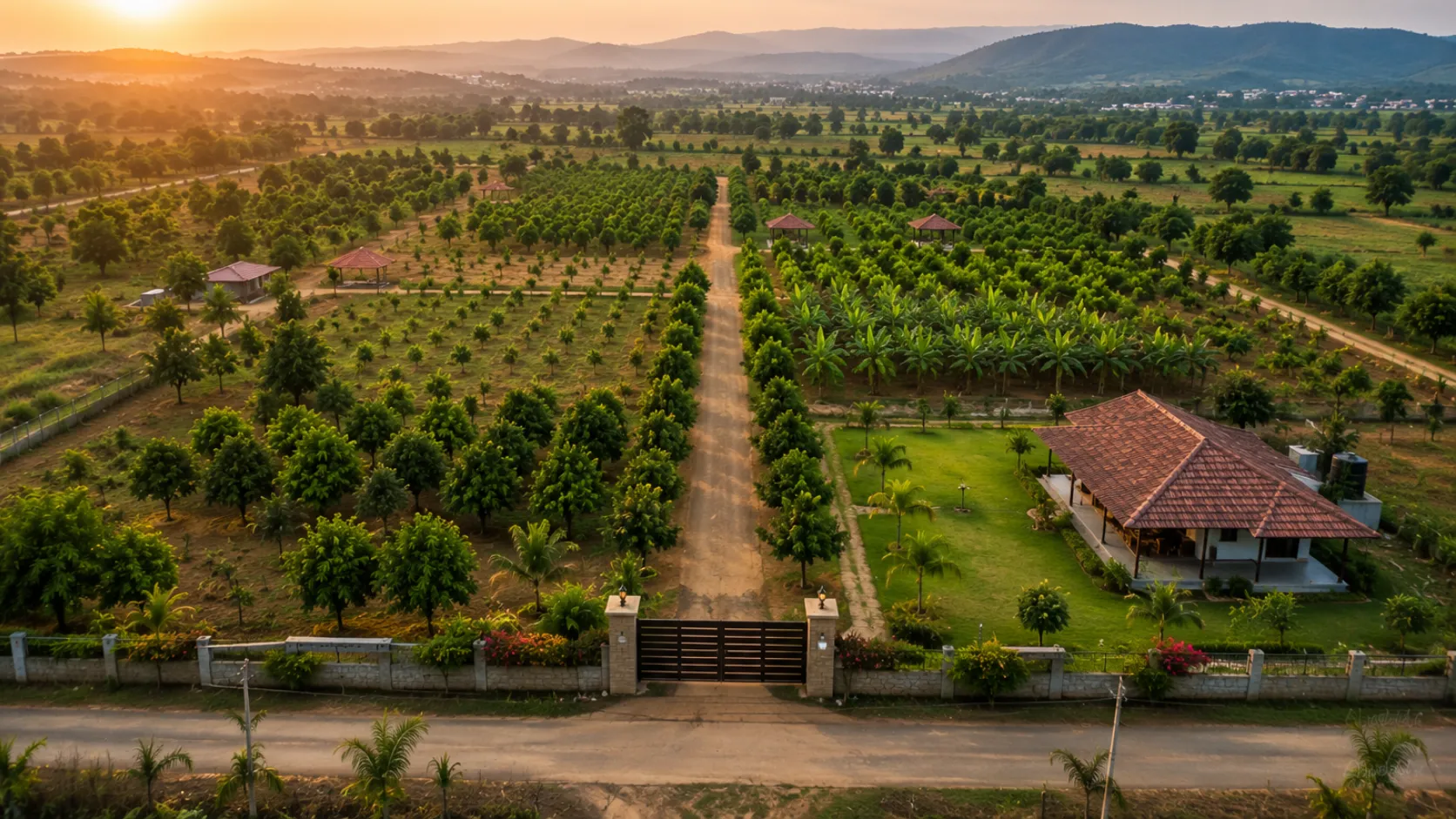
Community-based farming can meet several objectives at the same time: livelihood for full-time growers, reliable produce for nearby towns, and responsible participation for supporters who wish to engage without running day-to-day operations. T
The guiding principle is clear: farming remains farmer-led, and any allied uses must protect productive land, water, and biodiversity.
Built Form That Serves the Farm
Where modest residence is envisaged within a shared farming community, built form should follow the farm. Many readers explore house design ideas, house style ideas, and wider house ideas that respect the climate and landscape. When assessing house design ideas, exterior or exterior design house ideas, treat shade, drainage, soil percolation, and wind as first-order constraints.
Those considering ideas for small house design or a new house on agricultural land should prioritise siting, cross-ventilation, and minimal hard paving. Such choices keep fields productive, maintain water flows, and ensure that living areas do not disrupt cultivation.
Making Community Farming Work Day to Day
Here is how community farming works on a day-to-day basis:
Roles, Rules, and Records
Define who plans cropping, who coordinates inputs, and who maintains machinery. Keep short written rules for membership, produce sharing, and dispute resolution. Maintain simple ledgers for inputs, yields, and sales; review them monthly. Transparent information prevents friction and supports fair decisions. Clear governance is how farming communities turn good practice into durable institutions.
Soil and Water as First Priorities
Conduct soil testing and map drainage before expanding operations. Protect topsoil with cover crops and mulches. Harvest roof and surface water into storage and recharge features. These steps determine resilience during irregular monsoons and dry spells. Organic performance is directly linked to soil structure and water security.
Lean, Appropriate Assets
Invest in common assets that will be used daily: nursery benches, shredders, compost bays, small cold rooms, field crates, and a reliable vehicle. Avoid specialised equipment that sits idle.
Demand for clean food and nature-aligned stays near Bengaluru continues to grow. Interest in managed farmlands near Bangalore, farmland near Bangalore, and farm stay near Bangalore reflects this trend. Community organic farming can respond without turning villages into speculative real estate.
Indigenous Knowledge, Contemporary Markets
Indigenous farming is not nostalgia; it is a tested performance base for Indian climates. Local seeds, mixed species, and on-farm inputs reduce risk and improve resilience. Combined with clear records, quality standards, and simple market linkages.
The outcome is a community organic farming system that honours tradition while meeting present-day expectations. In short, indigenous farming and contemporary compliance can work together.
A Framework for a Small Farming Community
Here is a framework that would work for a small farming community:
Start with two or three crops suited to the soil and water, then scale after one proven season.
Use short learning cycles for spacing, staking, mulching, and rotations.
Set minimum standards for hygiene, tool care, and harvest handling.
Share success data and mistakes; convert both into improved routines.
This framework is modest by design and supports steady improvement rather than overstretch. If you are assessing farmland near Bangalore for participation in a community model, prioritise farmer-led governance and soil-first planning before lifestyle elements.
Bottom Line
Rural prosperity depends on shared systems that protect land, reduce uncertainty, and reward skill. Community farming, farming in rural areas backed by open books, and community organic farming anchored in soil care present a credible path. Sustainable farming communities provide structure; community-managed natural farming provides method; transparent markets provide income.
Together, they form a durable response to today’s pressures. A small farming community built on these principles will remain competitive, resilient, and relevant in the years ahead.