Beekeeping (Apiculture) on Your Farm: Benefits Beyond Honey
Discover practical gardening advice, expert landscaping tips, and inspiration to help you make the most of your outdoor space.
Sanctity Ferme Team
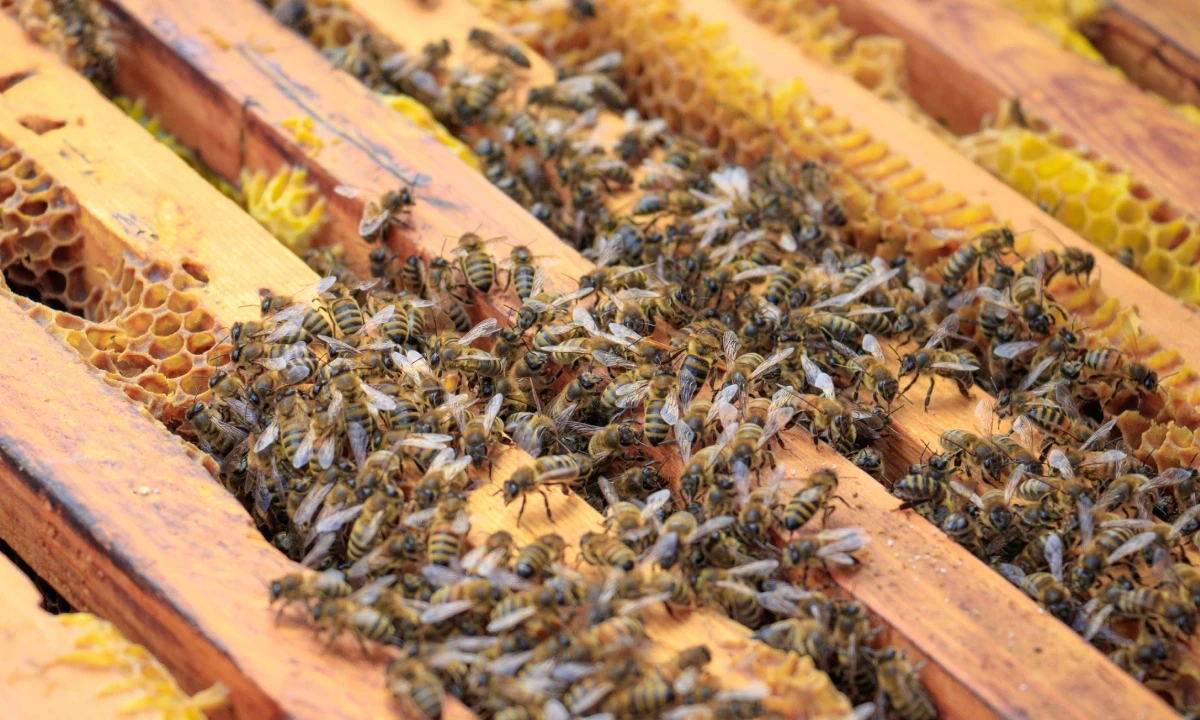
Most people think of beekeeping as a hobby that produces jars of honey. It is that but it is also quietly one of the most productive things you can add to a managed farmland, and one of the most overlooked.
If you own a farm plot near Bangalore or are exploring farmland for sale near Bangalore, integrating apiculture into your land is worth understanding properly. Not just for the honey. For everything else it does while you are not watching.
What Is Apiculture and Why Does It Matter for Indian Farms?
Apiculture is the systematic management of honeybee colonies in hives to produce honey, beeswax, and other hive products while quietly supporting the broader health of everything else growing on your farm.
Beekeeping in India has been gaining serious momentum. Honey bee farming can work as a standalone operation or be woven into an existing farm to improve crop yields and open up additional income streams simultaneously.
The scale of untapped potential here is striking. Only about 10% of India's existing beekeeping potential has been utilised so far. The country has the capacity to support over 200 million bee colonies compared to the roughly 3.4 million that currently exist. That gap, properly filled, could provide livelihoods to over 6 million rural families.
For a farmland owner, that gap is not a problem. It is an opportunity with very little competition.
Is It Beekeeping or Apiculture?
The terms mean exactly the same thing and get used interchangeably. Apiculture comes from Apis, the scientific genus of honeybees. Beekeeping is the common everyday term most people reach for first.
Honey farming or apiculture involves the systematic keeping of honeybee colonies in hives to produce honey, beeswax, propolis, royal jelly, and other by-products. It is one of the oldest agricultural practices in the world, and it is gaining renewed relevance today because of growing environmental awareness, economic incentives, and an increasingly clear understanding of just how much bees contribute to the food systems around them.
What Are the Benefits of Beekeeping Beyond Honey?
This is where most farmland owners are genuinely surprised because the answer goes much further than most people expect.
Pollination Services: The Invisible Multiplier
The most underappreciated benefit of beekeeping on a working farm is not what the bees produce directly. It is what they enable your other crops to produce.
Bees are responsible for pollinating approximately one-third of the food we eat. The contribution to agricultural productivity is not marginal it is structural. Research consistently shows that farms with nearby bee colonies experience significantly higher crop yields than farms without adequate pollinator populations. Beekeeping does not just generate income through hive products. It amplifies the income from everything else on the farm.
The numbers that put this in perspective: the economic impact of pollination services provided by honeybees in India has an estimated annual value exceeding ₹50,000 crore. For every ₹1 earned from honey production, pollination services contribute ₹30 to ₹40 in increased agricultural output from surrounding crops.
If you are growing vegetables, fruit trees, or any flowering crop on your managed farm plots bees are working silently on your behalf every single day.
High-Value Hive Products
Honey is just the beginning, and it is worth being specific about what else a managed hive produces.
India produces about 5,000 to 6,000 metric tonnes of beeswax annually used in cosmetics, creams, and ointments. Royal jelly is consumed as a health tonic and commands strong prices in urban health markets. Propolis has documented antibiotic properties and is increasingly sought after as a health supplement. Bee venom has therapeutic applications in treating conditions like rheumatism and arthritis, and is one of the highest-value hive products per gram available.
Each of these products typically commands far higher prices per kilogram than raw honey. For a farmland owner who is thinking seriously about income diversification, this range of marketable outputs from a single set of hives is worth paying attention to.
Biodiversity and Soil Ecosystem Health
Bees do not just help your crops. They improve the broader ecology of your land in ways that compound over time.
A farm with thriving bee populations tends to support more native flowering plants. More native plants support more insects. More insects support more birds. More birds and insects support richer soil organisms. This chain invisible on any given day, obvious over years is the foundation of a genuinely healthy, regenerative farm. Not just one that produces outputs, but one that improves its own capacity to produce over time.
At Sanctity Ferme's managed farmlands near Shoolagiri, regenerative land management is central to how projects are developed. With over 5 lakh trees planted across 300+ acres under management, the ecosystem already supports the kind of floral diversity that makes apiculture viable and genuinely productive. Adding bees to this environment does not just benefit the bees it accelerates the restoration cycle for the whole landscape.
What Are the Types of Beekeeping Practiced in India?
India has several honeybee species, each suited to different agro-climatic zones and farming contexts.
The industry primarily revolves around two domesticated species: Apis cerana the Indian honeybee and Apis mellifera, the European honeybee, which is central to commercial beekeeping at scale. India also has four wild honeybee species that play important ecological roles but are not managed commercially.
Apis cerana indica is well-adapted to South Indian conditions. It handles the local climate, disease pressures, and forest flora naturally without the intensive management that Apis mellifera demands. For a farmland owner in Tamil Nadu or Karnataka who is integrating bees alongside crops rather than running a dedicated honey operation, Apis cerana is usually the more practical starting point. It is less prone to absconding, better tuned to local flora, and considerably lower-maintenance for someone who is not a full-time beekeeper.
The sustainability practices at Sanctity Ferme already include native species planting and active biodiversity restoration conditions that make native bee species feel immediately at home.
What Is the 7 10 Rule in Beekeeping?
This is one of the most commonly searched questions among those new to apiculture, and it is a practical one worth answering clearly.
The 7 10 rule is a hive inspection principle: during the active season roughly spring and summer hives should be inspected every 7 to 10 days. The purpose is to monitor queen health, watch for early signs of swarming, check for disease, and assess honey stores before they become a problem.
Inspect more frequently than every 7 days and you risk stressing the colony unnecessarily. Leave it longer than 10 days during peak season and issues can develop that are much harder to address after the fact.
For a managed farmland owner who divides time between the city and the farm, this rhythm is entirely manageable. A weekly or biweekly site visit which many Sanctity Ferme owners already make as part of their normal routine aligns naturally with a basic beekeeping inspection schedule. If you are away for longer stretches, a trained farmhand or a local apiculture cooperative can conduct inspections on your behalf without any disruption to the hives.
Is Honey Farming Profitable in India?
Yes particularly when it is combined with crop pollination services and value-added hive products rather than treated as a honey-only operation.
A small-scale setup of 20 to 30 hives on a managed farmland can generate meaningful supplementary income from the first year of production. As the operation grows and products diversify raw honey, beeswax, propolis, royal jelly the income potential scales with it.
There is also a less obvious revenue stream worth knowing about: pollination services. During the flowering seasons of major crops, neighbouring farmers will pay to have hives placed near their fields. Processing and packaging honey and other hive products rather than selling raw further improves margins. Many successful beekeepers have built direct-to-consumer channels through farmers' markets, online platforms, and specialty stores capturing significantly more value per kilogram than they would through a middleman.
How Honey Bee Farming Fits a Managed Farmland Lifestyle
The appeal of managed farmlands is that you own land that is maintained and productive even when you are not physically there. Beekeeping fits this model particularly well.
Once hives are established and a capable local beekeeper or farm manager is in place, the day-to-day care is genuinely low-intervention. You can visit to harvest, inspect, or simply sit and watch the activity around a productive hive which turns out to be more satisfying than it sounds. Between visits, the hives are working. Your crops are benefiting. The ecosystem is improving.
It is one of the more honest examples of a farm asset that operates on its own rhythm not yours. It does not wait for you to show up.
If you are exploring life at Sanctity Ferme or want to understand how a managed farmland can practically support activities like apiculture, the team is happy to walk you through what is currently working on existing plots and what is realistic for your specific parcel.
Start With a Site Visit
Beekeeping on a managed farmland is not a complicated thing to begin. It needs the right species selection, basic equipment, some initial training, and access to a flowering landscape which any well-managed farm plot already provides.
Sanctity Ferme's projects near Shoolagiri sit in the middle of diverse native flora, 90 minutes from Bangalore via NH44. The land is developed, managed, and ecologically ready for activities like apiculture from day one.
Book a site visit to see the farms in person, understand the land's potential, and have a real conversation about what is practically possible for your plot.
Your land can do more than hold value. It can produce it one hive at a time.