Understanding Managed Farmland
Discover practical gardening advice, expert landscaping tips, and inspiration to help you make the most of your outdoor space.
Sanctity Ferme Team

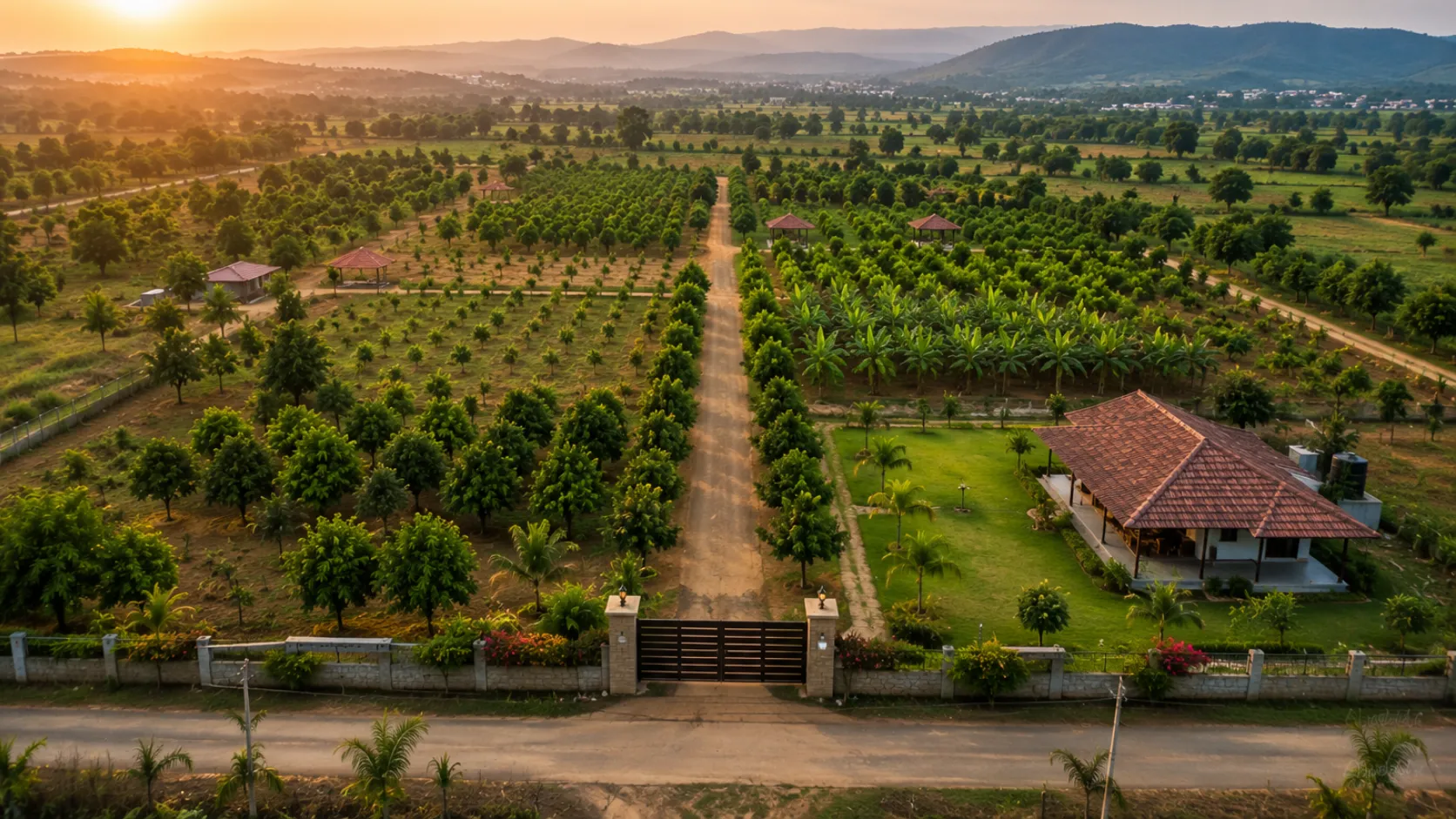
Managed farmland refers to agricultural land owned by individuals or investors but professionally operated by an agronomy and land-management firm under a service contract. It typically covers crop planning, labour, inputs, compliance, and reporting. In India - especially around Bengaluru - this model has grown as a structured way for urban buyers to participate in agriculture while outsourcing day-to-day operations to specialised “managed farms” providers.
What Is Managed Farmland
Managed farmland is a service-led arrangement in which ownership and operations are distinct: the buyer holds title to agricultural land, and a specialist firm manages cultivation, maintenance, and compliance, often under a multi‑year agreement with defined deliverables and fees.
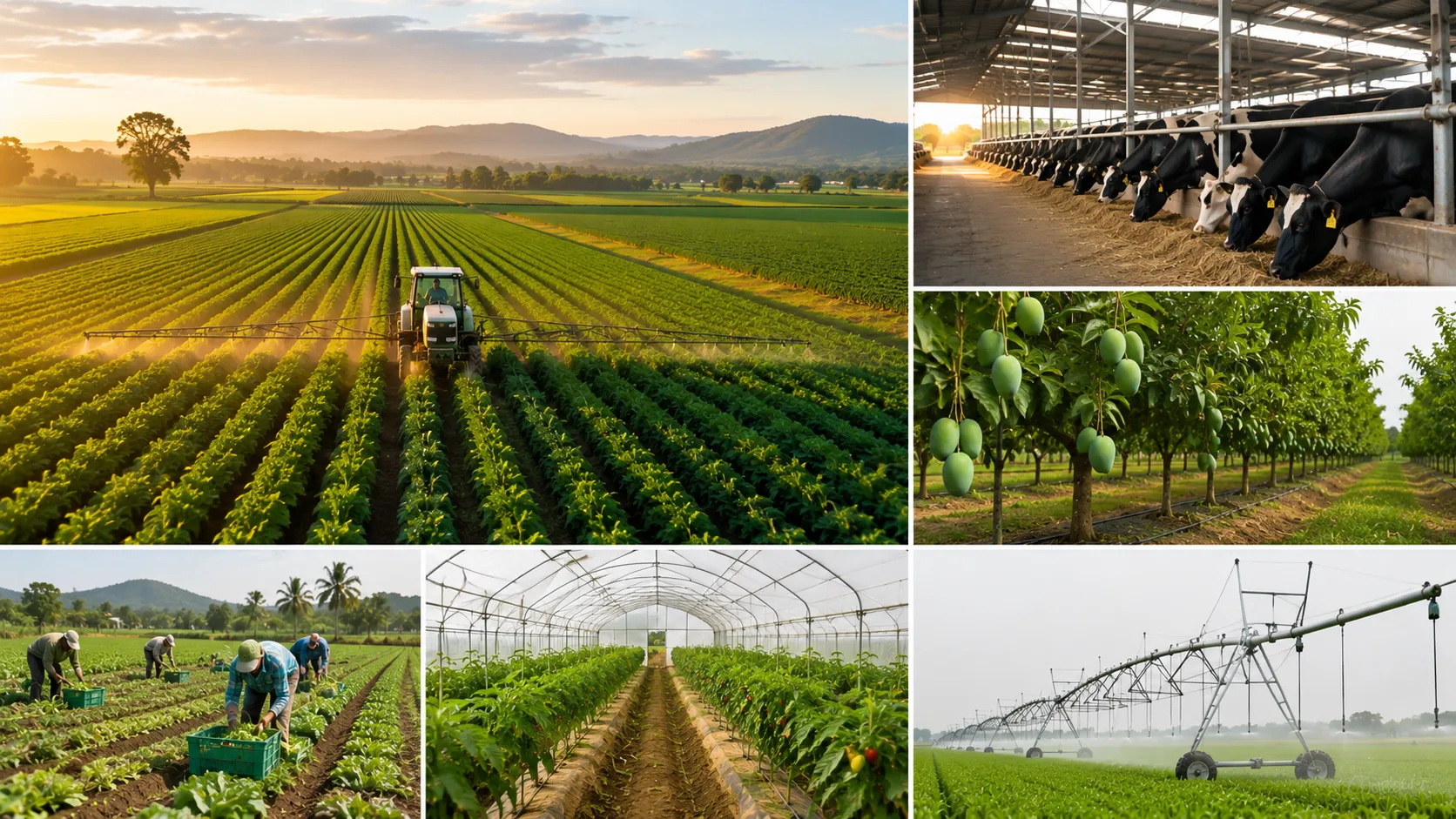
These arrangements can include seasonal crops, horticulture, agroforestry, or integrated farm systems, with the operator providing agronomy planning, labour supervision, input procurement, and periodic performance reporting. The model aims to bring standard operating procedures, agronomic discipline, and compliance rigour to small, fragmented holdings that individual buyers may not be able to run efficiently.
“Did You Know”
|
Why Interest Is Rising
Post‑pandemic, urban interest in land‑backed, real‑asset exposure grew, and media coverage highlighted managed farmland near Bangalore as an alternative asset aligned with sustainability and lifestyle preferences (weekend use plus professional upkeep).
Globally, institutional farmland is valued for low correlation with public markets and inflation hedging. In India, the appeal has been driven more by lifestyle and tangible land ownership, with management services filling an operational capability gap. Because India lacks a long-running public farmland index, buyers rely on manager reporting and local market intelligence rather than index benchmarks, which underscores the need for strong governance in contracts.
Business Models In India
Service-fee model: The owner pays fixed annual management fees; production accrues to the owner, who also bears market risk.
Revenue-share model: The operator shares production proceeds with the owner according to a pre‑agreed split, aligning incentives but requiring transparent accounting and grading standards.
Leaseback model: Owners lease land to the operator for a fixed rent. The operator assumes cropping and market risk while owners forgo upsides for predictable income.
In and around Bengaluru, many projects integrate orchard/horticulture plans (e.g., mango, timber, mixed fruit) with boundary planting, drip irrigation, and periodic farm-stay use, marketed as “managed farmland near Bangalore” to balance lifestyle and stewardship with professional care.
Ownership And Land-Use Law (Karnataka)
Karnataka liberalised agricultural land purchase in 2020 by amending the Karnataka Land Reforms Act, 1961. It removed the earlier income cap and restrictions that had barred many non‑agriculturists from buying farm land, while retaining land‑ceiling and other controls under the Act. Click Here to Know More
For any farmland in Bangalore Rural and surrounding districts, buyers still must comply with Karnataka land revenue and survey rules, mutation and RTC (Record of Rights, Tenancy and Crops), and applicable ceilings. Due diligence typically includes RTC/Pahani extracts, mutation entries, survey sketches, and encumbrance certificates. Karnataka’s land records modernisation (Bhoomi) offers digitised access to RTC and mutation status, which aids diligence for managed farms.
FEMA/FDI And Who Can Buy
Under India’s foreign‑exchange rules, NRIs/OCIs are permitted to acquire immovable property in India other than agricultural land/plantation/farmhouse. Purchase of agricultural land by NRIs/OCIs is not permitted except by inheritance or with specific approval. The controlling law is the Foreign Exchange Management (Acquisition and Transfer of Immovable Property in India) Regulations, 2018, notified in the Gazette of India, which preserves the longstanding restriction on agricultural land, plantations and farmhouses for persons resident outside India.
In practice, this means many managed farm projects in Karnataka are limited to resident Indian buyers. Any pitch to NRIs or OCIs to “own” agricultural plots in India should be viewed with caution and legal advice.
RERA And Plotting Considerations
The Real Estate (Regulation and Development) Act, 2016, covers the development of land into plots for sale, not just apartments. So if a managed farmland project engages in plotting with development works (roads, amenities, utility lines) for sale to buyers, it can fall within the definition of a “real estate project,” requiring registration and disclosures. Click Here to Know More
A pure agricultural holding without development works and not intended for non‑agricultural/ residential use may be outside RERA, but state regulators have issued cautions against “revenue layouts” or farmhouse plotting without conversion and approvals. Buyers of farmland in Bangalore should confirm whether a project has sought RERA registration (if applicable) and whether land‑use conversion is being represented or implied.
Operational Considerations
A robust managed farms operator for farmland in Bangalore typically offers integrated water budgeting, soil testing, crop calendars, integrated pest management, drip irrigation, and agri‑labour compliance. They should also maintain registers for input use, labour, produce sales, and statutory clearances, enabling owners to document agricultural income and sustainability claims.
To mitigate market risks, operators often prioritise horticulture with staggered harvests, local mandi linkages, and post‑harvest infrastructure. Here, revenue shares are offered, and the quality of record‑keeping and third‑party audits becomes critical.
Contractual guardrails rooted in FAO’s responsible contract farming guidance can reduce disputes and ensure fair risk allocation.
Governance And Investor Protection
Where a provider markets packaged “plots + services,” ensure the conveyance deed clearly demarcates independent title and possession, separate from the service agreement, and that common infrastructure easements are documented through appropriate rights rather than implicit promises. If the model contemplates common pooling of returns or integrated operations that buyers cannot opt out of, legal counsel should test the structure against SEBI’s CIS definition before any commitment.
For any representation implying non‑agricultural use (farmhouses, homestays, resorts), verify land‑use conversion, building permissions, and environmental approvals. RERA applies where plots with development works are for sale, and local bylaws govern farmhouse construction and use.
Things To Note
Keep ownership and management contracts separate: The sale deed should convey a clear agricultural title and possession, while the management agreement can be time‑bound and revocable without affecting ownership.
Avoid pooled-return promises: If returns are pooled and not tied to an individual, demarcated holding with owner control, they should be avoided. The arrangement risks will be classified as an unregistered Collective Investment Scheme.
Diligence is local: For managed farmland near Bangalore, insist on RTC/Pahani, mutation, survey, EC, groundwater feasibility, and species permissions, and verify whether any plotting or amenity works are being undertaken that might require RERA or other approvals.
Practical Checklist
Identity of seller and chain of title (RTC/Pahani, MR, EC, survey map), land‑ceiling compliance, and litigation search.
Water: Borewell permissions, hydrogeological assessment, drip design, metering plan, and recharge compliance.
Environmental and species: Tree‑felling/transit permissions, agroforestry plan, and soil testing records.
Contracts: Scope of services, fees, quality standards, input transparency, audit rights, insurance, termination and handover clauses, and dispute resolution opt
Risks And Due Diligence
Title and land use: | Regulatory triggers: | Water and environment: | Contract quality: |
|---|---|---|---|
Verify RTC/Pahani, mutation (MR), survey records, encumbrance certificates, and ensure the land is agricultural and free of conversion violations; validate boundaries via DGPS if needed. | Check whether the offering is plotting with development works (RERA), any pooling/return scheme (SEBI CIS), or an NRI/OCI-targeted structure (FEMA violation). | Confirm borewell permissions, groundwater compliance, and tree‑felling/transit permits for proposed species. | Management scope, fee model, performance standards, input quality, post-harvest handling, audit/inspection rights, and termination/exit provisions should be explicit and enforceable. |
Conclusion
Managed farm land can offer residents a structured, compliance‑first way to participate in agriculture while leveraging professional operators for agronomy, labour, and reporting. It is especially attractive for buyers of farmland in Bangalore who seek a blend of land ownership and outsourced farm care. The opportunity is real, but robust diligence on title, water, regulatory triggers (RERA/CIS/FEMA), and contract governance is non‑negotiable; with those safeguards, managed farms can balance stewardship, lifestyle, and agricultural outcomes.