Advantages of Organic Farming
Discover practical gardening advice, expert landscaping tips, and inspiration to help you make the most of your outdoor space.
Sanctity Ferme Team

In India, farming is not just a business. It shapes what you eat, what your family breathes, and how your village water stays usable. When chemical-heavy methods strain soil and water, you start looking for cleaner options that still keep farms profitable. That is where the advantages of organic farming stand out: you feed people while protecting the land that feeds you.
What Organic Farming Really Means
Organic farming avoids synthetic fertilisers and most synthetic pesticides. Instead, you work with compost, green manures, crop rotation, mulching, and biological pest control. When people search for organic farming and its advantages, they are usually asking if the system can be stable in real conditions. It can, if you plan for the transition and manage nutrients with discipline.
Healthier Soil is the First Big Win
One of the most visible merits of organic farming is soil recovery. Healthy soil holds water and resists erosion.
Soil, Water, and Resilience
Here are the benefits of organic farming that come directly from better soil:
More organic matter, which improves moisture holding during dry spells
Better soil structure, so rain soaks in instead of running off
Higher activity of earthworms and microbes that help nutrient cycling
This is also where the benefits of sustainable farming begin, because a living soil reduces your dependence on external inputs and helps your farm handle weather swings.
Cleaner Water and Lower Chemical Load
Many Indian farms sit close to borewells, tanks, and village ponds. When you cut harsh chemicals, you reduce the risk of residue reaching these sources. This is a major part of the benefits of organic farming on the environment, especially in regions where drinking water and irrigation share the same aquifers. The same idea is often searched as the benefits of organic farming on the environment, and the meaning is simple: fewer toxins moving through soil and water.
These are long-term environmental benefits of organic agriculture, and you will notice them not only on your field but around it, through healthier bunds, fewer chemical odours, and safer grazing patches. The environmental benefits of organic agriculture also include gentler pressure on helpful insects and birds.
You may also save on repeat spray rounds, and your workers handle fewer harsh products through the season overall.
Stronger Biodiversity and Natural Pest Balance
A field becomes resilient when it is not treated as a single crop island. With rotations, mixed cropping, and border planting, you create space for pollinators and predator insects. That is one of the core advantages of sustainable farming, because a diverse farm is less likely to collapse when one pest or disease spikes.
Over time, you often see fewer sudden pest explosions because the ecosystem becomes better at self-correction.
Benefits of Organic Produce in Daily Life
The benefits of organic produce matter most when they show up on the plate. Many families prefer produce grown with fewer chemical residues, especially for leafy greens, fruits, and food for children. Buyers also report better freshness when produce is harvested carefully and moved quickly through shorter supply chains.
For you as a grower, this trust can turn into demand through local retailers, direct sales, and community subscriptions.
Farm Economics That Improves with Planning
The pros of organic farming are not only about ecology. They can also be about income and risk control. During the first year or two, some crops may show a yield dip while the soil adjusts. However, as soil biology stabilises and nutrient cycling improves, many farms see more predictable results.
The benefits of organic farming for farmers typically come from:
Lower dependence on expensive synthetic inputs
Access to premium buyers in certain markets
Better soil-backed productivity over the long run
If you need to mention the benefits of organic farming in one sentence, say this: you spend more effort on management, and you buy less risk from the future.
Natural Farming and Organic: Related, Not Identical
You may also hear about natural farming models that reduce purchased inputs even further. The advantages of natural farming include low input costs and stronger use of on-farm resources like biomass and local bio inputs. The benefits of natural farming become clearer when you have consistent mulching, good moisture planning, and a system to handle weeds without shortcuts.
Some farmers pursue certification, while others focus on chemical-free cultivation for nearby customers. Both paths can support the benefits of organic agriculture, as long as the focus stays on soil health and safe inputs.
Organic Methods on Managed Land
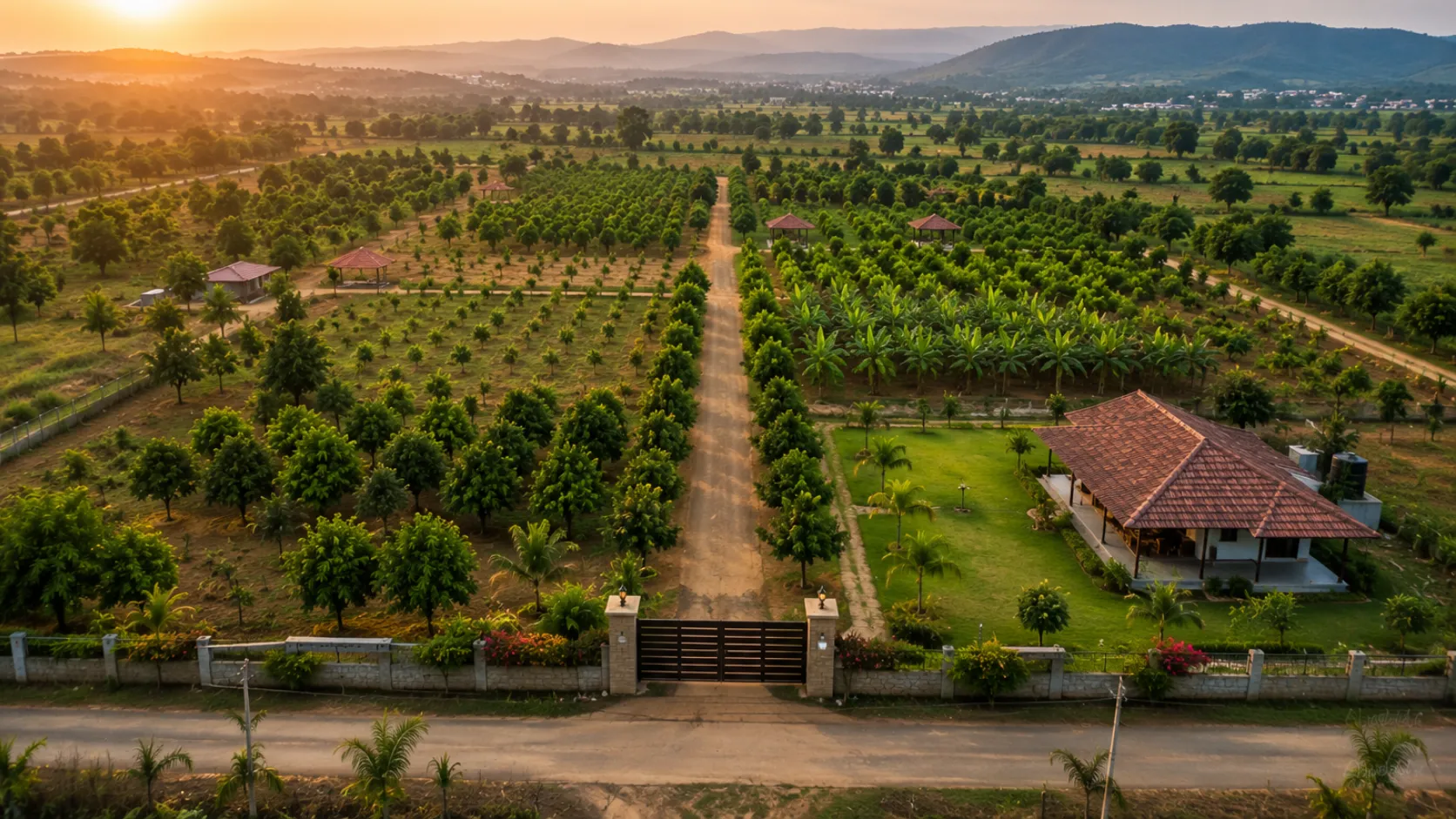
Organic success improves when the land is cared for, even if you cannot visit every week. That is why managed farmland is gaining attention among owners who want consistent upkeep, irrigation discipline, and planned planting. In the Bengaluru region, people searching for farm land for sale near Bangalore often compare access, water reliability, and the ability to maintain the plot responsibly. When you choose a managed model, you can build organic systems that do not break down due to neglect.
Closing Thought
The benefits of organic farming are not a trend. They are a response to soil fatigue, water stress, and the need for healthier food systems in India. If you want to explore a community-led approach to land stewardship, you can learn more at Sanctity Ferme.