Top Farmland Investment Opportunities Near Bangalore With Strong ROI
Discover practical gardening advice, expert landscaping tips, and inspiration to help you make the most of your outdoor space.
Sanctity Ferme Team
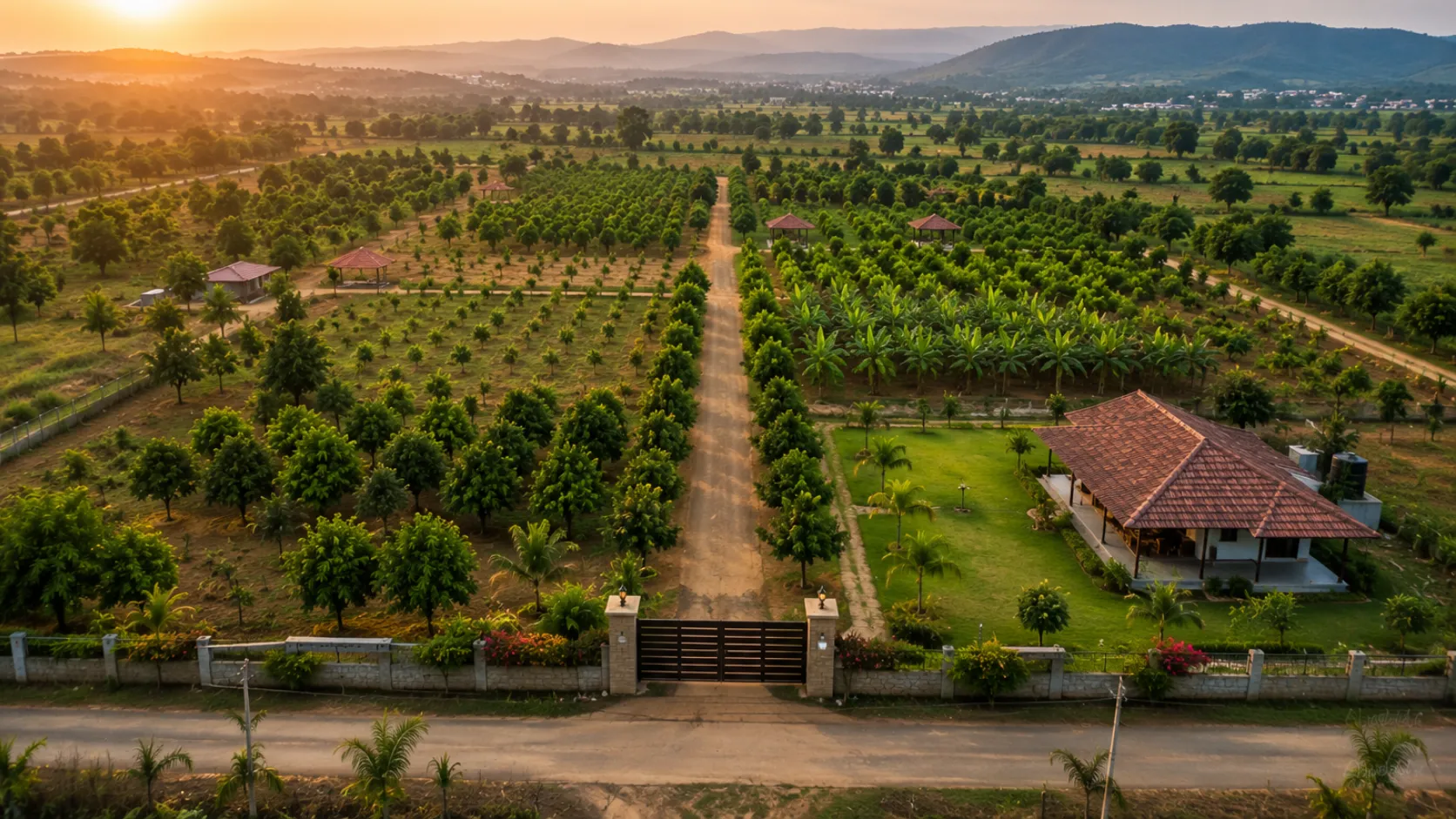
Bangalore is expanding fast. Highways are stretching outward, infrastructure is pushing into once-quiet corridors, and land on the city's fringe is quietly becoming one of the most watched asset classes in South India.
For urban professionals looking beyond fixed deposits and volatile equities, farm land investment near Bangalore is offering something different tangible ownership, long-term appreciation, and the kind of lifestyle asset that a mutual fund simply cannot give you.
This guide covers the best locations, the real ROI drivers, and what to check before you commit.
Is Farmland Near Bangalore a Good Investment?
Land Appreciation Has Been Consistent
The data from 2026 points clearly in one direction. Farm plots in well-connected corridors around Bangalore are appreciating at annualised rates of 10 to 15 percent, driven by urban sprawl, improved road networks, and tightening land supply. Areas like Hosur, Kanakapura, Shoolagiri, and Chikkaballapur that were considered remote five years ago are now under active investor scrutiny.
Agricultural income in India also remains tax-free under current provisions, which adds a quiet but meaningful layer of return especially for investors in higher tax brackets.
Urban Investors Are Rethinking Land
Over 60 percent of new farmland buyers near Bangalore in recent years have cited sustainable living and long-term diversification as primary motivations not just financial returns. This shift matters. It means demand for quality managed farmlands near Bangalore is being supported by lifestyle intent, not just speculation. That makes the asset more stable than many realise.
Which Locations Near Bangalore Offer the Best Farmland Investment Opportunities?
The South Corridor Shoolagiri and the Hosur Belt
The stretch along NH44 toward Shoolagiri and Hosur is among the most active corridors for investment in farmland near Bangalore right now. Located roughly 90 minutes from the city, this region combines fertile red-clay soil, a moderate climate suitable for horticulture, and improving connectivity through the six-lane highway. Land values here have moved significantly in some managed projects, values have risen from ₹55 to over ₹450 per sq. ft. over four years.
The Hosur-Denkanikottai-Thalli triangle is also drawing attention for its proximity to Tamil Nadu's industrial belt while remaining accessible for weekend visits from Bangalore.
Explore available farmlands for sale near Bangalore across these corridors to compare plot sizes and pricing.
Other Emerging Corridors
Kanakapura Road (south-west) and Ramanagara are popular for their scenic value and agri-tourism potential. Nelamangala on Tumkur Road offers strong connectivity and fertile land at relatively accessible entry prices. Doddaballapur in the north is gaining traction due to the Devanahalli airport expansion belt.
Each location carries different price points and crop suitability. What works for mango and moringa plantations may not suit floriculture. Location-specific due diligence matters.
What Factors Affect ROI in Farmland Investments Near Bangalore?
Connectivity, Crop Potential, and the Management Model
Three factors drive returns more than anything else in high ROI farmland investment near Bangalore:
Connectivity Land within 90–120 minutes of Bangalore via a national or state highway consistently appreciates faster. Investors can visit regularly, and future development potential is higher.
Crop selection High-demand crops like mango, banana, papaya, moringa, and guava thrive in South Indian conditions and attract strong market prices from Bangalore's urban consumer base. Organic certification further improves margins.
Management model This is the factor most investors underestimate. A professionally managed farmland project handles irrigation, soil health, plantation upkeep, and security. You own the land and benefit from its productivity without managing daily operations.
Sanctity Ferme's approach to regenerative farming including biodiversity restoration and soil-first practices is designed to build long-term land health, which directly supports value. Learn more at sustainability at Sanctity Ferme.
What Should Investors Check Before Purchasing Farmland Near Bangalore?
Legal Documents, Land Use, and Developer Track Record
Before any purchase, verify these four things without exception:
Encumbrance Certificate (EC) confirms the land has no pending loans or disputes
Land use classification ensure it is classified as agricultural land, not revenue or converted land
Title chain go back at least 30 years to verify clean ownership history
Developer credibility check how many projects the developer has completed, how many plots have been sold, and whether past buyers are accessible for reference
Never treat farmland paperwork as a formality. A clean document protects your investment today and makes resale straightforward when you decide to exit.
What Is the Difference Between Managed Farmland and Traditional Farmland Investments?
Hands-Off Ownership vs. Managing It Yourself
Traditional farmland purchase means you own the land and everything that comes with it. Hiring labour, managing irrigation, handling crop cycles, dealing with trespass and encroachment. For an urban professional with a full-time career, this is rarely practical.
Managed farmland changes the equation. You still hold full legal ownership of your plot. A professional team manages plantation, maintenance, water systems, and security on your behalf. You visit when you want. The land stays productive when you don't.
The key distinction: the management team works on a maintenance calendar, not a lease agreement. You remain the owner and retain all decision rights. It is not tenancy. It is professional stewardship of your asset.
Life at Sanctity Ferme gives you a clear picture of what this model looks like in practice from weekly farm activity to the broader community that develops around it.
Closing Thoughts
Farm land investment near Bangalore is not a niche play anymore. With infrastructure expanding, land supply tightening, and demand for managed farmlands near Bangalore rising steadily, the window for considered entry remains open but it won't stay that way indefinitely.
The right farmland investment combines clear legal title, a location with genuine appreciation potential, and a management model that keeps your land working even when you are not there.
Sanctity Ferme manages 300+ acres across Shoolagiri, with 5 lakh+ trees planted, 800+ plots sold, and a track record stretching back to 2017. If you are evaluating your options, a site visit is the most useful next step.
Book a site visit or read our story to understand the thinking behind what we've built.
Frequently Asked Questions
Is farmland near Bangalore a good investment?
Yes, farmland near Bangalore can be a strong investment. Land in well-connected corridors has appreciated at 10–15% annually in recent years, and agricultural income remains tax-free under Indian law. As with any asset, location, legal clarity, and management quality are key factors.
Which locations near Bangalore offer the best farmland investment opportunities?
The Shoolagiri-Hosur belt along NH44, Kanakapura Road, Ramanagara, and Nelamangala are among the most active corridors. Each offers different price points, crop suitability, and proximity to Bangalore.
What factors affect ROI in farmland investments near Bangalore?
Highway connectivity, crop selection, soil health, and the quality of the management model are the primary ROI drivers. Organic certification and agri-tourism potential add further upside.
What should investors check before purchasing farmland near Bangalore?
Verify the Encumbrance Certificate, land use classification, title chain (at least 30 years), and the developer's delivery track record before signing anything.
What is the difference between managed farmland and traditional farmland investments?
In traditional farmland, you manage daily operations yourself. In managed farmland, a professional team handles maintenance, plantation, and security while you retain full legal ownership making it practical for urban investors with no farming background.