Which Crops Are Grown in the Rabi Season? Complete Crop List
Discover practical gardening advice, expert landscaping tips, and inspiration to help you make the most of your outdoor space.
Sanctity Ferme Team
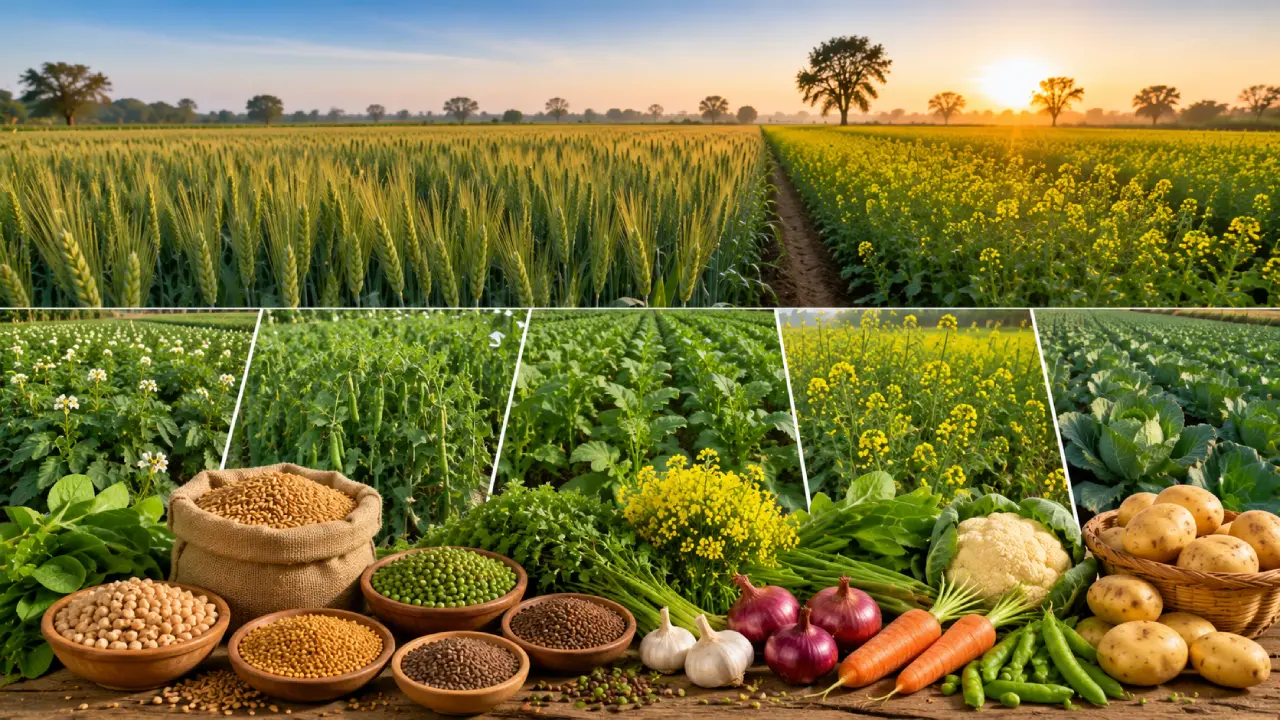
After the southwest monsoon withdraws, Indian farmers prepare for cereals, pulses, oilseeds, spices, vegetables and fodder. Crop choice depends on soil, irrigation, winter temperature and market demand. This guide explains the Rabi cycle, its main crops and its difference from Kharif farming.
What is a Rabi Crop?
Rabi crops are winter-season crops sown after the monsoon and harvested during spring. They rely mainly on irrigation because regular monsoon rainfall has ended.
The term “Rabi” refers to the spring harvest. Farmers prepare land after the rains, sow in cooler months and harvest in warmer, drier weather.
Main features include:
Cool weather during germination and early growth
Moderate temperatures during crop development
Dry conditions near maturity and harvest
Irrigation is the main water source
Sowing after the monsoon withdraws
Harvesting before intense summer heat
For readers asking what is rabi crop, it means a crop suited to India’s winter farming window.
Rabi Season Calendar
They are grown during winter, with field activity running from post-monsoon preparation to spring harvesting.
Crop Stage | Usual Period | Main Work |
Pre-Sowing | September to October | Land preparation |
Sowing | October to November | Seed placement and irrigation |
Growing | December to February | Weeding, nutrition and protection |
Harvesting | March to April | Cutting, drying and storage |
Late Harvest | April to May | Selected late crops |
Timing may shift because winters differ across India. Warmer regions may follow a different schedule from the northern plains for the selected crop variety.
Complete Rabi Crops List
The table below brings the main rabi crop examples together.
Crop Group | Main Crops | Common Producing Regions |
Cereals | Wheat, barley and oats | Northern and central India |
Pulses | Gram, peas, lentil and khesari | Central, northern and eastern India |
Oilseeds | Mustard, linseed, sunflower and safflower | Northern, western, central and southern India |
Spices | Coriander, fenugreek, cumin, fennel and ajwain | Rajasthan, Gujarat and Madhya Pradesh |
Vegetables | Potato, tomato, cauliflower, cabbage, carrot, spinach, onion and garlic | Several winter-growing regions |
Fodder | Berseem, lucerne and fodder oats | Punjab, Haryana and Uttar Pradesh |
This rabi crop list shows why winter cultivation cannot be reduced to food grains. Vegetable, spice and fodder crops also shape farm planning.
Major Cereal and Pulse Crops
Cereals and pulses differ in water need, soil preference and harvest timing.
Cereals
Wheat is the main winter cereal in several northern and central states.
Barley is grown in Rajasthan, Uttar Pradesh, Haryana and Madhya Pradesh.
Oats are cultivated for grain and livestock feed in cooler regions.
Pulses
Gram, also called chickpea, is widely grown during the Rabi season.
Lentils are common in Madhya Pradesh, Uttar Pradesh, Bihar and West Bengal.
Peas are grown in northern and central regions.
Khesari is included among winter pulses in selected eastern and central areas.
Oilseeds, Spices and Vegetables
Suitability depends on location and market access.
Oilseeds
Mustard is associated with Rajasthan, Haryana, Uttar Pradesh and Madhya Pradesh.
Linseed is grown in Madhya Pradesh, Uttar Pradesh and Chhattisgarh.
Rabi sunflower is cultivated in Karnataka and Andhra Pradesh.
Safflower is grown mainly in Maharashtra and Karnataka.
Spices
Coriander
Fenugreek
Cumin
Fennel
Ajwain
Vegetables
Potato
Tomato
Cauliflower
Cabbage
Carrot
Spinach
Onion
Garlic
Vegetable timings vary with crop variety, local temperature and winter length.
State-Wise Rabi Crop Coverage
Different states are known for different winter crop combinations. The table summarises the patterns listed in the reference.
State | Major Rabi Crops |
Uttar Pradesh | Wheat, gram, peas, potato and mustard |
Punjab | Wheat, barley, oats and berseem |
Haryana | Wheat, mustard, barley and gram |
Rajasthan | Mustard, gram, barley, cumin and coriander |
Madhya Pradesh | Wheat, gram, mustard, lentil and coriander |
Maharashtra | Gram, wheat, onion and safflower |
Gujarat | Wheat, mustard, cumin, fennel and garlic |
Bihar | Wheat, lentil, peas and potato |
West Bengal | Wheat, potato, lentil and mustard |
Karnataka | Wheat, sunflower, gram and tomato |
For someone assessing managed farmlands near Bangalore, this list is only a starting point. Water availability, soil drainage and local winter conditions should guide crop choice.
Conditions Needed for Rabi Farming
Field moisture, irrigation, soil condition and harvest weather influence performance.
Important points include:
Reliable irrigation after the monsoon
Adequate soil moisture at sowing
Well-prepared and drained land
Cool conditions during early growth
Timely weeding and nutrient management
Monitoring for frost, dry spells and unseasonal warmth
Dry weather near harvest
Storage and transport arrangements
Farmers should use district-level agricultural advice because local weather can vary sharply.
Rabi Crops and Kharif Crops
The two seasons differ mainly in timing, weather and water source.
Point | Rabi Crops | Kharif Crops |
Main Season | Winter | Monsoon |
Sowing Time | October to November | June to July |
Harvest Time | March to April | September to October |
Water Source | Irrigation | Rainfall |
Climate | Cool and dry | Warm and humid |
Common Crops | Wheat, mustard and gram | Rice, cotton and maize |
Weather Risk | Frost or dry spell | Flooding or excess rain |
Rabi planning begins after the monsoon, while Kharif planning is tied to its arrival.
Choosing a Suitable Rabi Crop
A crop should not be selected only because it appears on a national list. Farm conditions must support it through the season.
Before sowing, check:
Soil type and drainage
Irrigation capacity
Winter duration
Seed availability
Labour requirements
Storage needs
Access to buyers
Rotation with the previous crop
Those reviewing farmland for sale in Bangalore should examine year-round water security and whether the plot can support different seasonal crops, not only one winter crop.
Conclusion
Rabi farming includes cereals, pulses, oilseeds, spices, vegetables and fodder grown between the monsoon’s end and the spring harvest. Wheat, gram and mustard are widely recognised, but the list is broader. Crop selection should reflect soil, irrigation, winter conditions and market access. Local agricultural advice should guide sowing and crop care.
FAQs
What are Rabi crops, and when are they grown?
Rabi crops are winter crops generally sown after the monsoon and harvested in spring. They grow under cool, dry conditions and depend largely on irrigation.
What are the major Rabi crops grown in India?
Major crops include wheat, barley, gram, peas, lentil, mustard, linseed, coriander, cumin, potato, onion, garlic, berseem and fodder oats.
What is the difference between Rabi and Kharif crops?
Rabi crops grow during winter and mainly use irrigation. Kharif crops grow during the monsoon and rely more heavily on rainfall.
Which states produce the highest quantity of Rabi crops?
Uttar Pradesh, Punjab, Haryana, Rajasthan and Madhya Pradesh are prominent Rabi-growing states. Gujarat, Maharashtra, Bihar, West Bengal and Karnataka also grow important winter crops.
What are the ideal climatic conditions for Rabi crop cultivation?
Cool weather during germination, moderate conditions during development and dry weather near harvest are generally suitable. Reliable irrigation is equally important.