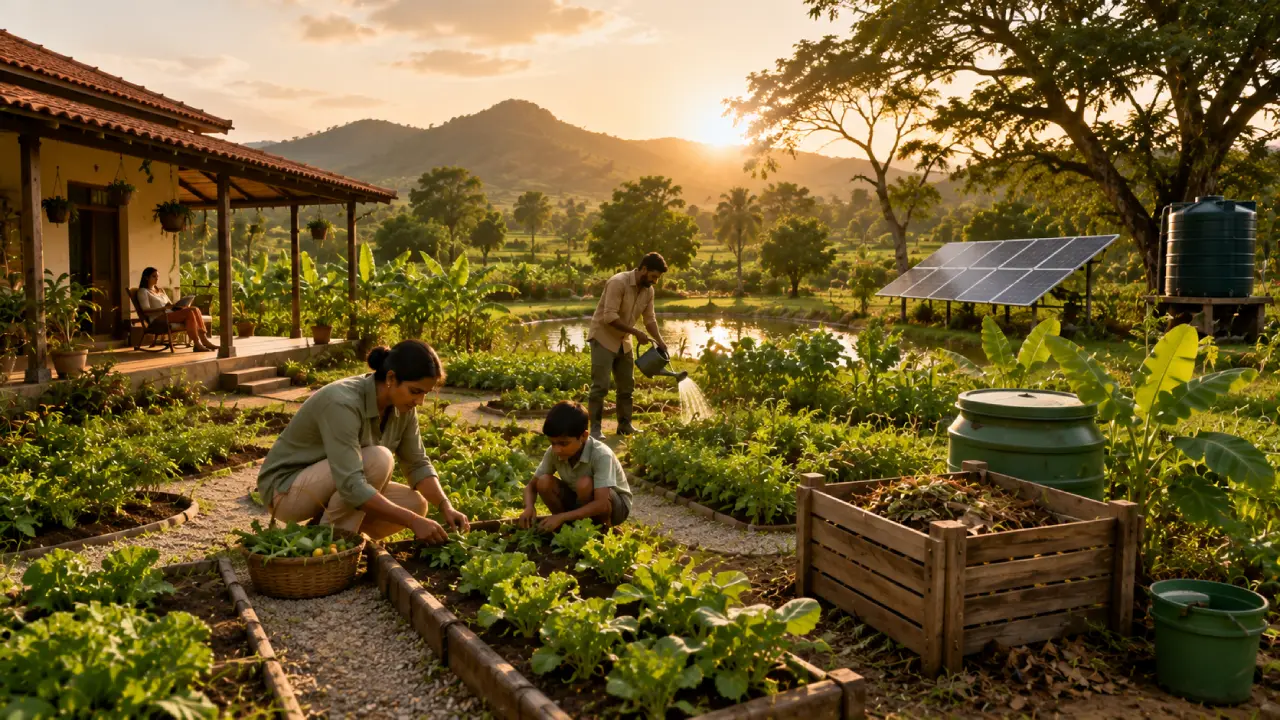
What Is Subsistence Farming? Meaning, Types & Examples
Discover practical gardening advice, expert landscaping tips, and inspiration to help you make the most of your outdoor space.
Sanctity Ferme Team
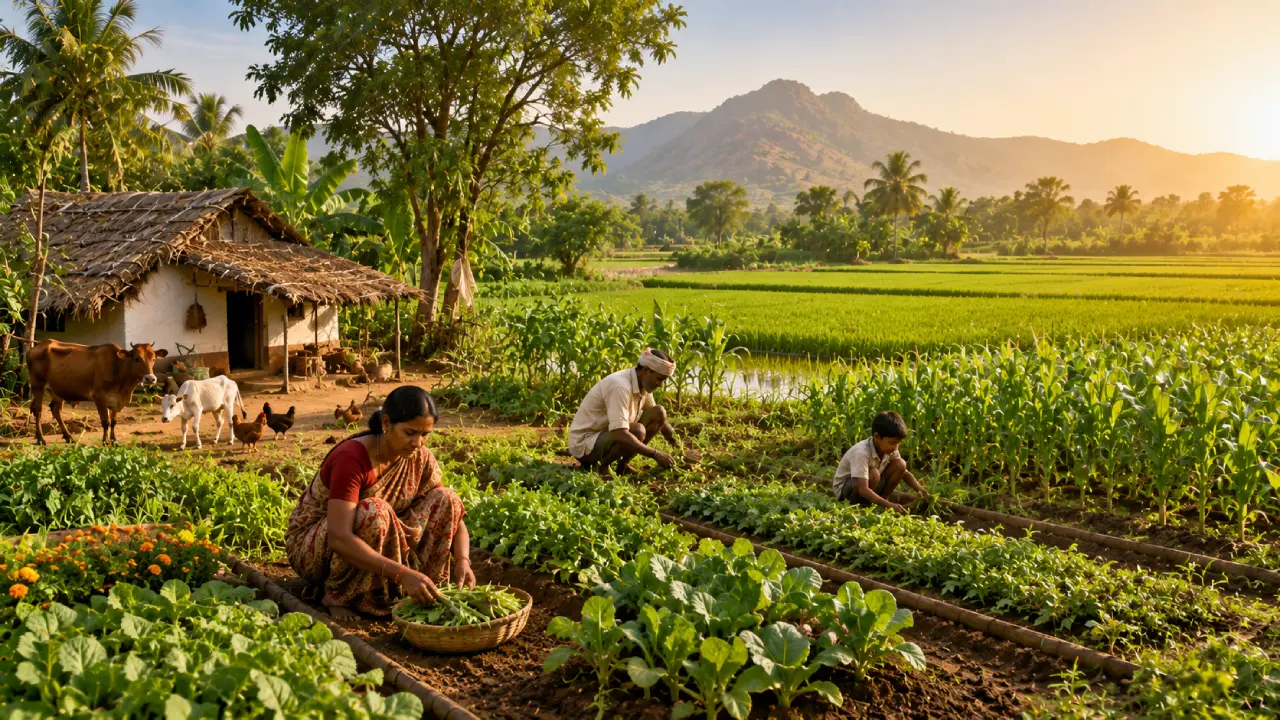
In many Indian villages, farming does not begin with a business. It begins with a simpler question: will the family have enough grain, pulses, vegetables, fodder and milk for the year? A farmer may sell a few bags after harvest, but the first share is usually kept at home. That is the heart of what subsistence farming is. It is a practical way of using land when income is limited, markets are uncertain and food security matters.
What Does Subsistence Farming Mean?
When people ask what does subsistence farming mean, they are asking about farming done mainly for self-use. The farmer grows food for the household rather than producing primarily for the market. The landholding is often small, the work is done by family members, and the methods are shaped by local soil and rainfall.
A household may grow ragi, paddy, wheat, jowar, tur dal, groundnut or seasonal vegetables. It may also keep cattle, goats, hens or buffaloes. Nothing is wasted easily. Straw becomes fodder. Dung becomes manure. Crop residue may be used for mulching or fuel. Seeds may be saved.
There can be some sale of produce when the monsoon is good. But selling is secondary. The main purpose is to reduce dependence on purchased food.
What Is Subsistence Agriculture?
Subsistence agriculture is the wider farming system where crops, animals, water, labour and storage are managed for household survival.
In India, this kind of farming is usually seen among small and marginal farmers. It depends more on local knowledge than on expensive inputs. Farmers observe when the soil is ready, how the wind changes before rain, which patch holds moisture and which crop can handle a dry spell.
Common features include:
Small plots, inherited over generations
Family labour during sowing, weeding and harvesting
Mixed crops instead of one large commercial crop
Limited use of machines
Dependence on monsoon rain or small irrigation sources
Storage of food grains for home use
This system may look simple from the outside, but it requires judgement.
Why It Still Matters In India
Subsistence farming continues because many families cannot afford to take a full market risk. A farmer who grows only a cash crop may earn well in one season and lose badly in another. Prices can fall after harvest. Transport may be costly. Rain may arrive late.
For such families, growing food crops creates a safety net. Even when income is low, there is something in the store room. In dryland areas of Karnataka, Maharashtra, Telangana and Rajasthan, millets and pulses are valued because they survive with less water. In paddy belts, rice remains central because it feeds the household directly.
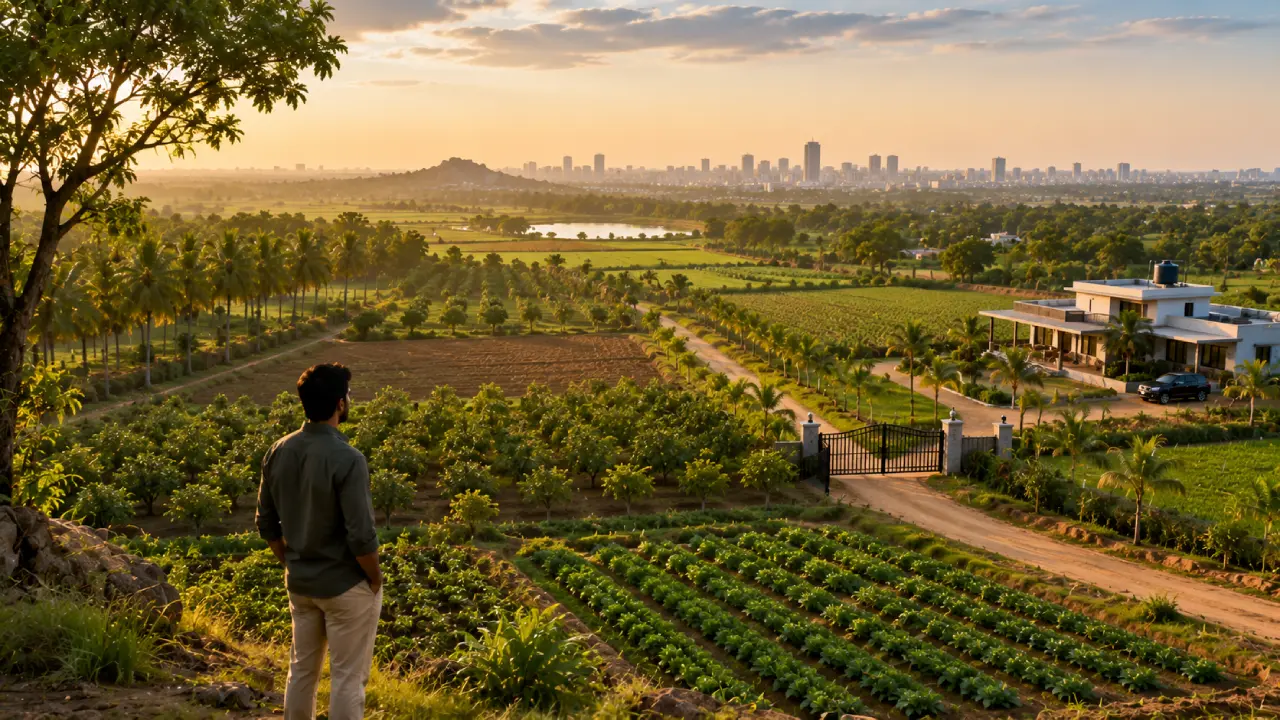
The same idea is useful for anyone comparing farmland for sale in Bangalore. Before making a purchase, it helps to look beyond the listing and understand whether the land can actually support crops, water planning and long-term maintenance.
This is why older farmers keep part of the land under food crops.
Types Of Subsistence Farming
Subsistence farming changes with rainfall, land size, terrain and population pressure.
Intensive Subsistence Farming
This type is common where land is small, but the number of people depending on it is high. Farmers try to get more from the same plot through labour, manure, irrigation and repeated cropping.
Rice-growing areas in West Bengal, Assam, Odisha, Kerala and coastal Karnataka often show this pattern. Where water is available, farmers may take two crops in a year. The land is used closely because there is little space to waste.
Primitive Subsistence Farming
This is an older form of farming seen in some forested and hilly regions. It includes shifting cultivation, where land is cleared, cultivated for a short period and then left to recover. In India, this has been practised in parts of the North East.
The system can work only when the land gets enough time to regain fertility. When the rest period becomes too short, soil erosion and poor yields follow.
Sedentary Subsistence Farming
It means farming on the same piece of land year after year, instead of shifting to a new plot.
Most village farming in India is sedentary. Over time, the farmer learns the land’s behaviour. One corner may suit vegetables. Another may hold water after rain. A bund may need repair before the monsoon. This memory is valuable with composting, crop rotation and careful water use.
Examples From Indian Farms
A family near Tumakuru may grow ragi for daily food, horse gram for both people and cattle, and groundnut for oil or small income. In Mandya, a farmer may keep paddy, coconut, banana and a few vegetables around the house. In Punjab or Uttar Pradesh, wheat, mustard, fodder crops and buffalo milk may support the household.
These examples show how subsistence farms mix food, animals, trees and labour. The system is built around need, not uniformity.
Subsistence And Commercial Agriculture
The phrase what is subsistence and commercial agriculture usually comes up when comparing two farming goals. Subsistence agriculture is for household consumption. Commercial agriculture is for selling produce and earning income.
In commercial farming, crop choice depends more on buyers, price, storage, transport and scale. Farmers may grow flowers, vegetables, fruits, sugarcane, cotton or plantation crops for the market. Investment is higher, and so is exposure to price changes.
Subsistence farming is modest but protective. It may not create strong cash flow, yet it gives direct food value. Many Indian farms follow a middle path: one part for family food and another part for income.
Is Subsistence Farming Sustainable?
It can be, but only when the land is cared for. Mixed crops, farmyard manure, native trees, seed saving and livestock integration can protect soil and biodiversity. Millets, pulses and local vegetables are useful in low-rainfall regions.
Still, subsistence farming can damage land if nutrients are not returned, trees are removed, or the same crop is repeated without rest. Good practices matter:
Composting crop waste
Using mulch to hold moisture
Planting native trees on boundaries
Rotating cereals with pulses
Harvesting rainwater
Keeping soil covered after harvest
For people eyeing managed farmlands near Bangalore, this idea is important. Land is not maintained by ownership alone. It needs water planning, soil care, seasonal observation and realistic crop choices.
Conclusion
Subsistence farming is farming for the household first. It may be small in scale, but it carries deep practical wisdom. It teaches that land is not only an asset or an investment. It is a living system shaped by rain, soil, labour, animals and patience. For modern farmland buyers and sustainability-minded readers, understanding subsistence farming is a useful first step.
FAQs
What is subsistence farming in simple words?
Subsistence farming means growing food mainly for the farmer’s own family, not for large-scale sale.
What are the main types of subsistence farming?
The main types are intensive subsistence farming, primitive subsistence farming and sedentary subsistence farming.
What is the difference between subsistence farming and commercial farming?
Subsistence farming is for family use. Commercial farming is done mainly to sell crops and earn income.
Which countries still practise subsistence farming?
It is still practised in India, Nepal, Bangladesh, Sri Lanka, parts of Africa, South-East Asia and Latin America.
What are the advantages and disadvantages of subsistence farming?
It supports food security and needs low investment, but income is limited, and crop failure can affect the family badly.