What Is Patta Chitta? Meaning, Types & How to Check Online Tamil Nadu Land Records
Discover practical gardening advice, expert landscaping tips, and inspiration to help you make the most of your outdoor space.
Sanctity Ferme Team
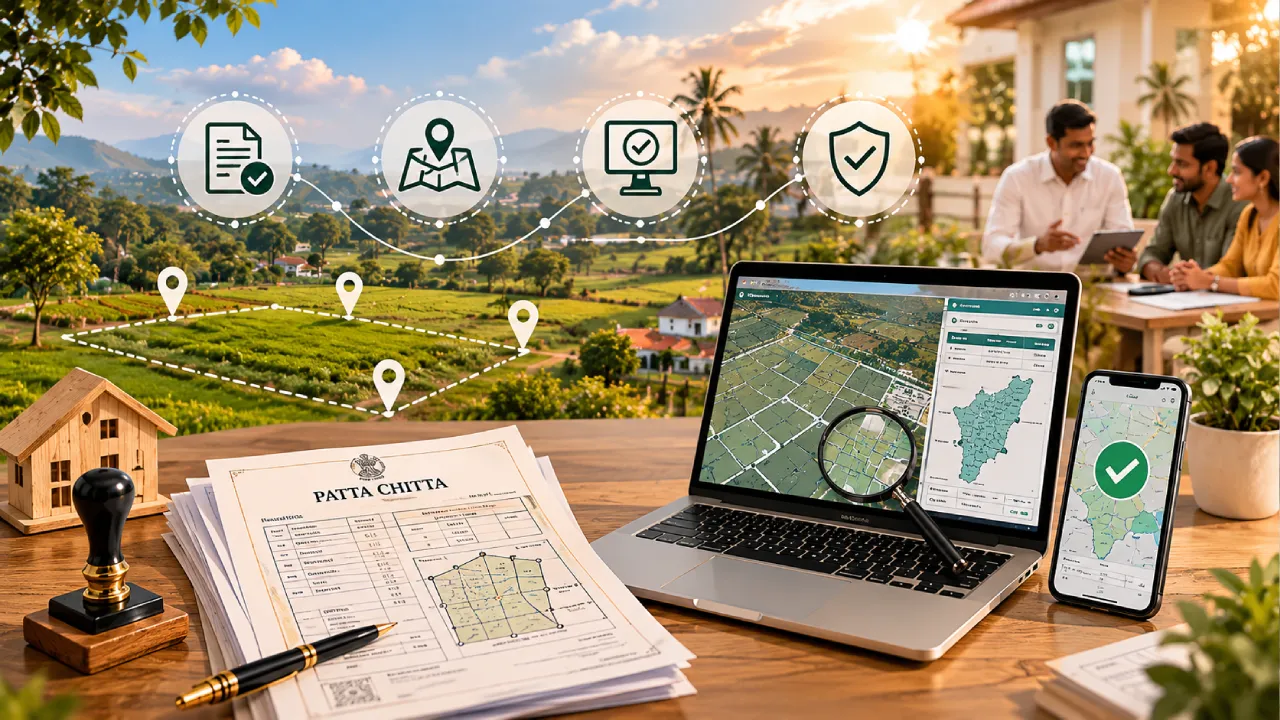
Buying land is one of the most significant decisions you'll make. And yet, many buyers sign on the dotted line without fully understanding the documents in front of them.
If you're exploring farmland or agricultural plots in Tamil Nadu whether near the Shoolagiri hills, the Hosur belt, or anywhere else in the state there's one document you must understand before anything else: Patta Chitta.
This guide explains what Patta Chitta is, why it matters, and exactly how to check your patta application status online. Whether you're a first-time buyer or a seasoned investor looking at farmland for sale near Bangalore, clean documentation starts here.
What Is Patta Chitta? Understanding the Basics
Patta is a legal ownership document issued by the Tamil Nadu Revenue Department. It records the landowner's name, the survey number, the extent of the land, and the type of land involved. Think of it as your government-issued title certificate the document that formally says, "This land belongs to you."
Chitta, on the other hand, is a revenue record that classifies the land. It indicates whether the land is wet (irrigated) or dry, and it's used by the Revenue Department for tax assessment and planning purposes.
Together, Patta Chitta forms the backbone of land ownership verification in Tamil Nadu. They're two sides of the same document in practice, though technically distinct in purpose.
Feature | Patta | Chitta |
Purpose | Proof of ownership | Land classification and revenue |
Authority | Revenue Department | Revenue Department |
Key Usage | Legal transactions, sale | Tax assessment, land planning |
If someone is selling you land and cannot produce a clean Patta, that's a red flag. Walk away, or consult a legal expert before proceeding.
What Is Chitta in Land Records? The Classification Layer
When people ask what is chitta in land, they're usually trying to understand what type of land they're dealing with.
Chitta classifies land into two broad categories:
Nanjai (wet land): Land with irrigation access rivers, tanks, or canals. Wet land typically commands a higher price and may have restrictions on conversion.
Punjai (dry land): Rain-fed agricultural land. More common in the Shoolagiri and Hosur belt where managed farmlands near Bangalore are typically developed.
Understanding this classification matters because it affects what you can do with the land, how it is taxed, and what permits may be needed for plantation or construction. Never skip this detail when reviewing any farm plot or agricultural land purchase.
What Details Are Included in a Patta Document?
A valid Patta document typically contains the following information:
Owner's name (and father's name or spouse's name)
Survey number and subdivision number
Taluk and district
Land area (in acres and guntas)
Land type (wet or dry based on Chitta classification)
Nature of possession (whether pattadar, government, or joint ownership)
These details are cross-referenced during property registration, loan processing, and inheritance settlements. Any mismatch between the Patta and the sale deed you're reviewing should be investigated before proceeding.
If you're evaluating managed farmlands near Bangalore, always ask the developer for the Patta documents for the plot you're considering. Any credible farmland developer should have these readily available.
Is Patta Mandatory for Land Registration in Tamil Nadu?
Yes. Patta Chitta is generally required during land registration in Tamil Nadu. The Sub-Registrar's office uses it to verify ownership, confirm survey details, and validate land classification before completing any transaction.
Buying land without verifying Patta puts you at real risk. Fraudulent ownership claims, disputed boundaries, and illegal encroachments are far more common in properties that lack clean Patta records. Clean documents protect you today and make resale easier when you decide to sell that's not an exaggeration, it's the practical reality of land ownership in Tamil Nadu.
Legal heirs, joint owners, and buyers post-registration can all apply for a Patta. The eligibility is straightforward if you hold legal title or are in the process of acquiring it, you are entitled to the document.
How to Check Patta Online in Tamil Nadu
The Tamil Nadu government has made this easier than most people realise. You can check patta chitta records and track your patta application status entirely online.
Step-by-Step: How to Check Patta Online in Tamil Nadu
Visit the official portal Go to the Tamil Nadu e-Services Patta Chitta page (tnpatta chitta official portal).
Select your location Choose your district, taluk, and village from the dropdown menus.
Enter survey details Input the survey number and subdivision number of the land you're checking.
View land records The system will display the current Patta details, including owner name, land area, and classification.
Download or print You can download a PDF copy for official use. Online Patta copies are valid for most banking and legal purposes.
The entire process typically takes under five minutes. If the records don't match what a seller has told you, that's your first signal to pause and verify further.
How to Check Patta Application Status Online
If you've applied for a new Patta or a Patta transfer, you can track progress without visiting any government office.
To check your patta application status:
Visit the TN e-Services portal.
Click on "Check Application Status."
Enter your application or reference number and the relevant survey number.
Click Search to see the current status pending, approved, or under correction.
Application processing times vary by taluk and complexity. If your application has been sitting without movement, the Tahsildar office of the relevant taluk is your point of escalation.
How to Verify Patta Details Before Buying Land
Due diligence before a land purchase should always include these steps:
Cross-check the survey number on the Patta with the actual survey number in the sale deed.
Verify the owner's name matches the person (or entity) selling the land.
Confirm the land area even small discrepancies in acreage can create complications.
Check the land classification wet or dry, and whether there are any encumbrances recorded elsewhere.
Request an Encumbrance Certificate alongside the Patta this covers the transaction history and any loans or legal claims on the property.
At Sanctity Ferme, all farm plots come with verified documentation. With over 800 plots sold and more than 1,400 community members, clean documentation has been a non-negotiable part of how projects like Sunset Slopes and Divine Grove have been structured. The Patta for every plot is verified before any sale is concluded.
If you're ever in doubt, engage a local property lawyer before signing. An hour of legal review can save years of dispute.
Frequently Asked Questions
What is Patta Chitta and why is it important?
Patta Chitta is a pair of land records issued by the Tamil Nadu Revenue Department. Patta confirms legal ownership; Chitta classifies the land type. Together, they are required for land registration, property sales, loan applications, and inheritance settlements. Without a valid Patta, your ownership claim is legally weak.
What is chitta in land?
Chitta is the revenue classification record that determines whether a piece of land is wet (nanjai) or dry (punjai). This classification affects taxation, permitted use, and resale value. Buyers should always review the Chitta classification before purchasing agricultural or farm land in Tamil Nadu.
How to check patta online in Tamil Nadu?
Visit the official Tamil Nadu e-Services portal, select your district, taluk, and village, enter the survey number and subdivision number, and view or download the Patta details. The process is free and usually takes a few minutes.
Is Patta mandatory for land registration in Tamil Nadu?
Yes. Patta Chitta is typically required during the registration process at the Sub-Registrar's office. It verifies ownership details and land classification and helps avoid disputes during and after the transaction.
Conclusion
Understanding what is patta and what is chitta in land records is not just paperwork knowledge it is the foundation of safe land ownership. In Tamil Nadu, these documents carry legal weight that protects you, your investment, and your family's future claims.
If you're considering farmland near the Bangalore-Chennai corridor, take a look at the farmlands for sale near Bangalore at Sanctity Ferme. Every plot is offered with verified records and full documentation support.
Want to see it for yourself? Book a site visit and walk the land before you decide. Our team is happy to walk you through every document.