What Is Mulching in Agriculture? Types, Benefits & Uses Explained
Discover practical gardening advice, expert landscaping tips, and inspiration to help you make the most of your outdoor space.
Sanctity Ferme Team
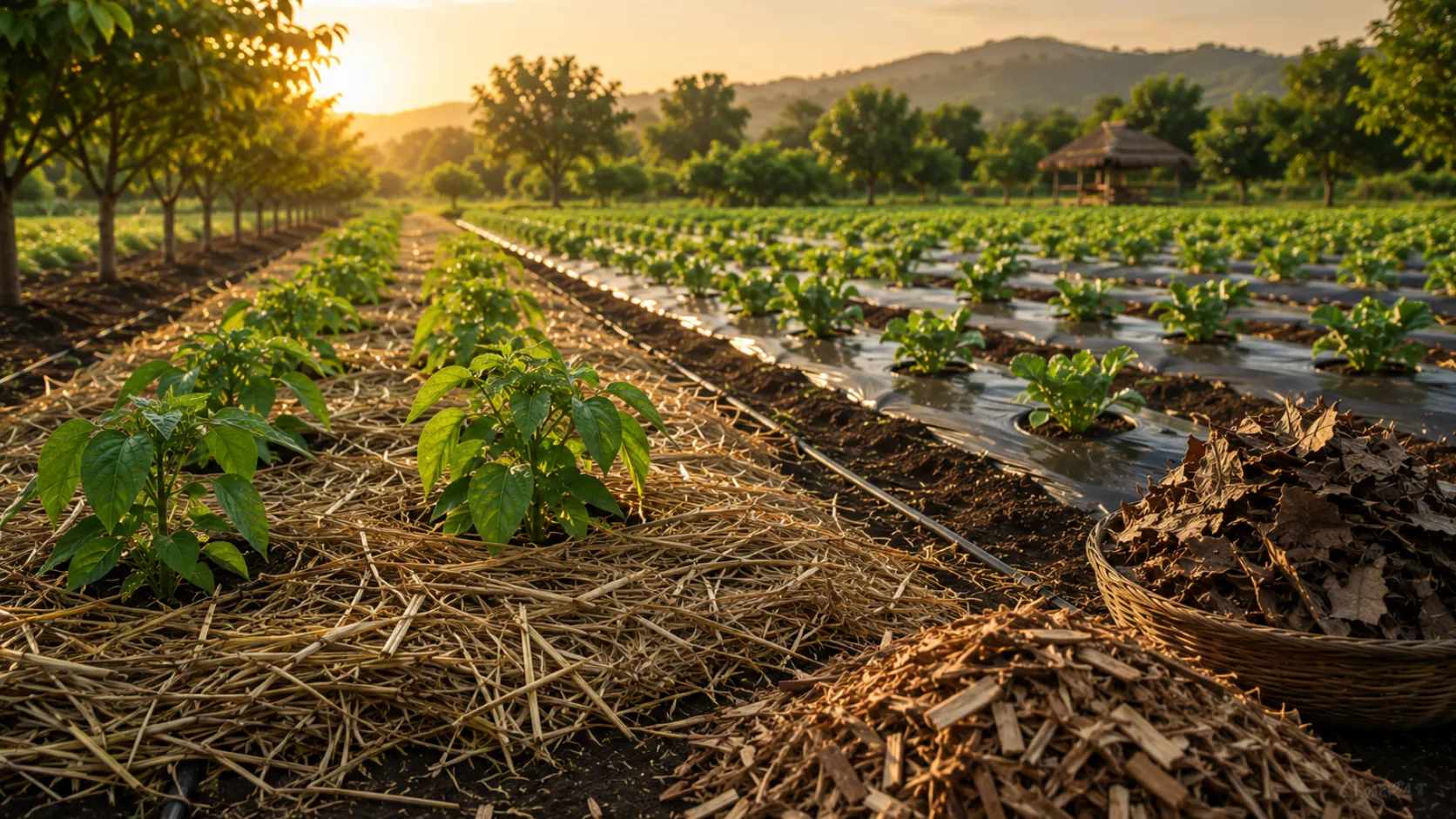
If you've ever noticed a layer of dry leaves, straw, or black plastic film spread across a farm bed, you've seen mulching in action. It's one of the oldest and most practical techniques in agriculture and one of the most underused on small and medium farms today.
Mulching meaning, at its simplest: covering the soil surface with a protective layer of material, organic or synthetic, to improve growing conditions. The benefits are immediate and cumulative better moisture retention, fewer weeds, more stable soil temperatures, and healthier crops over time.
This guide breaks down what mulching is, the main types used in farming, the key benefits, and how to choose the right approach for your land.
What Is Mulching in Agriculture and Why Is It Important?
Mulching in agriculture refers to the practice of applying a covering material straw, compost, wood chips, plastic film, or even living plants directly over the soil surface. This layer sits between the sun, wind, and rain on one side, and the soil and roots on the other.
According to the FAO's documentation on organic mulching practices, a good mulch cover enhances the activity of soil organisms like earthworms, creates a more porous soil structure, and significantly reduces surface runoff which is one of the leading causes of topsoil loss on unprotected farmland.
As the mulch material breaks down over time, it adds organic matter back into the soil. That's the compounding benefit: mulching isn't just protective, it's generative. Soil that's been mulched consistently over seasons builds fertility naturally, reducing dependence on external inputs.
Mulching is relevant across farming settings vegetable gardens, orchards, row crops, and mixed plantations. It's especially valuable during dry seasons, when moisture conservation is critical, and during monsoons, when bare soil is most vulnerable to erosion.
What Are the Different Types of Mulching Used in Farming?
There are two primary categories: organic mulching and inorganic mulching. Each has its place depending on your crop, soil type, and farming goals.
Organic Mulching
Organic mulch comes from natural, decomposable materials. As it breaks down, it actively improves soil health which is why it's the preferred choice on managed farmlands near Bangalore that prioritise regenerative and chemical-free practices.
Common organic mulch materials include:
Straw and hay affordable, widely available, effective for moisture retention and weed suppression
Compost enriches soil fertility as it decomposes; doubles as a soil amendment
Wood chips and bark long-lasting coverage, improves soil structure, suitable around trees and in orchards
Grass clippings readily available after mowing; add nitrogen to the soil as they decompose
Dry leaves shredded leaves break down quickly and add organic matter; excellent for seasonal use
Peat moss improves moisture retention, but should be used carefully due to its environmental footprint
Organic mulching is the backbone of sustainable farming. At Sanctity Ferme, maintaining soil biodiversity and reducing irrigation dependency are central goals and organic mulch supports both directly. You can learn more about our approach to sustainability practices on the farm.
Inorganic Mulching
Inorganic mulch materials are synthetic or mineral-based. They don't decompose, so they don't add nutrients but they offer durability and precision control that organic materials can't always match.
Common inorganic mulch options include:
Black plastic film widely used in vegetable farming; excellent for moisture conservation, weed control, and warming the soil
Gravel and stones suitable for permanent beds and areas needing erosion control
Landscape fabric permeable to water while suppressing weed growth underneath
Rubber mulch made from recycled materials; durable and effective for long-term coverage
Geotextiles used for soil stabilisation and erosion control on slopes and embankments
The right choice depends on your crop, your budget, and how long you need the coverage to last. Plastic mulching, for instance, is common in tomato and melon cultivation because it warms the soil and keeps fruit off the ground.
Which Materials Are Commonly Used for Mulching?
The most commonly used mulching materials in Indian agriculture, based on availability and cost-effectiveness, are:
Material | Type | Best For |
Paddy straw | Organic | Vegetable rows, moisture retention |
Compost | Organic | Soil enrichment, all crops |
Dry leaves | Organic | Garden beds, seasonal use |
Black plastic film | Inorganic | Vegetable farming, moisture & weed control |
Wood chips | Organic | Orchards, perennial plantations |
Coconut coir | Organic | Tropical crops, drip-irrigated beds |
Gravel | Inorganic | Permanent beds, landscaped areas |
For farms using drip irrigation which is common on farm land for sale in Bangalore corridor projects pairing plastic mulch with subsurface drip lines gives precise control over moisture delivery while nearly eliminating surface evaporation.
Can Mulching Help Conserve Water and Control Weeds?
Yes and this is where mulching delivers some of its most measurable value, particularly in India's climate.
Water conservation: Bare soil in direct sunlight loses moisture rapidly through evaporation. A mulch layer of even 5–8 cm can reduce this evaporation significantly, keeping the root zone consistently moist between irrigation cycles. On farms where water access is limited or expensive, this directly translates to reduced irrigation frequency and lower input costs.
Weed suppression: Weeds germinate when seeds get light and warmth from the soil surface. A mulch layer blocks both. Organic mulches reduce weed pressure by 60–80% in well-covered beds. Inorganic options like black plastic can suppress nearly all weed growth in the covered area. This means less manual weeding, lower labour costs, and reduced competition for the crop's nutrients and water.
Temperature regulation: Mulch acts as insulation. In summer, it keeps the soil cooler; in cooler months, it retains warmth around roots. This stability is particularly valuable for crops that are sensitive to temperature fluctuations during germination or fruiting.
Soil erosion prevention: Research-backed data from the FAO confirms that mulched soil resists surface runoff far better than bare soil. Rainwater infiltrates through the mulch layer instead of running off the surface which protects topsoil and recharges groundwater over time.
What Are the Benefits of Mulching for Sustainable Farming?
The benefits of mulching go beyond the immediate crop cycle. Consistently mulched land builds better soil over seasons:
Improved soil biology organic mulch feeds earthworms and beneficial microbes that naturally aerate and fertilise the soil
Reduced chemical dependency better moisture and weed control means less need for herbicides and synthetic fertilisers
Lower irrigation costs reduced evaporation means fewer irrigation cycles
Higher crop quality stable moisture and temperature produce more consistent yields
Long-term land value farms that invest in soil health command better returns, whether through crop income or land appreciation
These outcomes align closely with the managed farming model practised at Sanctity Ferme, where soil health, biodiversity, and reduced input dependency are built into the land management programme from the start. If you're curious about what life on a managed farmland looks like in practice including how sustainable techniques like mulching are applied across plots a site visit gives you a ground-level view that no brochure can.
Mulching and Managed Farmland Near Bangalore
For those exploring farmland ownership near Bangalore, mulching is one of those practices that separates a well-managed plot from a neglected one. It's low-cost, high-impact, and visible you can see and feel the difference in soil quality within a single growing season.
At Sanctity Ferme, across 300+ acres under professional management near the Shoolagiri hills, organic mulching is part of the plantation upkeep that keeps plots productive and soils alive year-round. With 5 lakh+ trees planted and a community of 1,400+ farm owners, the approach here is deliberately long-term: build the soil, reduce inputs, let the land compound its own fertility.
If you're thinking about farmland as an investment or a lifestyle choice and want to understand how sustainable practices like mulching fit into day-to-day management we'd love to show you around.
Frequently Asked Questions
What is mulching in agriculture and why is it important?
Mulching means covering the soil surface with organic or synthetic material to protect it from sun, wind, and rain. It conserves moisture, suppresses weeds, regulates soil temperature, and in the case of organic mulch actively improves soil fertility over time. It's one of the most cost-effective practices available to any farmer or landowner.
What are the different types of mulching used in farming?
The two main categories are organic mulching (straw, compost, wood chips, grass clippings, dry leaves) and inorganic mulching (plastic film, gravel, landscape fabric, rubber mulch). Organic types decompose and enrich the soil; inorganic types offer longer-lasting coverage and precision control.
Which materials are commonly used for mulching?
Paddy straw, compost, dry leaves, and wood chips are the most commonly used organic materials in Indian farming. Black plastic film is widely used in commercial vegetable production. The best material depends on your crop, water access, and whether you want the mulch to also feed the soil.
Can mulching help conserve water and control weeds?
Yes, significantly. A 5–8 cm mulch layer can reduce soil evaporation substantially, cutting irrigation frequency on many crops. It also blocks sunlight from reaching weed seeds, suppressing germination without chemicals making it a practical, low-cost alternative to herbicides on small and medium farms.