Sandalwood Farming in India: Cost, Profit & Complete Cultivation Guide
Discover practical gardening advice, expert landscaping tips, and inspiration to help you make the most of your outdoor space.
Sanctity Ferme Team
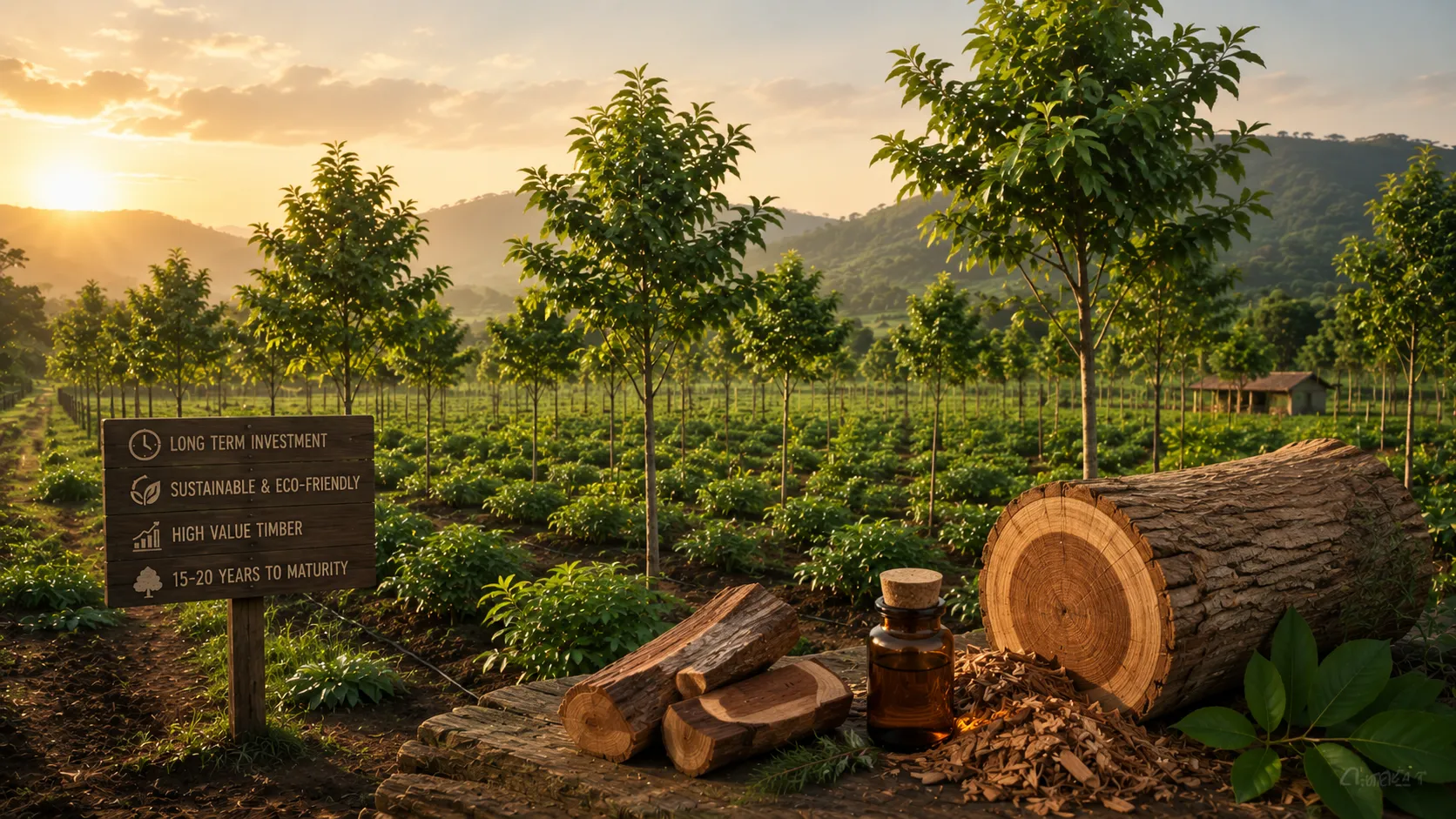
Few crops in India command the kind of market value that sandalwood does. Globally scarce, locally prized, and deeply embedded in India's cultural and religious fabric sandalwood (Santalum album) is among the most valuable tree species in the world. A single well-grown tree at maturity can fetch ₹2.5 to ₹3 lakh at government auction. An acre of productive plantation can make a landowner a crorepati.
But sandalwood farming in India is not a quick win. It demands patience, planning, legal compliance, and the right land conditions. This guide covers everything you need to know before you start from cultivation basics and soil requirements to legalities and profit potential.
What Is Sandalwood Farming and How Does It Work in India?
Sandalwood farming is the systematic cultivation of sandalwood trees on private or agricultural land, with the goal of harvesting aromatic heartwood and essential oil at maturity. The heartwood the dense, fragrant inner core of the tree is what carries the economic value, used in perfumery, cosmetics, traditional medicine, incense, and religious rituals.
What makes sandalwood cultivation in India distinctive is that the tree is a hemi-parasite. It cannot grow to full productivity on its own it draws nutrients from the root systems of nearby host plants. Successful sandalwood plantation in India therefore requires selecting and maintaining the right host species alongside the trees.
Common host plants include red gram (pigeon pea), casuarina, cowpea, and neem. These are planted either before or simultaneously with the sandalwood saplings, and their health directly affects how well the sandalwood trees develop over time.
India's primary growing regions include Karnataka, Tamil Nadu, Andhra Pradesh, Telangana, and parts of Maharashtra and Gujarat. Karnataka, in particular, has the longest tradition of sandalwood cultivation and the most established regulatory framework around it.
What Climate and Soil Conditions Are Suitable for Sandalwood Cultivation?
Sandalwood thrives in conditions that mirror its natural habitat tropical dry deciduous forests, with clear wet and dry seasons, moderate to low annual rainfall, and well-drained soils.
Temperature: The tree grows well between 12°C and 35°C. It does not tolerate sustained frost or waterlogging.
Rainfall: An annual range of 600–1,000 mm is considered suitable. Regions with this rainfall pattern like the semi-arid foothills of the Deccan plateau and parts of Karnataka and Tamil Nadu provide ideal conditions for sandalwood farming.
Soil: Well-drained red or loamy soils with a pH between 6.0 and 7.5 are preferred. Good drainage is non-negotiable root rot is among the most common causes of early tree loss in poorly chosen plots. Rocky or waterlogged terrain should be avoided.
Spacing: A 10 x 10 feet planting spacing is standard, allowing approximately 400–435 trees per acre. This gives each tree adequate root spread and room for the host plant network to develop around it.
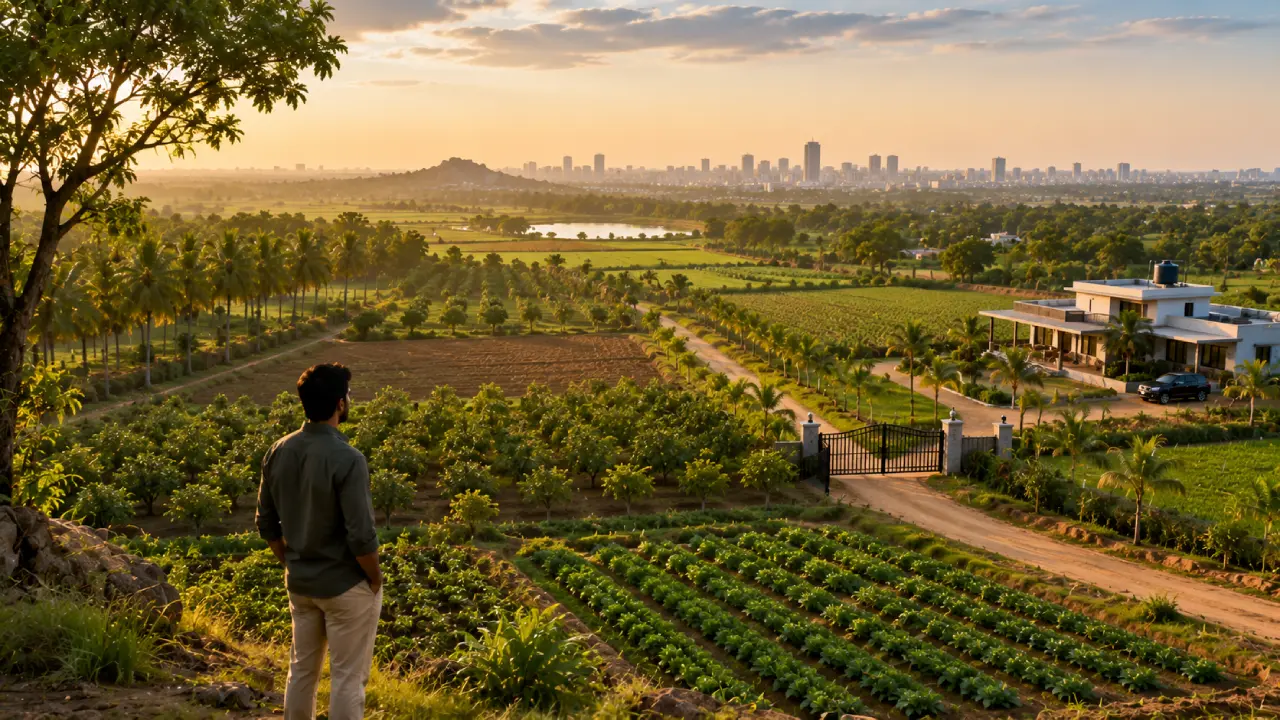
The terrain around Shoolagiri where Sanctity Ferme's managed farmland projects are located shares many of these characteristics: semi-arid red soil, moderate rainfall, and well-drained terrain that supports long-cycle plantation crops. For those exploring managed farmlands near Bangalore with an interest in agroforestry, these conditions matter.
How Many Years Does a Sandalwood Tree Take to Mature?
This is the most important question for anyone considering sandalwood plantation in India and the honest answer shapes everything else.
Sandalwood trees typically take 15 to 20 years to reach full maturity and produce harvestable heartwood. Naturally grown trees in forest conditions can take 30 years. Intensive cultivation using organic methods and optimised host plant management can bring this down to 12–15 years on well-managed plots.
The heartwood begins forming in the core of the trunk from around years 8–10. At that stage, a specialist can conduct a minor inspection sometimes a small core drilling to assess heartwood development without damaging the tree.
During the growing period, maintenance requirements are relatively modest compared to annual crops: periodic pruning, weed management, organic fertiliser application, and monitoring for pests. The bulk of the value builds quietly over years, which is why sandalwood farming is fundamentally a long-term investment in the land itself.
Are There Any Legal Regulations for Sandalwood Farming in India?
Yes and understanding the legal framework before planting is essential.
Sandalwood cultivation on private land has been permitted in India since the early 2000s, when Karnataka (2001) and Tamil Nadu (2002) enacted laws allowing private landowners to grow the crop. Other states followed. The era of the government holding exclusive rights over sandalwood even trees grown on private land has ended. But regulated it remains.
Here is what the current legal framework typically requires across most states:
Registration: Every sandalwood plantation must be registered with the local forest department. This involves declaring the plantation area, number of trees, and expected harvest timeline.
Harvesting permit: Felling trees without a permit is illegal. Before any harvest, landowners must apply to the forest department, which inspects the plantation and issues a felling permit. Unauthorised cutting carries serious legal penalties.
Transit permits: Sandalwood wood cannot be transported without a transit permit issued by the forest department. This applies even for moving logs from the farm to a processing facility.
Sale through government auction: In several states, including Karnataka, harvested sandalwood is auctioned by the government on the farmer's behalf. The farmer receives the proceeds after government fees are deducted. Direct sale in the open market without this process is not permitted.
State-specific rules: Karnataka's regulations fall under the Karnataka Forest Act, 1963. Tamil Nadu follows the Tamil Nadu Forest Act, 1882. Kerala, Andhra Pradesh, and other states each have their own provisions. Farmers must be familiar with the rules applicable to their specific state.
Security: Given sandalwood's high value, theft from plantations is a real risk. Perimeter fencing, live thorny hedges, and regular monitoring are standard protective measures. Any theft should be reported immediately to local authorities.
For those considering farm land for sale in Bangalore corridors for sandalwood plantation, understanding Karnataka's regulatory landscape is the right starting point. It's among the more established frameworks in the country which, while it adds compliance steps, also provides a clearer structure for farmers.
What Is the Cost and Profit Potential of Sandalwood Farming?
Initial investment (per acre, approximate):
Land preparation and soil work: ₹20,000–₹40,000
Sapling cost (400–435 trees): ₹60,000–₹1,00,000
Host plant establishment: ₹10,000–₹20,000
Fencing and security: ₹50,000–₹1,00,000
Annual maintenance (first 5 years): ₹20,000–₹30,000 per year
Revenue potential at maturity (indicative):
Quality heartwood typically fetches ₹10,000–₹20,000 per kg at government auctions
Sandalwood oil extracted from heartwood and roots can command ₹1.5–₹2.5 lakh per litre
A single mature tree can yield ₹2.5–₹3 lakh or more at harvest
An acre of 400 trees, with reasonable survival rates and proper management, represents a significant long-term return
These figures vary by state, auction conditions, tree quality, and heartwood yield which is why honest, qualified projections matter more than headline numbers. Global demand for sandalwood is estimated at around 40,000 metric tonnes annually; documented supply runs well below 100 metric tonnes. The structural scarcity is real and long-standing.
Sandalwood Farming and Managed Farmland Near Bangalore
Sandalwood is a long-term crop. It rewards landowners who are patient, legally prepared, and who have professional support in maintaining the plantation over its growth cycle. For most urban professionals, this means the difference between productive ownership and land that sits idle.
At Sanctity Ferme, long-cycle plantation crops including timber and agroforestry species are integrated into the land management approach across 300+ acres near the Shoolagiri hills. With 5 lakh+ trees planted and a professional team managing soil health, irrigation, and plantation upkeep across 800+ plot owner community, the infrastructure for growing long-cycle crops is already in place.
If you're interested in understanding what life on a managed farmland looks like or how our sustainability practices shape which crops are planted and why a site visit gives you the clearest picture.
Frequently Asked Questions
What is sandalwood farming and how does it work in India?
Sandalwood farming is the cultivation of Santalum album trees on private land, primarily for their aromatic heartwood and essential oil. The tree is a hemi-parasite it needs host plants like pigeon pea or casuarina to draw nutrients from. Farmers must register their plantations and obtain permits before harvesting or transporting the wood.
How many years does a sandalwood tree take to mature?
Sandalwood trees typically take 15 to 20 years to reach maturity in cultivated conditions. With organic-intensive methods and optimised host plant management, this can be reduced to 12–15 years. Heartwood development can typically be assessed after 8–10 years of growth.
What climate and soil conditions are suitable for sandalwood cultivation?
Sandalwood grows best in semi-arid to tropical conditions with temperatures between 12°C and 35°C and annual rainfall of 600–1,000 mm. It requires well-drained red or loamy soils with a pH of 6.0–7.5. Waterlogged or rocky terrain is unsuitable.
Are there any legal regulations for sandalwood farming in India?
Yes. Plantations must be registered with the state forest department. Harvesting requires a felling permit. Transporting wood requires a transit permit. In states like Karnataka, harvested sandalwood is auctioned by the government on the farmer's behalf. Direct open-market sale without authorisation is not permitted. Regulations vary by state, so it's essential to check the specific rules applicable to your location.