Polyhouse Farming in India: Benefits, Cost & Profit Explained
Discover practical gardening advice, expert landscaping tips, and inspiration to help you make the most of your outdoor space.
Sanctity Ferme Team
India's farming community is slowly but surely moving away from the unpredictability of open fields. Irregular monsoons, pest outbreaks, and shrinking margins are pushing both small farmers and large landowners toward smarter, more controlled ways of growing.
Polyhouse farming is one of the clearest answers to these challenges and across Karnataka, Tamil Nadu, Maharashtra, and beyond, it is quietly becoming one of the most talked-about methods in modern agriculture.
Whether you own farmland and want to increase its productivity, or you are exploring sustainable agricultural investments, here is a grounded look at what polyhouse farming involves, what it costs, and whether the numbers make sense.
What Is Polyhouse Farming?
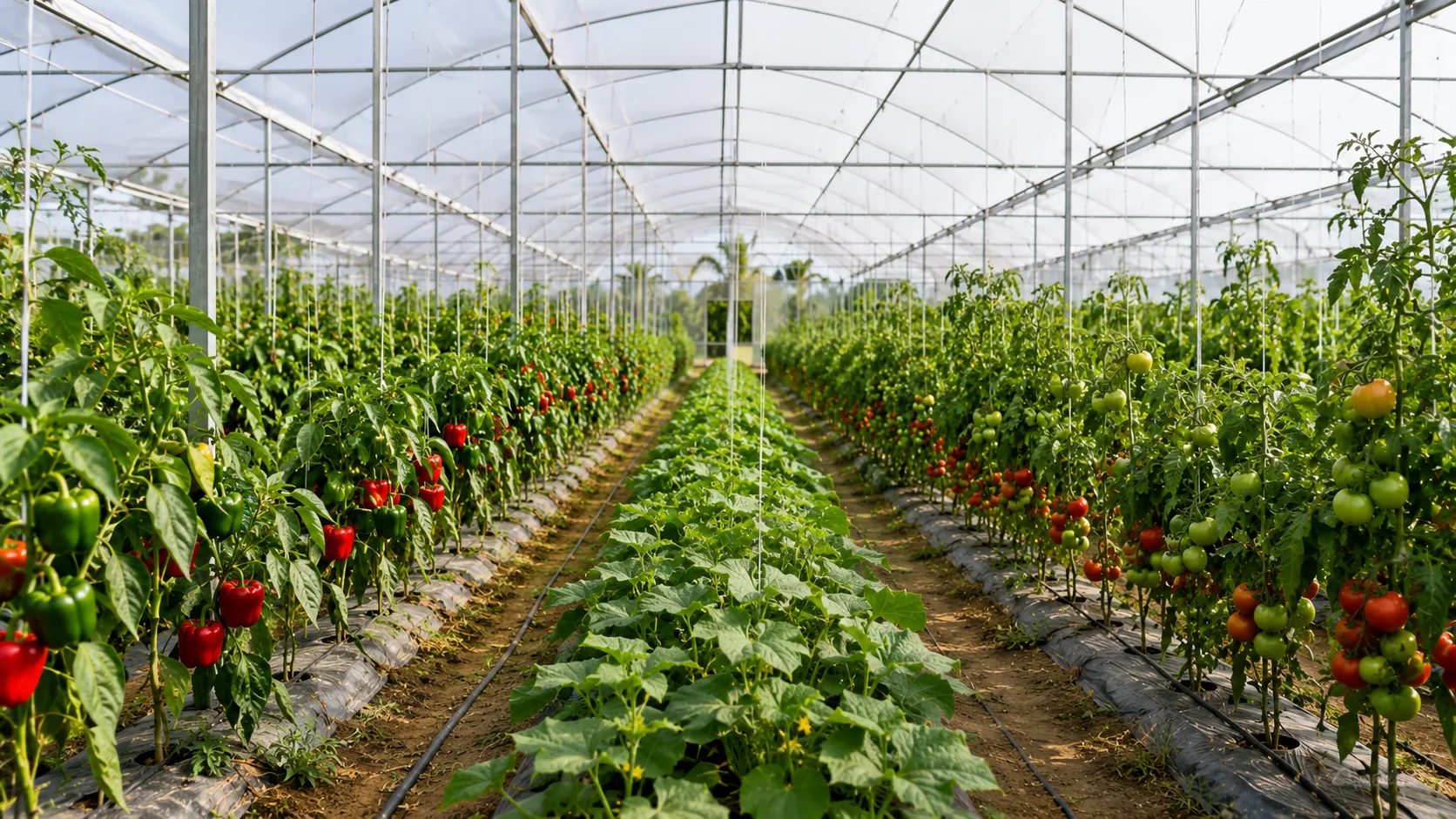
A polyhouse also called a plastic greenhouse is a structure covered with UV-stabilised polyethylene film that creates a controlled growing environment. Temperature, humidity, light, and nutrients can be managed inside, regardless of what is happening outside.
This is the core difference between polyhouse farming and conventional open-field cultivation. In a polyhouse, you are not farming with the weather you are farming around it.
The result: crops can be grown year-round, yields are significantly higher per square metre, and produce quality is more consistent and market-ready. Greenhouse farming in India using polyhouse structures has expanded rapidly over the past decade, supported by government subsidies and rising urban demand for off-season vegetables and flowers.
What Are the Major Benefits of Polyhouse Farming in India?
The advantages of polyhouse farming become clear quickly once you compare output with open-field farming:
Higher yield per unit of land Crops grown in a polyhouse typically produce 5 to 10 times more than the same crop grown in open fields. In a country where arable land is limited, this efficiency matters enormously.
Year-round and off-season production Tomatoes, capsicum, cucumber, and strawberries do not need to wait for the right season. A controlled polyhouse can produce them in any month, which means farmers can sell during low-supply periods and command better prices.
Water efficiency Drip irrigation and misting systems within polyhouses cut water consumption by 60 to 70 percent compared to flood irrigation. For farmlands in water-stressed regions, this is a meaningful operational advantage.
Reduced pest and disease pressure The enclosed structure limits exposure to insects, soil pathogens, and airborne diseases. This typically reduces dependency on chemical pesticides and supports more organic or near-organic production.
Precision nutrition management Fertigation (delivering nutrients through irrigation water) allows farmers to give plants exactly what they need at each growth stage. Less waste, better plant health, and superior produce quality all of which improve profitability.
These benefits make polyhouse farming especially well-suited for farmland owners who want to maximise the productive value of their land while keeping operational complexity manageable.
What Are the Types of Polyhouses in India?
Not all polyhouses are the same. The right choice depends on your budget, target crop, and location:
Low-Cost / Naturally Ventilated Polyhouse Built with GI pipe or bamboo frames and UV film, relying on natural airflow for climate control. Setup cost runs between ₹32–38 lakh per acre. Best for basic vegetables like tomatoes and capsicum, and suitable for most South Indian climates.
Medium-Tech / Semi-Automatic Polyhouse Equipped with exhaust fans, cooling pads, and misting systems. Suited for floriculture Dutch roses, gerbera, and carnations and higher-value vegetables. Costs are moderately higher but so are returns.
High-Tech / Fully Automatic Polyhouse Computer-controlled systems manage temperature, CO₂ levels, humidity, and nutrients. Setup costs range from ₹60–85 lakh per acre. Best for export-quality produce, strawberry cultivation, and crops with very precise environmental requirements.
Shade Net House A lighter alternative at ₹14–18 lakh per acre, used for nursery production and shade-loving crops.
What Is the Average Cost of Setting Up a Polyhouse in India?
Polyhouse farming cost in India varies significantly by type and location:
Type | Setup Cost (per acre) | Annual Operating Cost |
Low/Medium-Tech | ₹32–38 lakh | ₹4–7 lakh |
High-Tech (Fan & Pad) | ₹60–85 lakh | ₹6–10 lakh |
Shade Net House | ₹14–18 lakh | ₹2–4 lakh |
These figures cover structure, irrigation, and basic electrical installation. Recurring costs include seeds, fertilisers, electricity, and labour.
The good news: the Indian government provides substantial financial support, which significantly reduces the net investment required.
Does the Government Provide Subsidies for Polyhouse Farming in India?
Yes and the support is substantial. Under the National Horticulture Board (NHB) and state horticulture missions, farmers can access:
50 to 75 percent subsidy on project cost for general category farmers
Up to 90–95 percent subsidy for SC/ST farmers in some states
Credit-linked back-ended subsidies the bank disburses the full loan, and the subsidy is credited after project completion
A Letter of Intent (LOI) from NHB is required before construction begins
In Karnataka specifically, the state horticulture department runs additional programmes that make it easier to fund polyhouse projects. Farmers near Bangalore and Shoolagiri are well-positioned to access both national and state-level schemes.
Which Crops Are Best Suited for Polyhouse Farming?
Crop selection is where polyhouse farming profit is either made or lost. The best choices balance high market demand with suitability for controlled environments:
Vegetables Coloured capsicum (red, yellow, orange varieties command premium prices), English cucumber, cherry tomato, and broccoli are among the most profitable.
Flowers Dutch rose, gerbera, carnation, orchids, and lilium are in consistent demand from urban florists, event planners, and exporters.
Fruits Strawberry and melons perform exceptionally well in controlled, off-season conditions and attract strong retail and export prices.
The South Indian climate, particularly in the Shoolagiri-Hosur-Bangalore corridor, is well-suited for coloured capsicum and flower cultivation crops with good urban market access and rising demand from Bangalore's food and hospitality sector.
Is Polyhouse Farming Profitable in India?
Planned well, yes polyhouse farming profit can be meaningful. The key variables are crop choice, market linkages, and operational discipline.
A low-tech polyhouse growing coloured capsicum can generate gross revenues of ₹15–25 lakh per acre annually, against operating costs of ₹4–7 lakh. After accounting for loan repayments and amortised setup costs, a well-run polyhouse can reach break-even within 3 to 5 years faster if government subsidies offset the initial investment.
The income from polyhouse production also complements land value growth. Farmland that is actively productive commands better resale prices and is more attractive to future buyers than idle land.
For landowners considering how to activate the productive potential of agricultural plots, polyhouse cultivation can work alongside open-field planting or managed plantation depending on the size and nature of the holding.
Polyhouse Farming and Managed Farmland Near Bangalore
For urban investors and landowners near Bangalore, the combination of managed farmlands near Bangalore with modern techniques like greenhouse farming in India represents a practical path to better returns from agricultural land.
Sanctity Ferme has been developing managed farmland communities near Shoolagiri 90 minutes from Bangalore via NH44 since 2017. With 300+ acres under management, 5 lakh+ trees planted, and 800+ plots sold, the focus has always been on making farmland ownership productive, legal, and genuinely enjoyable for people who don't live on-site.
If you are evaluating farm land for sale in Bangalore or want to understand how to put your agricultural plot to work, talk to the Sanctity Ferme team or book a site visit to see the land firsthand.
Frequently Asked Questions
What are the major benefits of polyhouse farming in India?
Polyhouse farming delivers higher yields (5–10x vs. open fields), year-round crop production, 60–70% water savings through drip irrigation, reduced pest pressure, and precision nutrient delivery. These benefits make it one of the most efficient approaches to productive land use in India today.
What is the average cost of setting up a polyhouse in India?
Setup costs range from ₹14–18 lakh per acre for a basic shade net structure, ₹32–38 lakh for a naturally ventilated polyhouse, and ₹60–85 lakh per acre for a fully automated high-tech unit. Annual operating costs typically add ₹4–7 lakh per acre.
Which crops are best suited for polyhouse farming?
Coloured capsicum, cherry tomatoes, English cucumber, broccoli, Dutch roses, gerbera, carnations, strawberries, and melons are among the most profitable choices. The right crop depends on your polyhouse type, local climate, and proximity to markets.
Does the government provide subsidies for polyhouse farming in India?
Yes. The National Horticulture Board (NHB) offers 50–75% subsidies on setup costs, with some states providing up to 90–95% for SC/ST farmers. Karnataka has additional state-level schemes. A Letter of Intent from NHB is required before construction begins.
Is polyhouse farming profitable in India?
With the right crop selection and market planning, yes. A well-run polyhouse can reach break-even within 3–5 years, with annual revenues significantly exceeding operating costs. Government subsidies improve the economics further by reducing net capital outlay.