Karnataka Agriculture Guide 2026: Crops, Climate & Farming Opportunities
Discover practical gardening advice, expert landscaping tips, and inspiration to help you make the most of your outdoor space.
Sanctity Ferme Team
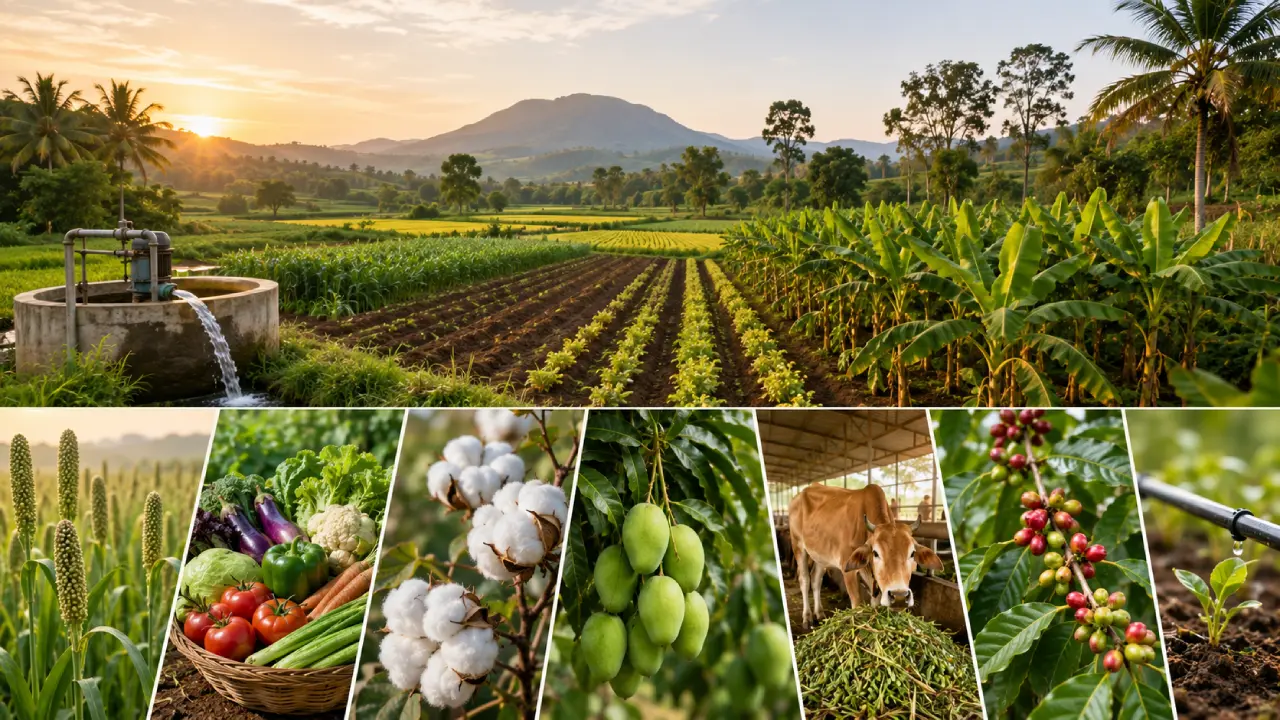
Karnataka’s agriculture changes from one region to another. The crops grown around Bengaluru may differ from those suited to the northern districts, coastal belt or dry interior areas. Soil type, rainfall, groundwater and access to markets all influence what can be cultivated successfully.
This guide explains the major crops grown across the state, the climate conditions that support them and the farming opportunities worth assessing before choosing land or planning cultivation in 2026.
How Farming Conditions Vary Across Karnataka
There is no single crop plan for the whole state. Soil depth, drainage and moisture retention shape what can be grown successfully.
Red loamy soil around Kanakapura and Channapatna is linked with vegetables, millets and fruit trees. Black cotton soil around Tumakuru and Doddaballapura is associated with pulses and cotton. Laterite or gravel-heavy land may need soil improvement before regular cultivation.
Land Condition | Suitable Crop Group | Main Check |
Red loamy soil | Vegetables, millets and fruit trees | Drainage and depth |
Black cotton soil | Pulses and cotton | Moisture retention |
Gravel-heavy land | Crops after soil improvement | Fertility and water holding |
A soil test is more reliable than judging land by colour alone.
Major Crops and Their Farm Needs
Crop selection should match the plot, available water and the owner’s capacity to manage field work.
Millets may suit land where seasonal water and soil conditions support them.
Vegetables need closer attention because irrigation, weed control, crop protection, harvesting and transport must happen on time.
Pulses and cotton may suit black-soil areas when excess water can leave the field.
Fruit farming requires a longer view. Mango and other fruit trees need spacing, pruning and dependable irrigation while they establish. Banana needs regular water and field supervision. Intercropping can use open space between young trees, but the secondary crop should not compete heavily for sunlight, nutrients or moisture.
How Climate and Water Shape Crop Choice
Annual rainfall alone does not show whether a farm can support a crop. The timing of rain, dry periods and actual water available on the plot matters more.
Before planting, check:
Whether the borewell works
Whether it supplies water in summer
How nearby farms irrigate
Whether wells, tanks or canals are available
Whether electricity supports pumping
How quickly the field drains
Whether drip irrigation is practical
Whether water can be stored
A crop that grows well during the rainy period may become difficult to maintain in the dry months. Water planning must cover the full crop cycle.
Farming Opportunities in Karnataka
The state supports seasonal cultivation, horticulture, intercropping, livestock-linked activity and professionally supervised farming. The right model depends on the plot and the owner’s involvement.
Seasonal farming suits owners who can arrange timely sowing, irrigation and harvest. Orchard development is a longer commitment because trees need continued care before the farm settles into a regular cycle.
Owners may consider managed farmlands near Bangalore when they cannot supervise irrigation, labour, pruning and maintenance. The agreement should state who handles inputs, crop decisions, records, harvesting and repairs.
Choosing Land for Cultivation
A neat-looking plot is not automatically productive farmland. Farm value comes from usable soil, dependable water, legal access and the ability to carry out agricultural work year-round.
While searching for agricultural land for sale in Karnataka, walk the boundaries, inspect low-lying areas, check the approach road and ask how neighbouring fields are cultivated.
Review:
Soil test results
Working water sources
Drainage
Access for farm vehicles
Electricity
Existing trees and crops
Distance from labour and buyers
Survey stones and boundary records
The term agricultural land describes the recorded category. It does not prove that every plot has suitable soil, water or access for the intended crop.
Why Old Price Searches Mislead
Price alone reveals little about farming potential. A cheaper plot may need heavy spending on water, soil correction, fencing or access.
The phrase 1 lakh per acre agricultural land in Karnataka 2020 is an old online search term, not a current valuation method. Value changes with location, title clarity, water, road connectivity, soil and permitted use. Unusually low quotations need investigation, not quick acceptance.
Legal Checks Before Purchase
Buying agricultural land in India requires state-specific verification. Karnataka’s amended framework has widened access for non-agriculturists, but every transaction still needs document and land-use checks.
Review the title deed, encumbrance certificate, RTC or Pahani, mutation record and survey documents. The seller’s name, survey number, land extent and boundaries should match throughout.
Those comparing farmland for sale in Bangalore should also check whether the plot lies near forests, lakes, buffer areas, planned infrastructure or restricted zones. Fencing or road access does not confirm permission for residential or commercial construction.
Finance for Salaried Buyers
A loan to buy agricultural land for salaried applicants may be considered, but the assessment differs from that of a home loan.
Lenders may examine title quality, location, valuation, repayment capacity and the proposed agricultural activity. Buyers should obtain written details on eligibility, required contribution, repayment terms and accepted documents before paying an advance.
Conclusion
Karnataka offers opportunities in millets, vegetables, pulses, cotton, fruit trees, intercropping and managed cultivation. The right choice depends on soil, water, local weather, labour and market access.
Decide first what the farm must support, then test the plot against that plan. Clear records matter, but so do drainage, year-round water and practical supervision. Good farming begins with land that can support the chosen activity with confidence.
FAQs
What are the major crops grown in Karnataka?
Karnataka grows a wide variety of crops, including rice, ragi, jowar, maize, pulses, sugarcane, cotton and oilseeds. The state is also known for coffee, arecanut, coconut, spices, fruits and vegetables. Crop choice mainly depends on rainfall, soil quality, irrigation access and the farming conditions of each region.
Which districts in Karnataka are best for agriculture?
Mandya, Mysuru, Hassan, Belagavi, Dharwad, Chikkamagaluru, Kodagu and Chikkaballapur are among Karnataka’s important agricultural districts. Mandya is known for irrigated crops, while Kodagu and Chikkamagaluru are suitable for coffee. The best district depends on the crop, water availability, soil type, climate and access to nearby agricultural markets.
What climate is suitable for farming in Karnataka?
Karnataka has tropical, semi-arid, coastal and hill climates, allowing farmers to grow different crops across regions. High-rainfall areas support coffee, spices and plantation crops, while drier regions are suitable for millets, pulses and oilseeds. Irrigated areas can grow paddy, sugarcane, vegetables and several commercially valuable horticultural crops.
Which horticultural crops are most profitable in Karnataka?
Grapes, pomegranates, mangoes, bananas, arecanut, coffee, flowers, spices and gherkins can provide good returns in Karnataka. However, profitability depends on suitable soil, reliable water supply, disease control, labour costs and market demand.
What are the emerging farming opportunities in Karnataka in 2026?
Emerging opportunities include high-value horticulture, organic farming, protected cultivation, micro-irrigation, beekeeping and food processing. Farmers are also exploring direct-to-consumer sales, farm tourism, value-added products and technology-based crop monitoring.