The Journey of Food from Farm to Plate Explained Step-by-Step
Discover practical gardening advice, expert landscaping tips, and inspiration to help you make the most of your outdoor space.
Sanctity Ferme Team
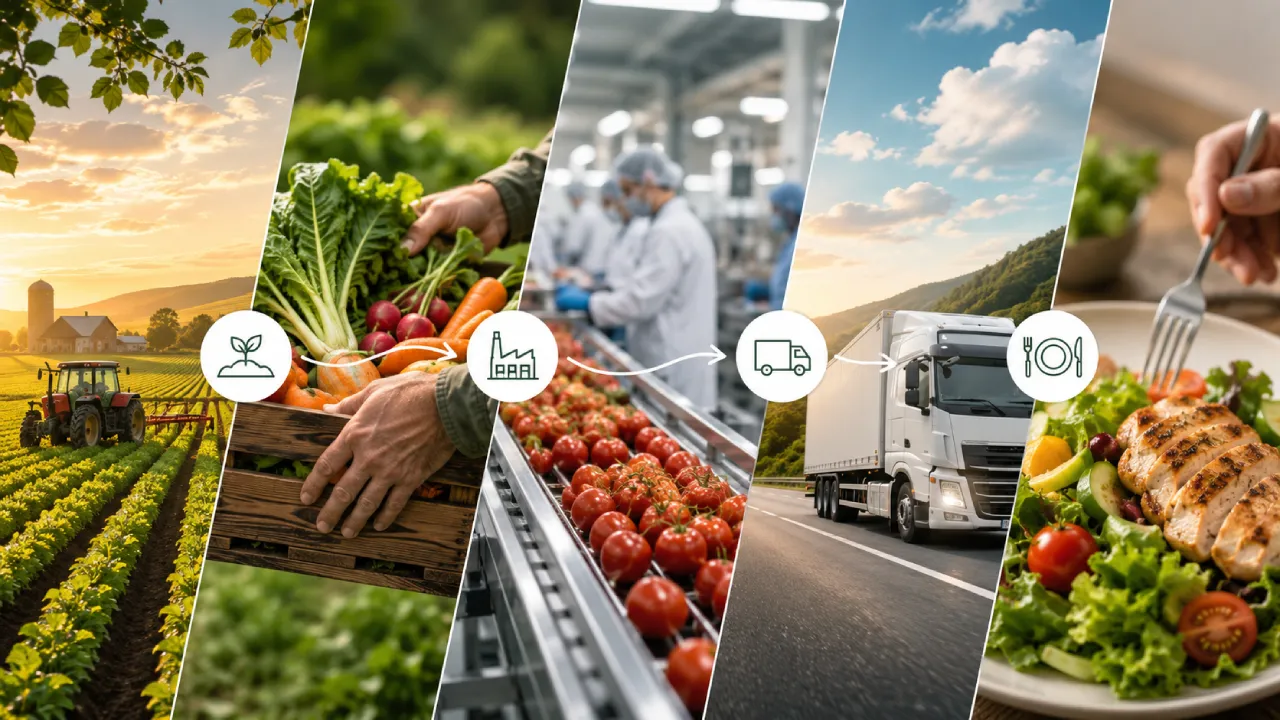
Think about the last meal you cooked. The tomatoes, the rice, the greens. Each ingredient sat on your counter looking unremarkable but behind it was a journey that stretched from soil to seed to harvest to truck to shelf to your kitchen.
Most of us eat without thinking about that journey. But understanding it changes how you look at food. It changes what you choose to buy, where you buy it, and why freshness matters more than most food labels admit.
This is the complete journey of food from farm to plate explained simply, step by step.
What Does "Farm to Plate" Mean?
Farm to plate (also called farm to table or farm to fork) describes the complete path food takes from where it is grown or raised to where it is consumed. It covers every stage in between harvesting, processing, packaging, transportation, retail, and finally your kitchen.
The phrase has become more than a description. It's now a philosophy. The farm to plate concept advocates for locally sourced, seasonal, organic, and freshly produced food bringing people back into a direct relationship with where their food comes from.
In an era where produce is often shipped across states and stored for weeks before reaching a supermarket, the farm to kitchen ideal is a meaningful counterpoint. It asks a simple question: what if the food on your plate came from somewhere you could actually visit?
Step 1: Farming and Cultivation
Every food journey begins with the land.
Farmers prepare the soil, select seeds suited to the season and climate, and plant crops. Depending on the scale, this work might be done by hand on a small family farm or mechanically across hundreds of acres. Farmers work tirelessly to grow, harvest, and care for the foods that eventually make their way to your table involving careful planning, planting, nurturing, and often sustainable farming practices to ensure a bountiful harvest.
Crop selection isn't arbitrary. Soil type, rainfall, temperature, and regional compatibility all determine what grows well where. A paddy field needs standing water. Millets thrive in drier conditions. A tomato in Karnataka ripens differently than one grown in Himachal Pradesh. The land itself shapes what ends up in your bowl.
This is the stage where the most is at stake and where the most is lost. Approximately 30–40% of food produced by farmers worldwide is never consumed, with food lost at this stage due to pests, disease, harsh weather, or market conditions that make harvesting uneconomical.
Step 2: Harvesting
When crops reach maturity, they're harvested either by hand, using traditional tools like sickles, or by machine for large-scale farms.
Timing matters enormously. Harvest too early, and the produce lacks flavour and nutrients. Harvest too late, and quality degrades quickly. Skilled farmers read the crop its colour, firmness, smell to decide the right moment.
For most vegetables and fruits, the clock starts ticking the moment they leave the plant. Nutritional content and freshness begin to decline from the point of harvest. This is why the distance between harvest and plate directly affects what you're actually getting in terms of nourishment.
Step 3: Processing
Not all food reaches you in its raw state. Some food is processed to increase shelf life or make it convenient to use grains like wheat are ground into flour, milk is processed into butter or cheese, and fruits are turned into jams or juices.
Processing facilities clean, sort, and prepare food for distribution. At this stage, washing, cutting, drying, freezing, canning, or cooking may be applied depending on the product. Even produce that appears "fresh" at a supermarket has usually been washed, sorted by size and colour, and sometimes treated to slow ripening.
This step is where additives and preservatives most often enter the food journey. Waxing of apples, gassing of bananas to control ripening, and preservative sprays on vegetables are all standard in industrial supply chains. The further food travels, the more processing it typically requires.
Step 4: Packaging
Packaging serves two purposes protection and information.
It's estimated that roughly a third of all food produced is wasted between farm and fork, equating to 1.3 billion tonnes per year making effective packaging critical in preserving food that does make it through the supply chain.
Labels on packaging carry nutritional information, expiry dates, storage instructions, and source details. Reading these carefully is one of the simplest ways to understand more about where your food came from and how it was handled.
Step 5: Transportation
This is the leg of the food journey that most people never think about but it has the largest environmental footprint and the most significant effect on freshness.
The average meal travels about 1,500 miles to reach your plate. Refrigerated trucks carry produce across states. Airfreight moves perishables across international borders overnight. Ships carry bulk grains, oils, and packaged goods between continents.
The longer the transport chain, the more energy is consumed, and the older the produce when it arrives. Cold chain infrastructure refrigerated storage and transport has made this possible at scale, but it comes with a significant carbon cost.
Locally sourced food, by contrast, requires no long-distance transportation, involves no distributor or processor in between, and delivers the freshest seasonal food without preservatives or other chemicals.
Step 6: Distribution and Retail
Once transported, food moves through distributors large warehouses that sort and supply inventory to retail outlets before reaching supermarkets, grocery stores, local markets, or directly to consumers through delivery platforms.
Trucks coming directly from distributors, airports, or docks arrive at retailers to be unloaded; store staff then stock the shelves, and the food becomes available for purchase.
At the retail stage, food may sit on shelves for days or weeks before being purchased. Temperature-controlled aisles, sell-by date management, and restocking logistics all work to minimise spoilage but waste at this stage is still significant.
Step 7: Your Kitchen
The final step of the farm to plate journey happens in your home.
How you store and cook food affects what nutritional value you ultimately receive. Boiling vegetables can leach out essential vitamins, while steaming retains them better making cooking technique genuinely relevant to how much benefit you get from fresh produce.
A head of spinach harvested two weeks ago and stored in a cold chain has lost a meaningful portion of its nutrients by the time you cook it. The same spinach harvested that morning from a local farm and cooked the same day is simply a different product in nutritional terms.
Why Farm-to-Plate Matters for Fresh and Healthy Food
The industrial food chain described above is efficient it allows cities of millions to be fed year-round with produce from across the country and world. But efficiency and freshness are not the same thing.
The farm to plate philosophy prioritises short supply chains. Fewer steps between harvest and table means fresher produce, higher nutrient retention, lower preservative load, and better taste. It also means lower carbon emissions from transport and cold storage, and direct economic benefit to farmers rather than to layers of intermediaries.
A recent survey found that 72% of consumers prefer locally sourced food a signal that people understand, at least intuitively, that shorter supply chains produce better food.
Where Managed Farmlands Fit Into This Story
The farm to plate ideal is most fully realised when you can see the farm itself when the distance between where food is grown and where it's eaten is measured in minutes, not miles.
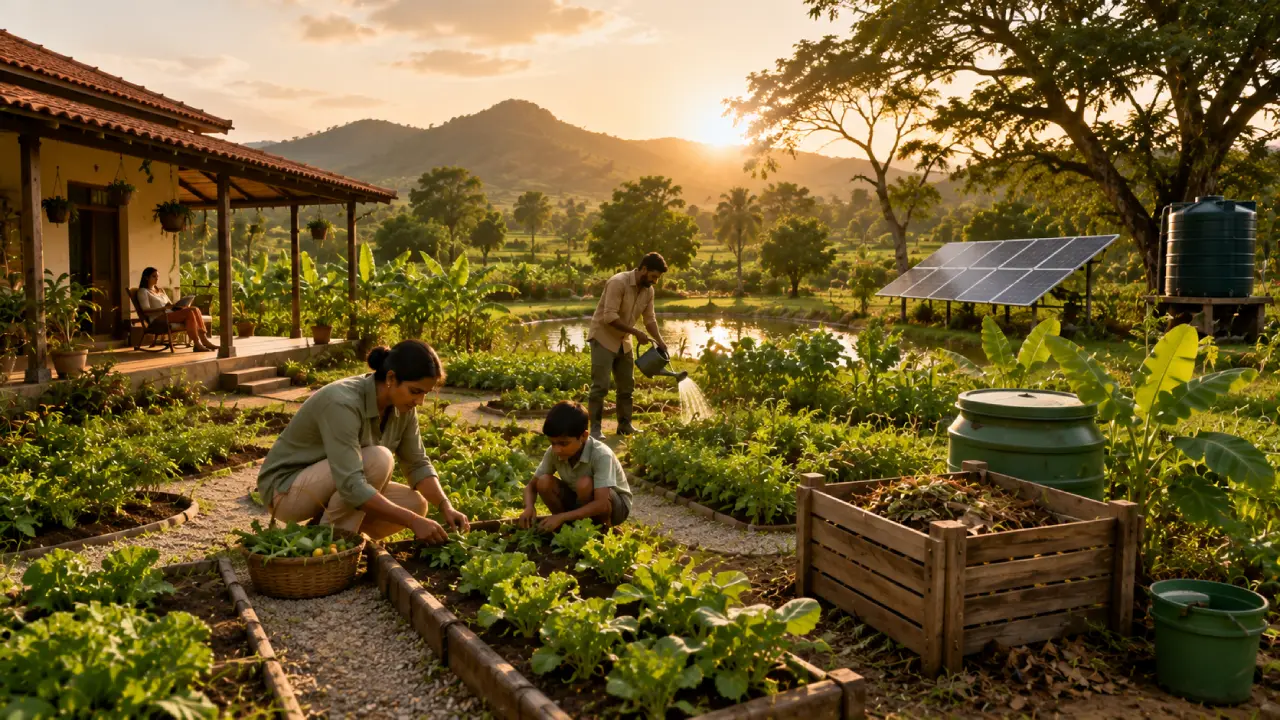
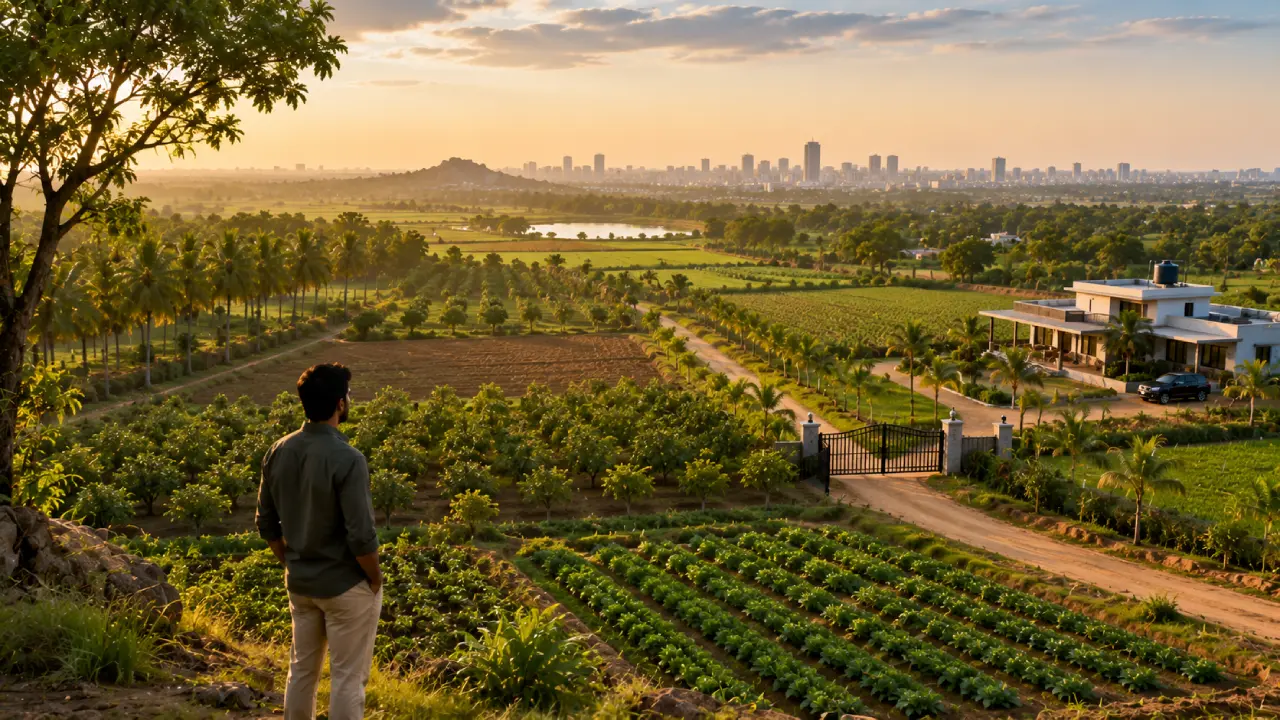
At Sanctity Ferme's managed farmlands near Bangalore, plots are cultivated using regenerative farming practices that prioritise soil health, biodiversity, and chemical-free growing. With over 5 lakh trees planted across 300+ acres near the Shoolagiri hills about 90 minutes from Bangalore via NH44 these are working landscapes, not decorative ones.
Owners of farm plots at Sanctity Ferme can visit, participate in harvests, and experience what the farm to kitchen concept looks like in practice not as a marketing idea, but as a lived reality.
If you're interested in what owning farmland near Bangalore actually involves documentation, management, and what happens between planting and plate take a look at the farmlands for sale near Bangalore and life at Sanctity Ferme.
A site visit is the best first step. Book one here.
Frequently Asked Questions
What does "farm to plate" mean in simple terms?
Farm to plate describes the complete journey food takes from where it is grown or raised to the moment it is eaten. It covers farming, harvesting, processing, packaging, transportation, retail, and cooking. As a concept, it also refers to a philosophy of eating that favours locally grown, seasonal, minimally processed food to reduce the distance between producer and consumer.
What are the steps in the food journey from farm to plate?
The main steps are: farming and cultivation, harvesting, processing, packaging, transportation, distribution and retail, and finally preparation and consumption in the kitchen. Each step has its own impact on freshness, nutritional value, and environmental cost.
How is food transported from farms to cities?
Food is transported using refrigerated trucks for domestic distances, and via airfreight or ships for international movement. A centralised distribution network routes food through warehouses before it reaches retail stores. The longer the distance, the more handling and cold chain infrastructure is involved and the older the produce by the time it reaches the consumer.
Why is farm-to-plate important for fresh and healthy food?
Shorter supply chains mean less time between harvest and table. Produce harvested recently and transported directly to local buyers retains more nutrients, requires fewer preservatives, and typically tastes better. The industrial supply chain prioritises shelf life and consistency over freshness which is why food grown and sold locally is genuinely different in quality, not just in philosophy.