Irrigation Methods in India: Types, Benefits & Best Practices
Discover practical gardening advice, expert landscaping tips, and inspiration to help you make the most of your outdoor space.
Sanctity Ferme Team
Rainfall does not always arrive when crops need it. Dry gaps can leave the root zone short of moisture even during a good monsoon. Irrigation helps manage these gaps, but the method must suit the field. Soil, crop spacing, slope, water supply and maintenance all influence the choice.
Why Irrigation Planning Comes First
Irrigation is not about running a pump until the soil looks wet. Water must reach the roots without collecting in low areas or leaving the field.
A useful plan answers four questions:
How much water does the crop need?
How quickly does the soil absorb it?
Can the source supply water throughout the season?
Who will maintain the system?
These checks help farmers choose among the irrigation methods in India instead of selecting equipment only by price.
Main Types of Irrigation
Indian farms use traditional and controlled systems, each with different maintenance needs.
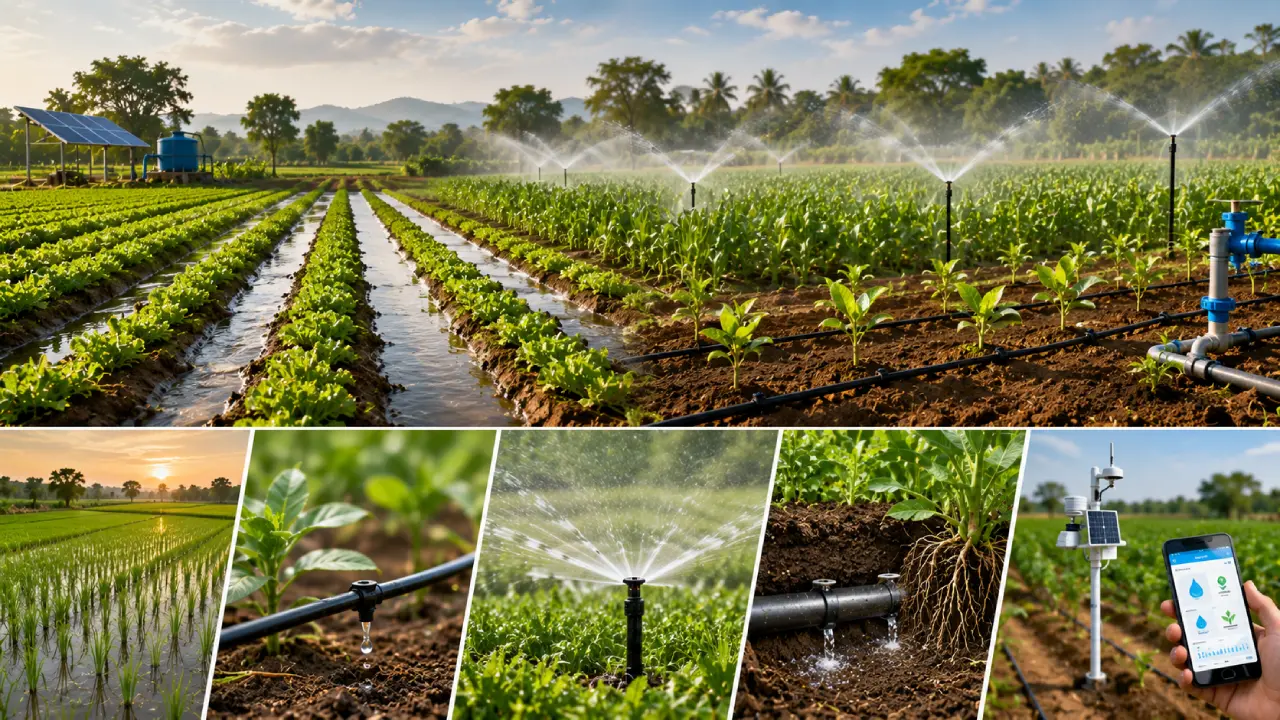
Method | Water Delivery | Suitable Situation | Main Concern |
Surface Irrigation | Water flows over soil | Level fields with channels | Uneven spread |
Drip Irrigation | Emitters supply roots | Orchards and vegetables | Blocked emitters |
Sprinkler Irrigation | Nozzles spray water | Uneven land | Wind and pressure |
Subsurface Irrigation | Pipes release water underground | Lower surface evaporation | Hidden leaks |
Smart Irrigation | Sensors control watering | Closely monitored farms | Technical upkeep |
Surface Irrigation
Surface irrigation moves water through gravity. Flood, furrow and basin irrigation belong to this method. It suits level fields with maintained channels.
On uneven land, water may stay near the inlet while distant areas receive less. Farmers must watch the flow, repair bunds and stop once the section is wet.
Drip Irrigation
Drip irrigation carries water through pipes and releases it near plant roots. The crop row receives moisture without wetting the entire field.
It is one of the modern irrigation methods in India used for orchards, vegetables and horticulture. It works only when filters are clean, pressure is suitable, and emitters stay open.
Routine work includes:
Flushing lateral pipes
Cleaning filters
Checking pressure
Replacing damaged connectors
Finding blocked emitters
Owners considering managed farmlands near Bangalore should confirm who will handle these checks when they are away.
Sprinkler Irrigation
Sprinklers push water through nozzles and spread it like rainfall. They help where surface flow is difficult or land is not level.
Coverage depends on pressure, nozzle spacing and wind. Dry patches, leaking joints and damaged nozzles should be checked while the system runs.
Subsurface and Smart Systems
Subsurface irrigation places water underground. It keeps the surface drier and reduces evaporation, but buried damage is harder to find.
Smart irrigation adds moisture monitoring, automated valves and remote operation. These tools improve control but cannot correct weak pumps, blocked lines or poor field design. Among irrigation techniques in India, automation works best when routine maintenance is dependable.
Irrigation for Rice Fields
Rice needs steady moisture, but water should not be added without checking the field. Soil condition, crop stage, rainfall and drainage should guide irrigation.
Common irrigation methods for rice in India rely on level plots, bunds and field channels. Levelling helps water move across the plot instead of collecting in lower sections. Bunds should hold water without uncontrolled seepage, and channels should be cleared before irrigation.
Where rain has already supplied enough moisture, the next watering can be delayed. The field should be inspected rather than managed through a fixed calendar.
How to Choose the Right Method
The crop is only one part of the decision. A system must also match the land and the farm’s operating capacity.
Check:
Soil texture and drainage
Field slope and shape
Root depth and crop spacing
Water quality and availability
Pump capacity and electricity
Labour for the operation
Repair and spare-part access
Space for tanks and filters
People examining farmland for sale in Bangalore should inspect the borewell, storage, power connection and drainage before choosing an irrigation setup.
Benefits of a Suitable Irrigation System
A well-matched system can make watering more organised and predictable. It may reduce losses caused by poor distribution.
Practical benefits include:
Water reaches the intended crop area
Support during breaks in rainfall
Lower runoff through controlled application
Easier scheduling of farm work
Reduced manual operation through automation
Nutrient application through suitable systems
Better monitoring of leaks and pressure
These benefits depend on supervision. A neglected drip line or damaged sprinkler can waste water while appearing to work.
Best Practices for Daily Irrigation
Good irrigation comes from repeated field checks, not from installing equipment once.
Farmers should:
Check soil moisture before starting
Adjust watering after rainfall
Irrigate according to crop stage
Repair leaking pipes quickly
Clean filters and nozzles
Keep channels free from weeds
Prevent water from standing around roots
Record irrigation dates and problems
Review pressure across the field
Change the layout when crop spacing changes
The aim is to apply enough water where it is needed. Longer irrigation is not automatically better irrigation.
Conclusion
Surface, drip, sprinkler, subsurface and smart systems all have a place in Indian agriculture. The right method depends on crop, soil, slope, water, power and maintenance. Regular inspection, cleaning and flexible scheduling often matter more than a complicated setup.
FAQs
What are the different types of irrigation methods used in India?
The main types are surface, drip, sprinkler, subsurface and smart irrigation. Surface systems include flood, furrow and basin irrigation.
Which irrigation method is the most water-efficient?
Drip irrigation applies water close to the root zone. Its performance depends on correct design, clean filters, suitable pressure and timely maintenance.
What is the difference between drip irrigation and sprinkler irrigation?
Drip irrigation releases water near individual roots. Sprinkler irrigation sprays water above the crop and covers a wider field area.
How do farmers choose the best irrigation method for their crops?
They assess crop needs, soil, slope, water supply, power, labour, field size, cost and maintenance requirements.
What are the advantages of modern irrigation systems over traditional methods?
Modern systems provide closer control over timing and distribution. They can reduce manual work, improve monitoring and limit unnecessary watering when maintained properly.