Horticulture Crops: Types, Importance & Benefits Explained
Discover practical gardening advice, expert landscaping tips, and inspiration to help you make the most of your outdoor space.
Sanctity Ferme Team
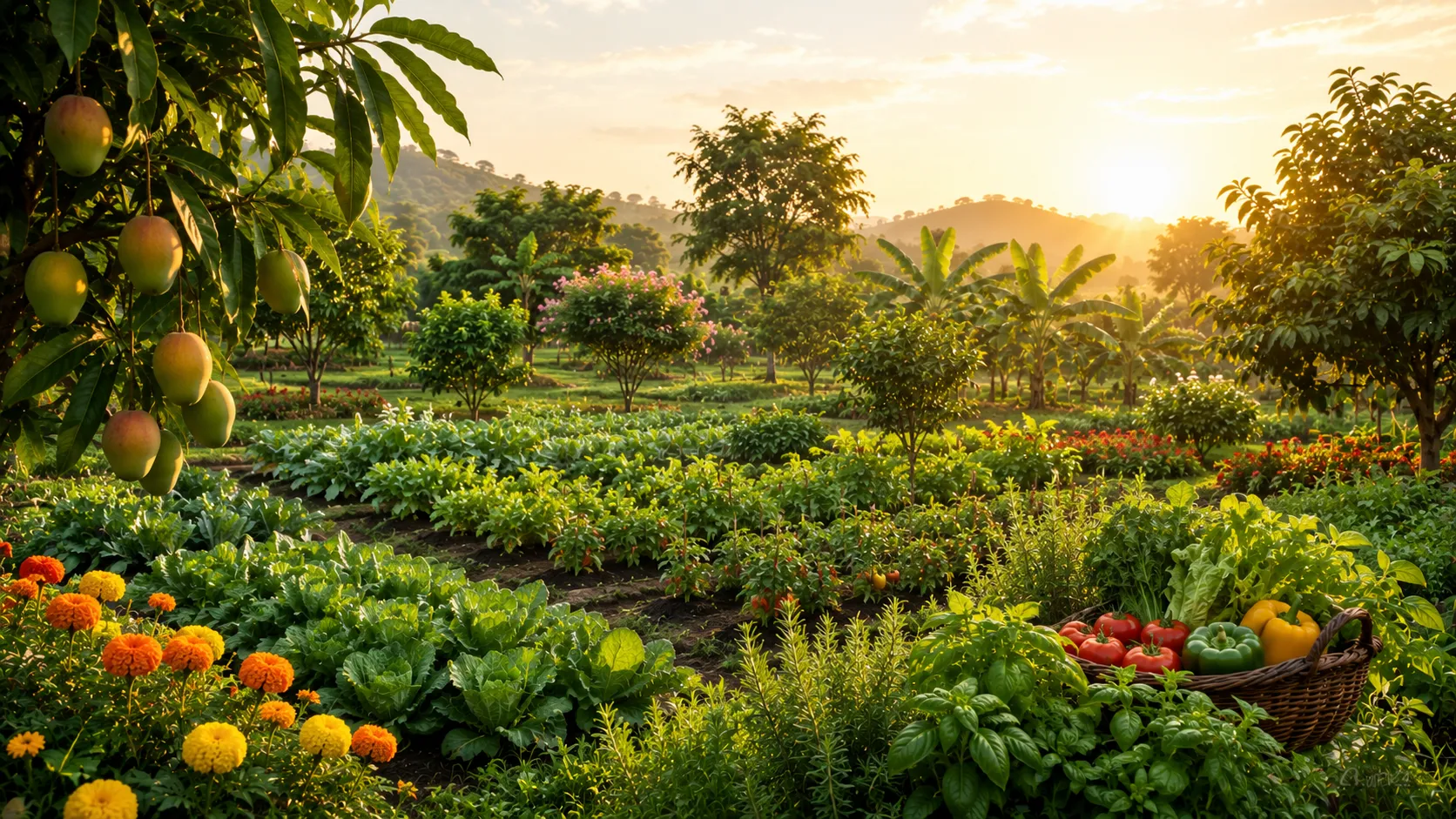
Walk through any well-managed farm near Bangalore and you'll notice something beyond the rows of trees: a thoughtful mix of fruit plants, vegetable patches, flowering species, and medicinal herbs, each playing a specific role in how the land produces and sustains itself. That's horticulture farming at work.
Horticulture meaning, at its core: the science and practice of growing plants for human use food, medicine, aesthetics, and ecological balance. It's more intensive and specialized than conventional field crop agriculture, and in many ways, more rewarding. For farmers, landowners, and investors in agricultural land, understanding what horticultural crops are and how they fit into a productive farm system is increasingly valuable knowledge.
This guide covers the key types, classification, and benefits of horticulture farming in a practical, no-fluff way.
What Are Horticulture Crops and How Are They Different from Field Crops?
Horticultural crops are plants cultivated with close attention to quality, yield efficiency, and end-use whether for food, decoration, medicine, or environmental function. The category spans a wide range: fruits, vegetables, herbs, spices, ornamental plants, and flowers.
The distinction from field crops is one of scale, intensity, and purpose. Field crops like wheat, rice, and maize are typically grown across large areas using mechanised methods, with volume as the primary goal. Horticulture farming, by contrast, is intensive and detail-oriented focused on the quality of each plant and its output, often across smaller but more carefully managed plots.
This makes horticulture particularly well-suited to managed farmlands near Bangalore, where land parcels are professionally maintained with attention to soil health, irrigation, and planting diversity rather than mass-scale monoculture.
Classification of Horticulture Crops: The Main Types
The classification of horticulture crops follows the branches of the discipline itself. Each branch focuses on a distinct crop category and cultivation approach.
Pomology Fruit Crops
Pomology is the study and cultivation of fruit crops. It covers everything from orchard establishment and variety selection to harvest management and post-harvest handling. Common examples include mangoes, bananas, guavas, sapota, papayas, and citrus fruits in India's tropical and semi-arid regions.
Fruit crops are among the most commercially valuable horticultural crops and among the most commonly grown on well-managed agricultural plots near Bangalore, given the region's suitability for tropical and subtropical varieties.
Olericulture Vegetable Crops
Olericulture covers the production of vegetables from leafy greens and root vegetables to legumes and gourds. This branch of horticulture farming handles everything from seed selection and soil preparation to post-harvest storage and market linkages.
India is one of the world's largest producers of vegetables, and the diversity of its climates allows year-round cultivation across states. Tomatoes, brinjal, okra, beans, and leafy greens are among the most widely grown examples of horticulture crops in the vegetable category.
Floriculture Flower and Ornamental Crops
Floriculture focuses on the cultivation of flowers and ornamental plants for cut flowers, potted plant markets, landscaping, and religious use. In India, marigold, jasmine, rose, and chrysanthemum are among the most widely grown, with strong demand from festivals, weddings, and the export market.
This branch of horticulture farming is particularly relevant for mixed plantation models, where flowering species are interplanted with fruit trees to improve biodiversity and supplement farm income.
Arboriculture Trees and Woody Plants
Arboriculture is the careful management of trees and woody plants, including techniques like pruning, pest control, and structural support. On farmland, arborists focus on maintaining timber trees, shade trees, and multi-use species that contribute to both the ecology and economics of the land.
At Sanctity Ferme, the plantation approach integrates timber and fruit trees as part of a long-term land management plan a practical application of arboricultural principles. You can read more about our sustainability practices and how they shape what gets planted and why.
Postharvest Physiology Quality After Harvest
Postharvest physiology focuses on maintaining the quality of horticultural crops between harvest and the consumer. Temperature management, packaging, storage conditions, and transport logistics all fall within this branch. It's a critical but often overlooked part of horticulture farming that determines the actual market value of what's grown.
Which Horticulture Crops Are Widely Grown in India?
India's climatic diversity from the humid tropics of Kerala to the semi-arid Deccan plateau and the foothills of the Shoolagiri region supports a remarkably broad range of horticultural crops.
Fruits: Mango, banana, sapota, papaya, guava, pomegranate, citrus (sweet lime, mosambi, lemon), and coconut dominate fruit horticulture in peninsular India.
Vegetables: Tomato, onion, potato, brinjal, okra, bitter gourd, and leafy greens are cultivated across most states year-round with proper irrigation.
Spices and Herbs: Turmeric, ginger, pepper, cardamom, and curry leaf are economically significant horticultural crops with strong domestic and export demand.
Flowers: Marigold, jasmine, rose, and tuberose are widely grown for both domestic religious use and export to the Middle East and Europe.
Plantation Crops: Coconut, arecanut, and coffee though sometimes classified separately fall within the broader horticulture farming category in terms of management intensity and crop care.
For those exploring farm land for sale in Bangalore corridors, many of these crops are viable depending on plot location, soil type, and water availability. The Shoolagiri region, where Sanctity Ferme's projects are located, supports a productive mix of tropical fruits, spice plants, and timber species.
Why Are Horticulture Crops Important in Agriculture?
The importance of horticulture in Indian agriculture extends well beyond food production. Here's what makes it foundational:
Nutritional contribution: Fruits and vegetables supply the vitamins, minerals, and antioxidants that staple crops cannot. Diversified horticulture farming supports better nutrition at both household and community levels.
Economic value per acre: Horticultural crops typically generate higher income per unit of land than most field crops. A well-managed orchard or vegetable plot can deliver substantially better returns compared to equivalent wheat or paddy cultivation.
Employment generation: Horticulture is labour-intensive from nursery management and planting to harvesting and packaging. In rural India, it is one of the more reliable sources of farm employment across seasons.
Biodiversity support: Mixed horticultural plantations with fruit trees, flowering plants, and ground-level crops in combination build richer ecosystems than monoculture fields. They support pollinators, improve soil biology, and reduce pest pressure naturally.
Environmental stability: Trees and perennial horticultural crops build ground cover, reduce erosion, and contribute to carbon sequestration over time. This is one reason why life on a managed farmland that integrates horticulture feels distinctly different from a cleared, bare-field farm the land itself feels more alive.
What Are the Key Benefits of Horticulture Farming?
Higher income potential: Fruit crops, spices, and flowers command premium prices in domestic and export markets. With the right crop mix and post-harvest management, horticulture farming can be significantly more profitable per acre than conventional crops.
Year-round productivity: Unlike single-season field crops, a well-planned horticulture farm produces across multiple seasons fruits in summer, vegetables through the cool months, flowers throughout the year.
Soil health improvement: Perennial fruit trees and diverse planting systems build organic matter in the soil over time, reducing the need for chemical inputs and improving land productivity with each passing season.
Scalability for landowners: Horticulture is one of the few farming categories that scales well on plots as small as half an acre making it accessible to farm plot owners who aren't running large agricultural operations.
Long-term land value: Planted farmland with established fruit trees, managed soil health, and productive biodiversity holds and typically grows in value. At Sanctity Ferme, land that was valued at ₹55 per sq. ft. has appreciated to over ₹450 per sq. ft. over four years, driven in part by the productive plantation management built into the project.
Horticulture Farming and Managed Farmland Near Bangalore
Owning land is one thing. Having it work producing fruit, maintaining soil health, contributing to the ecosystem requires consistent, knowledgeable management.
This is where managed farmland near Bangalore offers a practical path for urban professionals and investors who want land ownership without the full burden of daily farm operations. Across 300+ acres and 800+ plot owners, Sanctity Ferme maintains productive horticultural plantations that integrate fruit trees, spice crops, and biodiversity-supporting species as part of a long-term land management plan.
If you'd like to see what a working horticultural farm plot looks like in practice the trees, the soil, the planting design a site visit is the clearest way to understand what you're investing in.
Frequently Asked Questions
What are horticulture crops and how are they different from field crops?
Horticultural crops are plants grown intensively for food, medicine, aesthetics, or ecological use including fruits, vegetables, flowers, herbs, and spices. Unlike field crops such as wheat or rice, which are grown at scale for volume, horticulture farming prioritises quality and diversity, typically on smaller, more carefully managed plots.
What are the major types of horticulture crops?
The main types follow horticulture's key branches: pomology (fruit crops), olericulture (vegetables), floriculture (flowers and ornamentals), arboriculture (trees and woody plants), and spice or medicinal crop cultivation. Each has distinct management requirements and market applications.
Which horticulture crops are widely grown in India?
India produces a wide range of horticultural crops including mangoes, bananas, coconut, tomatoes, onions, turmeric, ginger, jasmine, and marigold. The diversity of India's climates allows year-round cultivation of both tropical and temperate varieties across different regions.
Why are horticulture crops important in agriculture?
Horticulture crops contribute to nutritional security, generate higher income per acre than most field crops, support rural employment, and build biodiversity on productive farmland. They are also foundational to sustainable farming systems because perennial crops improve soil health and ecosystem resilience over time.
What are the key benefits of horticulture farming?
Higher per-acre income, year-round productivity, improved soil health through diverse planting, scalability for small plot owners, and long-term land value appreciation are the primary benefits. For landowners who want their plots to remain productive and appreciating assets, horticulture farming is one of the most reliable paths.