AI in Agriculture: How Artificial Intelligence Is Transforming Modern Farming
Discover practical gardening advice, expert landscaping tips, and inspiration to help you make the most of your outdoor space.
Sanctity Ferme Team
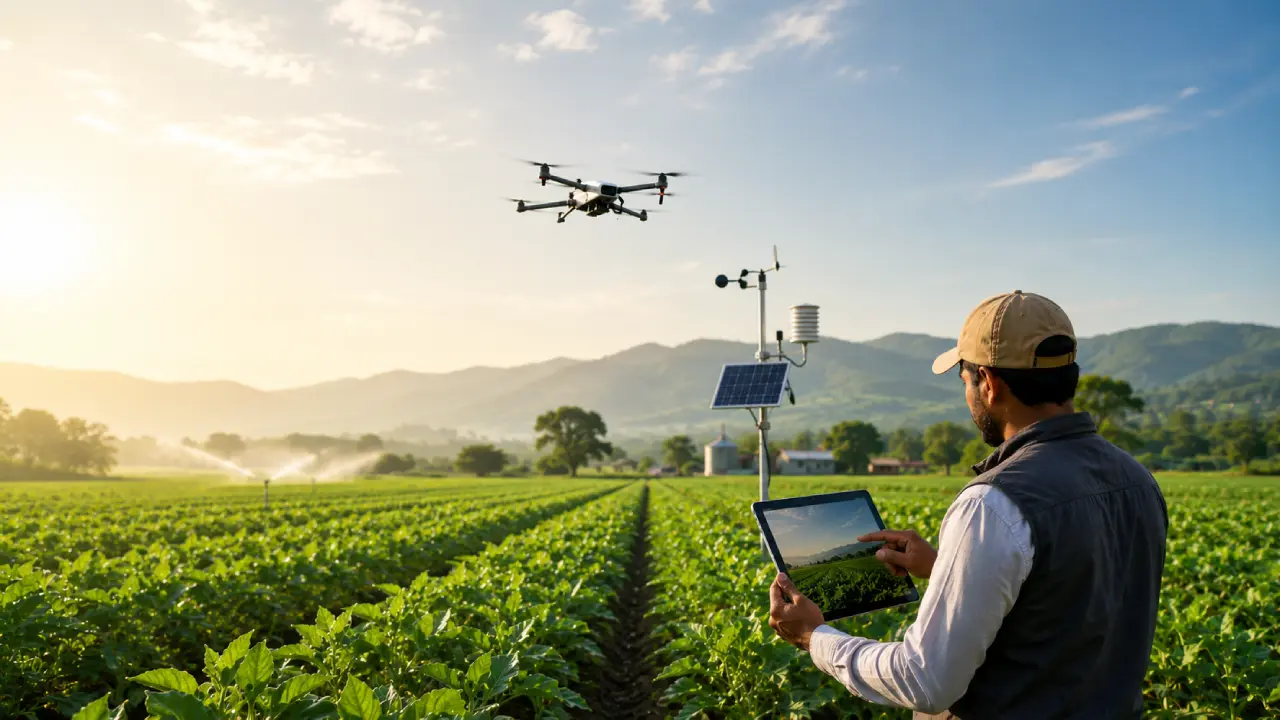
Farming decisions depend on timely knowledge of crops, soil, weather, water and field conditions. Artificial intelligence in agriculture can organise this information, identify patterns and present findings for review. It does not replace farming experience, but may support closer monitoring and informed planning.
For Indian agriculture, digital tools are valuable only when their output is clear, locally relevant and checked against conditions on the ground.
What Artificial Intelligence Means in Agriculture
AI refers to technologies that process information, recognise patterns and produce an output from available data. In farming, that output may be an alert, forecast, classification or recommendation.
AI in agriculture can work with weather records, field observations, soil information, crop images and remote-sensing data. Machine learning, computer vision, predictive analytics and robotics support this process. The result should be treated as decision support rather than an instruction followed without review.
How Farm Data Becomes Useful Information
A farm produces information throughout the crop cycle. The challenge is to organise it well enough to support a timely decision.
Information processing in agriculture begins with collecting relevant field data. Digital systems compare current conditions with available patterns and highlight changes requiring attention.
The use of AI in agriculture can make large data sets easier to examine, although the output still depends on the quality and relevance of the input.
People assessing managed farmlands near Bangalore may therefore look beyond the presence of technology and ask how field information is collected, reviewed and used by the management team.
Where AI Supports Farm Management
AI can assist with several parts of crop and field management. Its role is mainly to organise information and direct attention towards conditions that may need inspection.
The benefits of AI in agriculture may include:
Reviewing weather information for farm planning
Monitoring visible changes in crop health
Identifying possible pest or disease pressure
Examining soil and crop conditions across a field
Supporting decisions on irrigation and farm inputs
Maintaining consistent digital records
Prioritising areas for physical inspection
Predictive analytics can examine historical and current data to indicate possible risks involving weather, pests, disease, soil conditions, crop growth, or yield potential. These indications are not guarantees; farmers must consider them alongside field knowledge.
How Precision Agriculture Improves Visibility
Precision agriculture focuses on observing and managing variation within a field. AI supports this process by analysing information collected through sensors, satellite imagery and crop images.
Computer vision and machine learning can identify differences in crop appearance or field conditions that may be missed during a broad inspection. This can direct farmers towards areas needing closer attention and support focused planning for water, fertiliser and crop-protection inputs. Any response should still follow physical inspection and professional judgement.
Why Human Oversight Remains Essential
Agricultural data never captures every condition affecting a farm. Local weather behaviour, soil response, crop history, labour availability and operational limits still require human understanding.
AI systems should support decisions rather than replace the people responsible for them. Farmers and managers need to know what data was used, what the output means and where the system may be limited. Transparency, accountability and human review matter because an alert can be incomplete, delayed or unsuitable for a field.
Making AI Relevant to Indian Farming
Indian farms differ widely in size, climate, crop choice, access to labour and digital infrastructure. A useful system must fit these conditions instead of adding another layer of complexity.
Local language support, dependable connectivity and clear training can also affect whether farmers are able to use the information confidently.
Anyone considering farmland for sale in Bangalore can examine how the land is monitored, how soil and water information is recorded, and who reviews digital findings before action is taken. Technology alone does not establish the quality of farmland or its management.
For wider adoption, AI-powered tools need to be understandable, accessible and suited to the farmer’s environment. Small-scale farmers may benefit when information is practical, the interface is straightforward and human guidance remains available. Equal access also matters, so technology does not widen gaps between farming operations.
Conclusion
AI can support farm management by improving how agricultural information is collected, processed and reviewed. Its strongest role is practical assistance for farmers assessing crops, soil, weather and resources together.
A responsible approach combines digital analysis with field inspection and local experience. When technology addresses a defined need, produces clear information and keeps people in control, it may become a useful part of modern farming. In India, relevance, accessibility and human oversight will determine its value on the ground.
FAQs
What is AI in agriculture, and how does it work?
AI in agriculture refers to technologies that analyse farm data and recognise patterns. Information may come from weather records, soil observations, sensors, crop images or satellites. The system processes it and presents an alert, forecast or recommendation for review.
How is artificial intelligence improving crop production?
Artificial intelligence can improve the information available for crop planning and monitoring. It may identify changes in crop health, weather risk, soil conditions, pest pressure or disease pressure. Farmers can inspect the relevant conditions before deciding whether action is appropriate.
What are the benefits of using AI in modern farming?
The main benefits are better organisation of farm data, closer crop monitoring, earlier attention to possible risks and more focused resource use. These benefits depend on reliable inputs, a suitable system and careful human review.
Which AI technologies are commonly used in agriculture?
Common technologies include machine learning, predictive analytics, computer vision, remote sensing, connected sensors and robotics. Some collect field information, while others analyse it or present findings that support a decision.
Can small-scale farmers benefit from AI-powered farming solutions?
Small-scale farmers may benefit when a solution is affordable, understandable and relevant to local farming conditions. Technology should provide practical information without reducing the farmer’s control over important decisions. Guidance and reliable infrastructure also influence its usefulness.