Understanding RTC, Mutation and EC Before Buying Agricultural Land
Discover practical gardening advice, expert landscaping tips, and inspiration to help you make the most of your outdoor space.
Sanctity Ferme Team
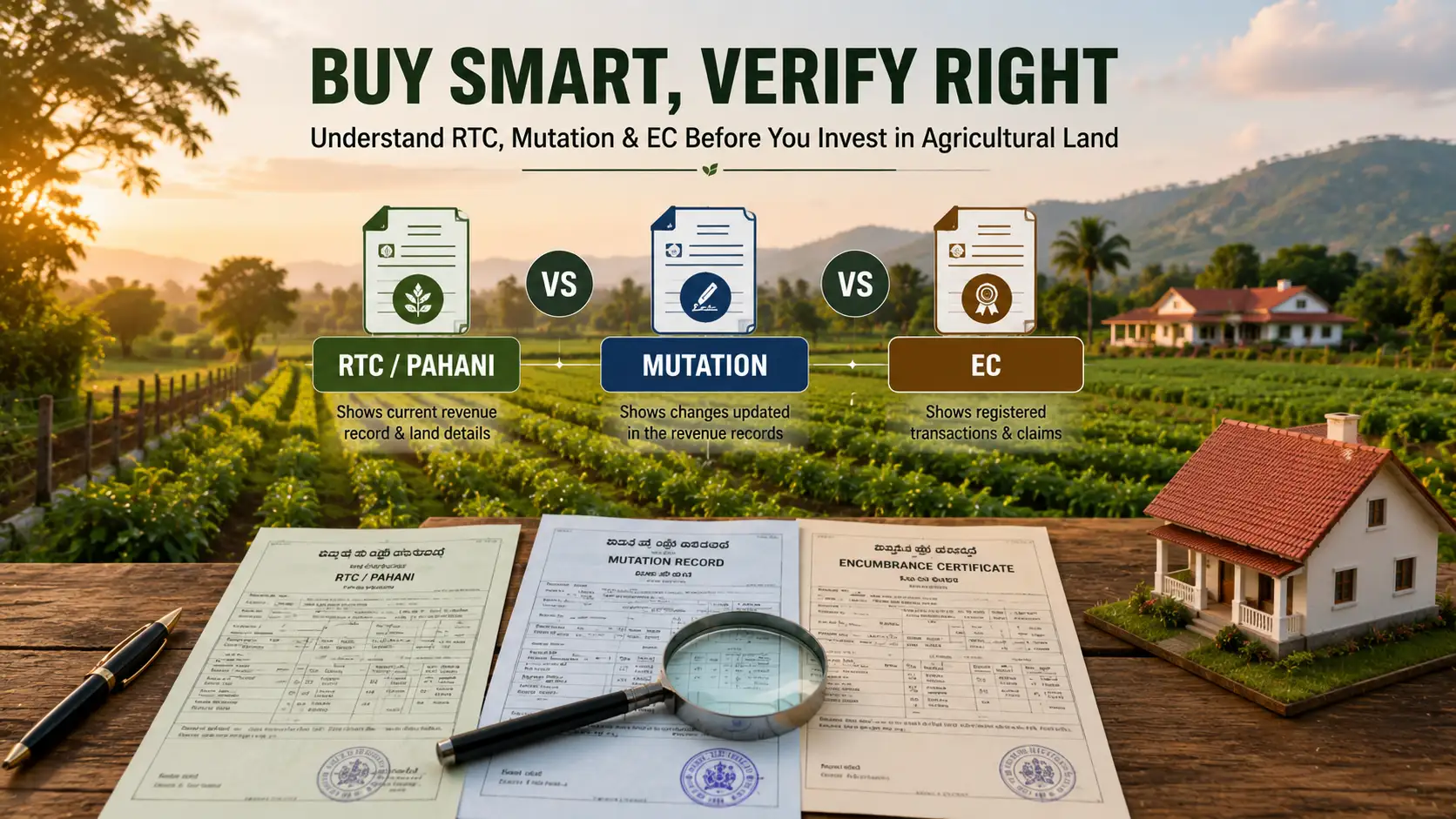
Agricultural land may look straightforward on the ground, but its paperwork can tell a more complicated story. Before proceeding, a buyer should understand what the revenue and registration records show.
In Karnataka, RTC or Pahani mutation records and the Encumbrance Certificate serve different purposes. None should be read alone. Together, they can reveal mismatched names, survey details, pending changes and registered transactions.
Why These Three Records Matter Together
Each record answers a different question and should be matched with the title documents presented by the seller.
The discussion around Pahani vs Mutation vs EC is not about choosing the most important document. The RTC reflects revenue information, the mutation record tracks changes entered in those records, and the EC reports registered dealings found for the selected property and period.
Together, they may help check:
Whether the seller’s name appears consistently
Whether the survey number, subdivision and extent correspond
Whether a recorded ownership change has been updated
Whether registered mortgages or transfers appear
Whether a discrepancy needs clarification
What an RTC or Pahani Shows
RTC stands for Record of Rights, Tenancy and Crops. In Karnataka, it is commonly called Pahani and forms part of the agricultural revenue records.
An RTC may contain the recorded holder’s name, survey details, land extent, classification, cultivation information and remarks linked to the property. It shows how the land appears in revenue records when issued.
It is not conclusive proof of ownership. It must be checked against the registered title deed and earlier title documents. In Pahani RTC vs Mutation, the RTC displays the revenue entry, while the mutation trail explains how a relevant change was entered in that record.
Check the RTC for:
Correct names and relationship details
Matching survey, hissa and village information
Consistent extent and land classification
Tenancy or restriction-related entries
Remarks requiring supporting documents
What a Mutation Record Indicates
Mutation is the process through which a change connected with landholding is entered in the revenue records. It may follow a transfer, inheritance, partition, court direction or another recognised event.
A mutation entry helps trace why the name or interest recorded in the RTC changed. Buyers should examine the mutation history rather than relying only on the latest RTC. A completed entry may show an update, but it does not replace the transfer document.
The RTC vs Mutation vs EC distinction is clear: RTC shows the revenue position, mutation shows the recorded change behind it, and EC traces registered transactions. Any gap between them should be examined before proceeding.
What an Encumbrance Certificate Covers
An Encumbrance Certificate comes from the property registration system. It reports registered documents indexed against the property for the requested search period.
The EC may reveal registered sale deeds, mortgages, releases, gifts, partitions or other instruments affecting the land. Buyers should check whether the property description, parties, survey details and transaction sequence align with the seller’s title documents.
The phrase mutation vs encumbrance certificate can cause confusion. Mutation belongs to the revenue system, while the EC is based on registered documents. An EC may not capture unregistered arrangements, possession claims or every dispute. It should support, not replace, a complete title review.
How to Cross-Verify the Documents
Cross-verification means reading the RTC, mutation history, EC and title deeds together. The purpose is to identify missing links or inconsistencies.
A practical review should include:
Obtain current copies from relevant government portals or offices
Match names, survey numbers, subdivisions, boundaries and extent
Trace mutation entries to supporting documents
Review the EC for a period connected with the title chain
Check whether releases follow earlier registered burdens
Compare online records with certified copies and originals
Seek independent legal and survey review where needed
People considering managed farmlands near Bangalore should ask how ownership, management duties and document access are structured. Records should remain available for independent verification.
Those assessing farmland for sale in Bangalore should confirm that the parcel shown during inspection matches the survey information in the documents. Physical identification and documentary review should support each other.
Common Warning Signs during Verification
Among the land documents Karnataka buyers review, inconsistencies may indicate that further investigation is needed. They should not be ignored or explained only verbally.
Look more closely when there are:
Different names across the RTC, deed and EC
Pending or unexplained mutation proceedings
Survey numbers or extents that do not match
Missing deeds in the title chain
EC entries without a corresponding release
Corrections or unclear certified copies
Restrictions, tenancy references or dispute remarks
A clean-looking EC or updated RTC is not a guarantee. A broader review may include title scrutiny, revenue records, registration records, survey confirmation and advice from qualified professionals.
Final Thoughts
Buying agricultural land requires more than checking whether a seller’s name appears in one record. RTC, mutation entries and the EC should be reviewed together with title deeds, survey information and supporting documents. Each record serves a different purpose and may reveal gaps that need clarification.
Careful verification can help buyers understand the land’s recorded ownership, transaction history and existing obligations before making a commitment. Independent legal and survey guidance can further support a well-informed purchase decision.
Frequently Asked Questions
What is an RTC document, and why is it important when buying agricultural land?
An RTC is a revenue record containing the recorded holder, survey information, extent, classification and cultivation entries. It shows the current revenue position but should be read with the title deeds and mutation history.
What does a Mutation Certificate indicate in a land transaction?
It indicates that a change has been entered in the revenue records following a recognised event. The supporting deed, order or succession document should still be reviewed because mutation alone does not establish title.
Why is an Encumbrance Certificate essential before purchasing farmland?
An EC helps identify registered documents affecting the property during the chosen period. It supports transaction and burden checks but may not disclose unregistered interests or every dispute.
How can buyers verify RTC, Mutation, and EC records before investing?
Buyers can obtain records from official government systems, match property and party details, trace mutation entries to supporting documents and arrange an independent title review.
What risks can arise if RTC, Mutation, or EC documents are not properly verified?
Unresolved discrepancies may create uncertainty about ownership, property identity, registered burdens or record updates. Legal and survey review can clarify these issues more clearly before commitment.