Why Smart Investors Are Choosing Farmland over Traditional Assets
Discover practical gardening advice, expert landscaping tips, and inspiration to help you make the most of your outdoor space.
Sanctity Ferme Team
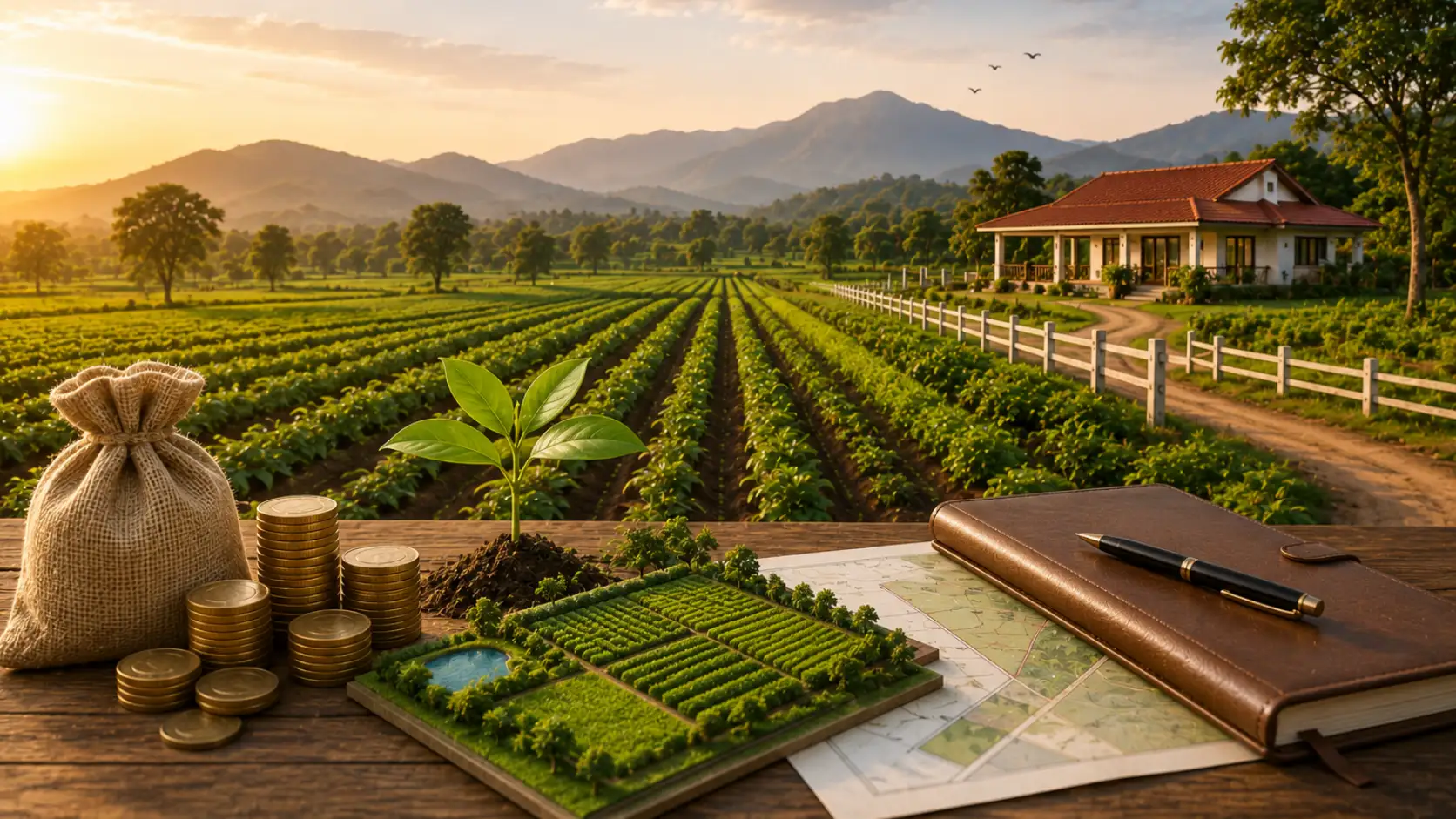
For years, investors have relied on stocks, gold, fixed deposits and urban property to build wealth. Today, many are also considering farmland as a long-term asset. Its appeal comes from being tangible, limited in supply and capable of generating value through cultivation, leasing or managed plantations.
However, farmland is not free from risk. Its performance depends on factors such as location, legal ownership, water availability, access and the quality of ongoing land management.
Why Farmland Is Entering More Portfolios
Stocks, gold, fixed deposits and urban property serve different financial goals. Farmland adds an option; its value is linked to soil, water, road access, ownership records and local development.
Interest in farmland investment in India has grown among urban professionals who want a physical asset without managing agricultural work themselves. Managed models have made that option easier to consider.
What Makes Farmland Different from Traditional Assets
Several key features set farmland apart from traditional investment options.
It Is Tangible and Limited
Agricultural land has a location and defined boundaries. Well-located land cannot be created in unlimited quantities. Demand may rise near growing towns, road networks and expanding economic corridors, though appreciation is never guaranteed.
It May Offer Two Sources of Value
Farmland may earn income through crops, orchards, leasing or other agricultural activity. The land may appreciate over a long holding period. Results depend on crop choice, costs, water, management quality and local demand. This combination is why some investors consider farmland as an investment rather than only as land for farming.
It Follows a Slower Cycle
Listed assets change in value every trading day. Agricultural land is priced less frequently, so investors are not reacting to movements. The asset still carries risk, but it requires a patient approach.
How Farmland Compares with Other Assets
The comparison becomes clearer when key benefits and limitations are viewed side by side.
Asset | Main Strength | Main Limitation |
Stocks | Liquidity and growth potential | Market volatility |
Gold | Easy to hold and sell | No productive income |
Urban Property | Rental and appreciation potential | High cost and upkeep |
Fixed Deposits | Predictable interest | Limited growth potential |
Farmland | Productive use and long-term value | Legal checks and low liquidity |
Each asset serves a different purpose, so farmland works best within a balanced plan rather than entirely replacing emergency savings or other liquid investments.
Why Farmland May Remain Steady during Uncertainty
Farmland is connected with basic needs such as food production and land use. It is also less directly affected by quarterly earnings, sudden market selling or trading activity. This may help it behave differently from financial assets during uncertain periods.
Yet, resilience is not the same as guaranteed returns. Poor access, unclear ownership, water shortage or weak management can reduce income and resale demand.
Managed Farmland Has Reduced the Practical Burden
Traditional farmland ownership often involves regular visits, labour coordination, irrigation planning and crop supervision. Professional management can reduce this workload through a clearly defined service arrangement.
This convenience has made managed farmlands near Bangalore a practical option for buyers seeking support with day-to-day operations. The agreement should clearly state the landowner, operating party, included services, applicable charges and the process used to calculate and distribute farm income.
Risks Investors Should Not Ignore
Farmland carries practical and legal risks that differ from stocks or gold. Important concerns include:
Unclear title or incomplete ownership records
State restrictions on agricultural land purchases
Poor road access or disputed boundaries
Inadequate water availability
Crop failure or rising input costs
Long resale periods
Unclear management fees
Unverified development promises
Anyone assessing farmland for sale in Bangalore should check the jurisdiction, land classification, survey details, access road and Karnataka rules before paying an advance.
What to Check before Investing
Start with the title chain, encumbrance certificate, revenue records, tax receipts, survey map and seller identity. Confirm that the area on paper matches the boundary. A property lawyer and licensed surveyor can identify issues that may not be visible during a visit.
Then assess water, soil, road access, nearby infrastructure and agricultural activity. In a managed project, review maintenance duties, plantation plans, charges, reporting and the exit process. A farmland wealth asset is built through clear ownership, careful selection and patient management.
Who May Find Farmland Suitable
Farmland may suit investors who are comfortable holding an asset for several years and do not need quick access to the money invested. It can also appeal to those looking for a tangible asset with possible agricultural use, future family value or long-term appreciation.
First-time investors should check their liquidity, budget and risk tolerance before committing a share of their savings.
Conclusion
Farmland can offer productive use, ownership value and long-term appreciation potential, but outcomes depend on location, documentation and management. It should be assessed carefully alongside traditional assets before any decision.
Investors should compare benefits with liquidity needs, legal duties and operating risks. Sanctity Ferme shows this considered approach by connecting managed farmland ownership with responsible land care, clear planning and patient value creation.
Frequently Asked Questions
Why are investors increasingly choosing farmland over traditional investment options?
Farmland offers a tangible asset, possible agricultural income and appreciation potential. It also behaves differently from listed markets, which may support diversification.
How does farmland compare with stocks, gold, and real estate in terms of Long-term returns?
Returns vary. Stocks offer liquidity, gold supports preservation, and property may provide rent. Farmland can combine productive income with appreciation, but resale may take longer.
What makes farmland a resilient investment during economic uncertainty?
Its value depends more on land, location and productive use than on daily trading. Legal defects, water issues and poor management can still affect performance.
What factors should investors evaluate before investing in farmland?
Check title records, eligibility, access, water, soil, boundaries, local demand and management terms. Complete legal and survey verification before payment.
Is farmland a suitable investment for first-time and long-term investors?
It may suit long-term investors with liquid savings. First-time investors should diversify carefully and avoid committing all funds to land.