Agricultural Land vs Plot Investment: Pros, Cons and ROI Compared
Discover practical gardening advice, expert landscaping tips, and inspiration to help you make the most of your outdoor space.
Sanctity Ferme Team
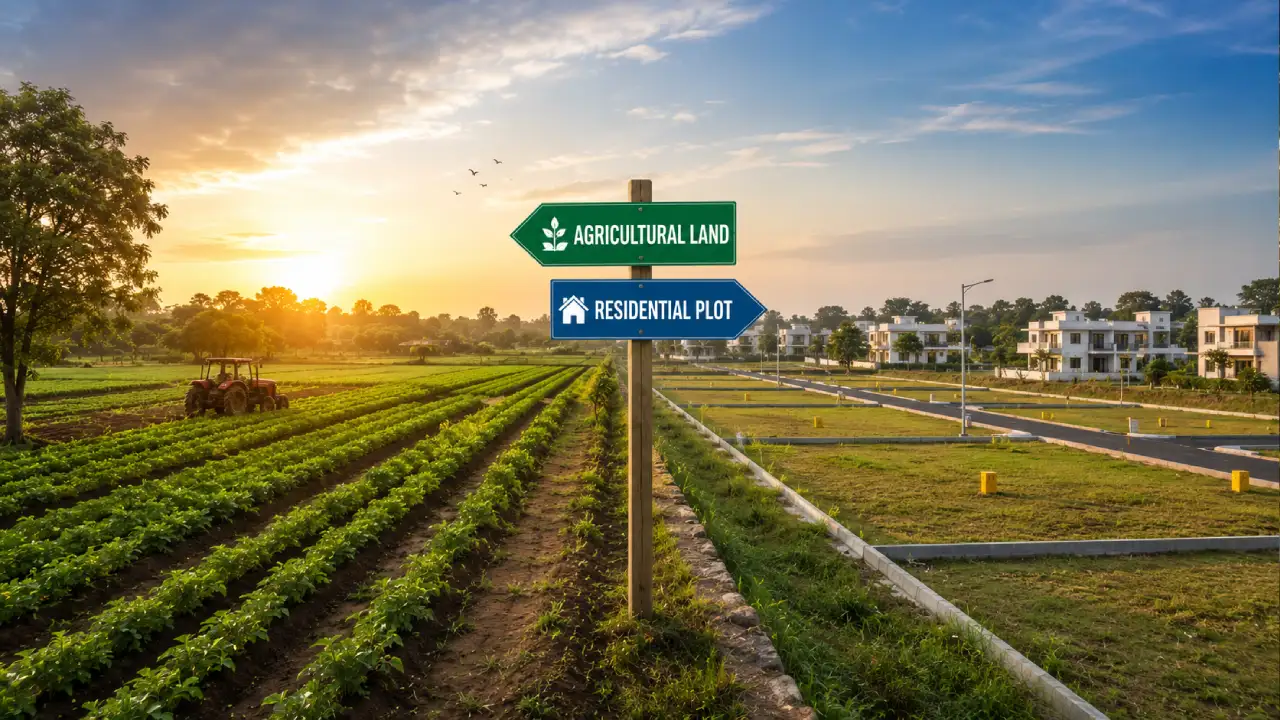
Land appeals to investors because it is tangible and versatile. Yet agricultural land and residential plots are not interchangeable. They differ in permitted use, upkeep, documentation, buyer demand and return potential. An agricultural land vs residential plot decision should begin with the investor’s objective, holding period and management capacity.
Understanding the Basic Difference
The recorded use of the property shapes the investment. Agricultural land is meant for farming. Its suitability depends on title clarity, soil, water, access and state-specific rules. A residential plot is land approved or designated for housing. Its usefulness depends on layout approval, roads, infrastructure and construction permissions.
Purchasing farmland does not automatically permit residential development. A plotted property is not construction-ready until its land use, layout and approvals are verified. State conversion processes generally examine revenue records and planning requirements before non-agricultural use.
How the Return Potential Differs
ROI should be assessed through its sources, not an assumed appreciation rate. Agricultural land investment may create value through cultivation, leasing, managed activity or appreciation. Outcomes depend on water, access and nearby development. Income is not automatic, while farming brings expenses, supervision and seasonal uncertainty.
Residential plot investment usually depends on appreciation or later construction. Demand may improve where transport and neighbourhood services develop, but a plot can remain idle while taxes, fencing and maintenance continue. Performance is tied to genuine end-user demand and approved infrastructure.
Comparing the Main Advantages
Both can suit patient investors, although their benefits differ.
Agricultural land may offer:
Productive use through cultivation
Agricultural income where operations are viable
Scope for soil and water improvement
Rural lifestyle value
Less dependence on housing demand
A residential plot may offer:
A defined housing purpose
Familiarity among urban property buyers
Scope for construction under applicable rules
Easier comparison with nearby developments
Less operational involvement than cultivated land
Benefits remain conditional. Weak title, poor access or unsuitable land use can reduce the value of either asset.
Recognising the Limitations
The farmland vs residential plot comparison becomes clearer when responsibilities are considered.
Agricultural land may require supervision, boundary protection, cultivation planning and attention to water or soil. State laws can affect purchase eligibility, use and conversion. Resale may take time.
Residential plots can appear simpler but still carry risks. Investors must verify the sanctioned layout, developer authority, road ownership, encumbrances and construction conditions.
The Real Estate (Regulation and Development) Act covers land developed into plots for sale and requires registration of applicable projects in planning areas, subject to its provisions and exemptions.
Liquidity and Exit Planning
An exit plan should be considered before purchase. Residential plots may attract more buyers in established housing markets because their intended use is familiar. That does not guarantee a quick sale. Price expectations, approval gaps, location and demand can still delay a transaction.
Agricultural land may have a narrower market, especially in remote locations. Land with clear records, reliable access, usable water and management may improve assessment. The agricultural land vs plot choice should reflect how long the investor can hold without relying on an immediate sale.
Due Diligence before Choosing
Documentation should be reviewed independently for both property types. Investors considering managed farmlands near Bangalore should carefully study the sale structure, title, cultivation arrangement, maintenance scope, access rights, revenue records and exit terms. Management support may reduce daily involvement, but it does not replace legal verification.
Anyone reviewing farm land for sale in Bangalore should check:
The title chain and seller’s authority
Revenue entries, survey records and boundaries
Encumbrances, disputes and acquisition notices
Legal and physical road access
Water sources and recorded land use
Planning restrictions and conversion status
Farming and maintenance responsibilities
For a residential plot, buyers should add layout approval, planning documents, applicable project registration, civic access and completion. Digitised land records can assist the review, but they should still be compared with local records and a physical survey.
Which Investment May Suit Different Goals?
The suitable option depends on what the investor expects the land to do. Farmland investment vs residential plot selection may favour agricultural land when the buyer accepts a longer horizon, understands farming responsibilities and values productive use.
A residential plot may suit someone seeking future home construction or exposure to an established housing market.
Neither asset is automatically safer or more profitable. Location cannot correct defective ownership, and marketing cannot replace permissions. Investors should compare acquisition cost, ongoing expenditure, possible income, legal restrictions, resale demand and management responsibilities.
Final Thoughts
Agricultural land vs plot investment has no universal winner. Farmland may offer productive use and value drivers, while a residential plot can provide a clearer development purpose and broader market familiarity.
ROI depends on legal clarity, location, maintenance, purchase discipline and the eventual exit. The stronger decision is aligned with the investor’s time horizon, involvement level and verified rights.
FAQs
Which offers better ROI: agricultural land or residential plots?
Neither offers a guaranteed advantage. Agricultural land may combine operational income with appreciation, while residential plots rely more on demand-led appreciation. Location, legal clarity, purchase price and holding period influence the result.
What are the key differences between investing in agricultural land and plots?
Agricultural land is intended for farming and may require active management. Residential plots are intended for approved housing use and depend more on layout, infrastructure and construction permissions.
Is agricultural land a better long-term investment than residential plots?
It may suit investors who accept a longer holding period and agricultural responsibilities. A residential plot may suit those seeking a clearer route towards construction or resale in a housing market.
What are the pros and cons of investing in agricultural land?
Possible benefits include productive use and agricultural income. Limitations include operational work, state-specific rules, conversion restrictions, record verification and potentially slower resale.
What factors should investors consider before choosing between farmland and plot investments?
They should assess title, approved use, access, water, infrastructure, upkeep, taxes, legal restrictions, income potential, holding period and likely resale demand.