Everything You Need to Know about Agricultural Land Sale Agreements
Discover practical gardening advice, expert landscaping tips, and inspiration to help you make the most of your outdoor space.
Sanctity Ferme Team
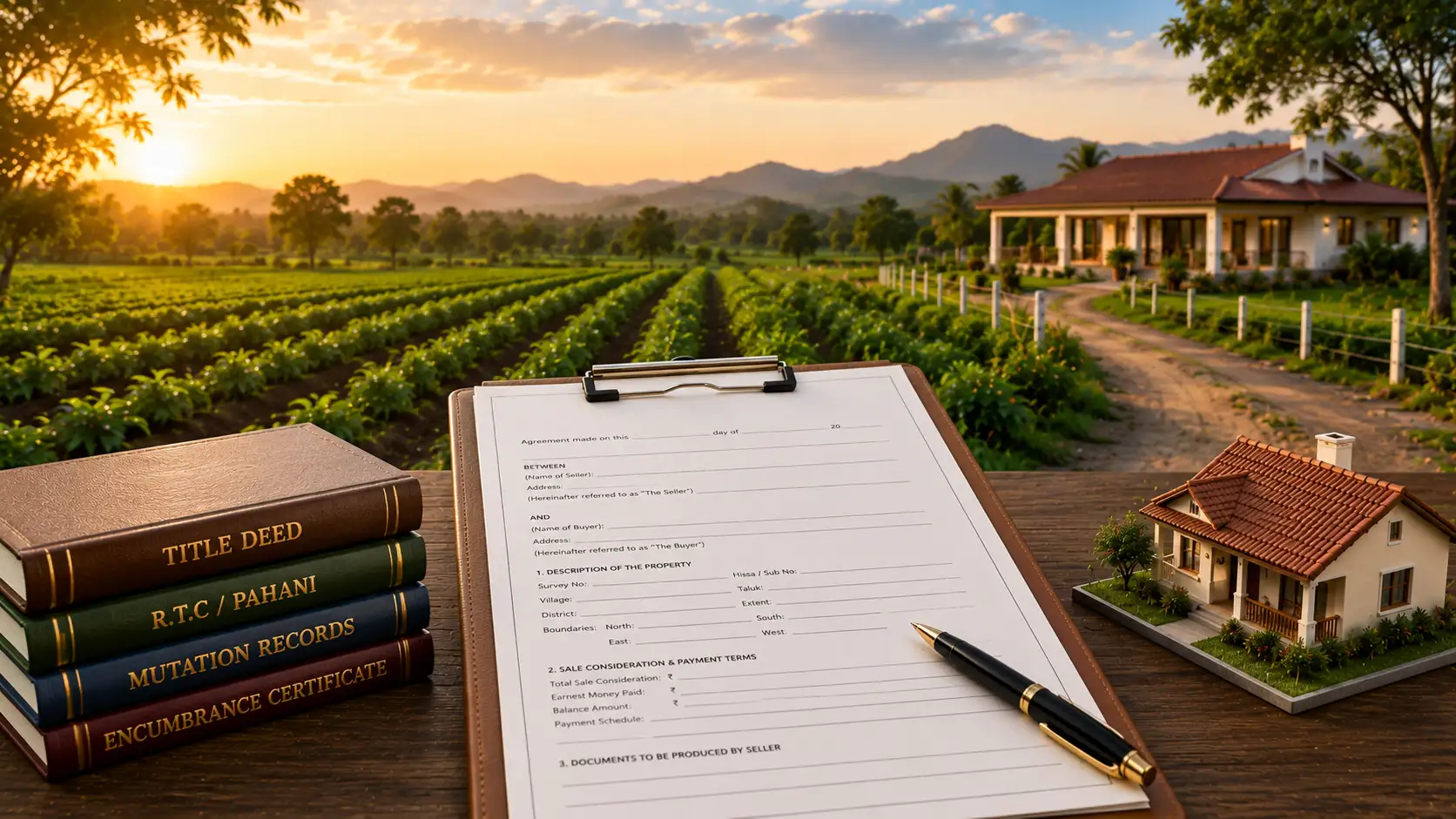
An agricultural land sale agreement sets out the terms agreed between the buyer and seller before the final sale deed is registered. It covers the land details, price, payment schedule, possession, required documents and responsibilities of both parties.
Since farmland transactions may involve state rules, revenue records and ownership checks, every clause needs careful attention. Knowing what the agreement should contain helps buyers understand the process clearly and avoid unnecessary confusion or costly disputes later.
What Is the Purpose of a Farmland Sale Agreement?
A sale agreement records the proposed transaction before ownership is transferred. It identifies the parties, describes the land, fixes the price and sets conditions for payment, registration and possession.
An agricultural land sale agreement format is a starting point. Agricultural rules and records vary across Indian states, so the wording must suit the property, title history and agreed terms. A property lawyer should review it before signing.
When Should the Agreement Be Signed?
Sign the agreement once the seller’s identity, ownership papers, land type, survey details and boundaries have been checked. If anything is still under review, mention it clearly in the document.
The agreement should also explain what will happen to the advance payment if a title problem, legal claim or record mismatch comes up later.
Essential Clauses Every Agreement Should Cover
A farmland sale agreement format should explain the transaction and leave little room for verbal interpretation.
Names and Capacities of the Parties
Include full names, addresses, identity details and legal capacity. If a representative signs through a power of attorney, verify the authority granted.
Exact Description of the Property
Mention the survey number, subdivision, village, taluk, district, extent and boundaries. These details must match the title records, revenue entries and survey. Record access or shared rights.
Price and Payment Terms
State the price, token amount, advance, balance and payment method. Link each installment to a date or milestone, such as verification or registration.
Seller’s Title Declaration
The seller should disclose mortgages, disputes, family claims, leases, notices, unpaid dues and third-party possession. Known issues should never be hidden behind a statement that the title is clear.
Documents to Be Produced
List the records due before registration, including title deeds, sale deeds, encumbrance certificates, tax receipts, revenue records, measurement certificates and powers of attorney.
Registration and Possession
Fix the deadline for registering the sale deed. State when possession will be handed over, whether the land is vacant and who will pay the stamp duty and registration expenses.
Default and Cancellation
A land sale agreement format should state what happens if a party delays or breaches the terms. It may cover notice, extension, refund, deductions or compensation. These clauses need legal review.
Documents to Verify before Signing
State laws govern agricultural land purchases, and buyer eligibility can vary. The supplied reference advises checking ownership, land use, boundaries and essential records before completing the transaction.
Buyers should verify:
Title deed and previous ownership documents
Encumbrance certificate
Property tax and land revenue receipts
Registration and stamp duty records
Mutation or relevant revenue entries
Land measurement certificate
Power of attorney, where applicable
State-specific land extracts, where required
Complete these checks carefully before making any substantial advance payment to the seller or signing the document.
Special Care in Managed Farmland Transactions
Land ownership and service responsibilities must be treated separately when purchasing managed farmlands near Bangalore. Plantation care, maintenance, facilities, rental support and hospitality may require different agreements.
The agricultural land agreement should define the property and ownership obligations. Supporting documents should cover service periods, management charges, access rules and responsibilities for crops, facilities and common areas.
Sale Agreement and Sale Deed Are Not the Same
A sale agreement records the terms accepted by the buyer and seller before the transaction is completed. It covers the price, payment schedule, registration date and possession terms. The sale deed is the document that legally transfers ownership after registration.
A signed or notarised agreement alone does not establish ownership of farmland for sale in Bangalore. Legal ownership begins only after the sale deed is registered and the land records are updated through mutation.
Mistakes That Can Weaken Buyer Protection
Avoid blank spaces, unsigned corrections, vague boundaries and payment terms without dates. Do not rely on verbal promises about title clearance, access, possession or refunds.
A residential template may overlook agricultural classification, eligibility, surveys or cultivation rights. Read every clause, attach the property schedule and retain signed copies with payment proof.
Conclusion
A clear agreement gives structure to an agricultural land purchase. It connects payment with verification, identifies the property, records seller declarations and fixes dates for registration and possession. It also provides a process for delays, defects or cancellation.
Sanctity Ferme reflects this clarity-led approach to managed farmland, where transparent documentation supports responsible land care and ownership.
Frequently Asked Questions
What is an agricultural land sale agreement, and why is it important?
It is a written contract recording the proposed sale, price, conditions and responsibilities. It matters because it provides evidence of what both parties accepted before registration.
What details should be included in an agricultural land sale agreement?
Include party details, survey numbers, boundaries, extent, price, payment stages, title declarations, required documents, registration date, possession terms, default clauses, signatures and witnesses.
Is a sale agreement legally binding before the final land registration?
Its terms may bind the parties depending on applicable law and proper execution. However, it does not replace the registered sale deed used to transfer ownership.
What documents should buyers verify before signing a farmland sale agreement?
Check title deeds, earlier ownership records, encumbrance certificates, revenue entries, tax receipts, survey records, mutation details and any power of attorney or state-specific extract.
How can a well-drafted sale agreement protect agricultural land buyers?
It can connect payment with successful verification, require disclosure of claims, fix completion dates and state the remedy when title defects, delays or defaults arise.